
Port lights blink erratically. Uptime stats plummet. Your team tears into configurations, firewall rules, and switch firmware—hours wasted before someone finally checks the physical connection. Cable test Cisco switch procedures often seem like networking’s most overlooked foundation. We demand blazing speeds from Cisco Catalyst hardware, complex security policies, and flawless redundancy. Yet a single marginal patch cable, a slightly damaged SFP optic, or degraded Cat6 buried in a conduit can bring critical operations crashing down. Why do even seasoned teams scramble when link flapping hits? Simple: verifying copper and fiber infrastructure frequently drops off the priority list until disaster strikes. Performing rigorous cable testing isn’t just troubleshooting; it’s strategic network hygiene. It’s knowing your entire physical layer—from wall jacks to uplink SFP+ modules terminating in the closet—can reliably carry the load under all conditions. Skipping this step with your Cisco switch gear is like building a skyscraper without inspecting the steel beams. The real question becomes whether operational stability truly begins with disciplined cable validation before chasing complex software fixes.
So, does genuine network resilience honestly start at the cable junction box? Absolutely, and here’s why neglecting cable verification invites chaos:
First, understand what “cable test” means beyond basic connectivity. Pinging the device next door only confirms a signal gets through. Proper validation examines critical electrical and physical characteristics copper networks degrade silently over time. Tools like Cisco switch built-in TDR (Time Domain Reflectometry) diagnostics—activated via show cable-diagnostics tdr—map precise distance to faults. Pinpointing a kinked cable 37 meters down a hallway run saves hours. High crosstalk or insertion loss, measured using specialized certifiers like Fluke DSX tools, reveals bandwidth ceilings throttling that expensive 10GBase-T port down to 1G speeds. Imagine deploying new VoIP phones across three floors, only to have echo issues and dropped calls traced to poor terminations compromising noise margins. That’s time and money evaporating. Untested patch cords behind desks? They become silent killers dragging performance when least expected. Verifying standards compliance like Cat6a certification ensures your infrastructure handles tomorrow’s bandwidth demands without rewiring everything.
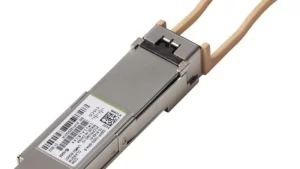
Optical fiber demands equally rigorous scrutiny. Testing involves checking light levels using optical power meters. Connecting a new 40G QSFP+ transceiver without measuring transmit (Tx) and receive (Rx) power values risks everything. Margins too low? Intermittent failures. Too high? Damaged optics or receiver overload. Cisco switches log optical power metrics (show interfaces transceiver detail), but baseline testing during installation is non-negotiable. Cleaning every single fiber end-face before mating connections—using dedicated click-style cleaners—prevents microscopic dust particles causing signal attenuation or permanent scratches. Ever diagnosed a mysterious “error-disabled” port only to find a $2,000 SFP+ ruined by grease from someone’s fingers? Disaster-proof your fiber plant with documented insertion loss and reflectance measurements—key for troubleshooting later.
Environmental factors turn minor flaws into network-wide emergencies. Bundled cables generating heat? Temperature increases resistance in copper, distorting signals. EMI interference from nearby power lines or fluorescent ballasts injects noise Cisco error correction can’t always overcome. Testing after installation validates immunity to noise under real-world conditions. A Cisco switch cable test should include stress scenarios: validating throughput remains stable while heavy HVAC systems kick on nearby. Did a rodent chew a cable concealed above a ceiling tile? Periodic re-testing identifies subtle signal degradation before failures cascade. Documentation is crucial—labeled diagrams mapping tested runs to switch port IDs let technicians correlate a flapping interface immediately to patch panel position A23-FiberLink-B7 without guesswork. This transforms overnight firefights into 10-minute swaps.
Beyond hardware, Cisco IOS commands provide frontline diagnostics. Using test cable-diagnostics interface initiates a TDR scan directly from the CLI. Results show critical faults: shorts determining if voltage leaks across wire pairs, opens showing broken connections, or impedance mismatches hinting at mismatched cable grades. Pair this with show interfaces status err-disabled revealing ports shut down due to physical errors detected. Integrate these into monitoring tools—automated alerts when link CRC errors climb signal physical layer trouble demanding inspection. Training staff to run these commands before escalating complex tickets filters out the “noise” caused purely by cabling.
Ultimately, demanding perfect performance from sophisticated Cisco Catalyst switches without validating the basic pathways connecting them invites instability. Chasing software bugs or configuration gremlins overlooks reality: 60%+ of network downtime stems from physical layer failures. Proper cable test Cisco switch methodologies build resilience from the ground up. Establishing rigorous standards for copper certification, optical light budgets, and environmental stress testing transforms the physical layer from a liability into a predictable asset. Documenting test results provides a vital forensic map when issues arise. Integrating switch-based TDR diagnostics and optical monitoring into routine maintenance proactively flags degrading links before users complain. Yes, robust spanning-tree configurations and encrypted tunnels matter tremendously. But they function atop the physical layer. Investing in disciplined cable verification isn’t a low-level chore—it’s the bedrock enabling advanced features to shine reliably under pressure. Neglect it, and you gamble with outages waiting to happen. Master it, and your network withstands storms while delivering consistently on its potential. Resilience doesn’t start at the router configuration line—it begins where light pulses and electrons travel through meticulously tested copper and glass pathways toward Cisco switch interfaces engineered to perform when foundations are proven sound.







Leave a comment