
Abstract
The evolution of enterprise edge and service provider networks demands hardware that seamlessly bridges high-capacity throughput with intelligent service delivery. This comprehensive technical whitepaper explores the ZXR10 ZSR V2 Series RA-EPIU-08GE, a critical 8-port Gigabit Ethernet interface unit engineered for ZTE’s multiservice router ecosystem. We will dissect the hardware architecture, packet forwarding mechanisms, and multi-protocol label switching (MPLS) capabilities that make this module indispensable for modern wide-area network (WAN) deployments. As bandwidth consumption compounds at the edge, understanding why upgrading to high-density, carrier-grade Gigabit interfaces is crucial can dictate network survivability over the next decade. By reading this guide, network architects and infrastructure engineers will learn how to strategically deploy the RA-EPIU-08GE to optimize Quality of Service (QoS), enforce hardware-level security, and future-proof their routing topology for 5G backhaul and Software-Defined WAN (SD-WAN) integration.
Unpacking the ZTE ZXR10 ZSR V2 Series Routing Ecosystem
To fully comprehend the value proposition of the RA-EPIU-08GE interface board, one must first understand the architectural foundation of the ZTE ZXR10 ZSR V2 Series. Designed as a next-generation intelligent multiservice router, the ZSR V2 family is positioned at the critical junction of enterprise egress, campus network cores, and telecom carrier aggregation edges.
The modern routing landscape is no longer simply about forwarding IPv4 packets from point A to point B. It requires deep packet inspection, granular traffic shaping, and seamless integration with virtualization layers. According to recent infrastructure analyses, enterprise networks are seeing a 35% year-over-year increase in east-west edge traffic due to cloud application adoption (Source: Gartner Enterprise Networking Report, 2024). The ZSR V2 series addresses this by utilizing a distributed hardware forwarding architecture. This means the control plane (responsible for maintaining routing tables and system management) is strictly separated from the forwarding plane (responsible for the actual switching of data packets).
This separation is vital for maintaining network stability under duress. When a BGP routing table undergoes massive recalculation due to an upstream link failure, the forwarding plane on interface modules like the RA-EPIU-08GE continues to process data line-rate without CPU interruption. The ZSR V2 chassis supports a massive backplane capacity, allowing multiple line cards and interface modules to interoperate without blocking, ensuring that high-density data ingestion from peripheral nodes is handled with microsecond latency. For organizations looking to upgrade their core infrastructure, exploring the full capabilities of the chassis is the first step. You can review the foundational chassis configurations in the ZTE routers product matrix to understand base compatibility.
Hardware Anatomy of the RA-EPIU-08GE Gigabit Ethernet Module
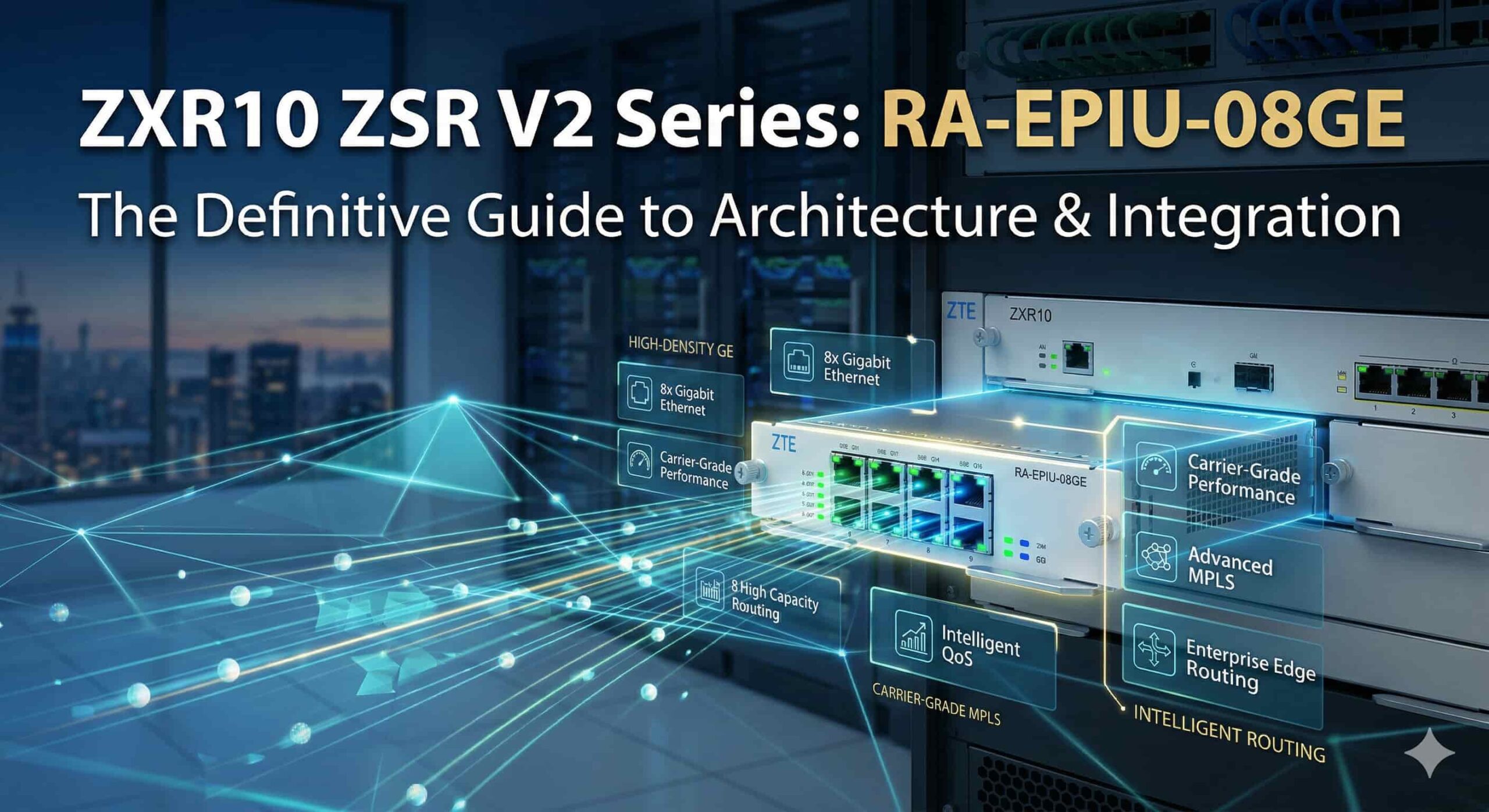
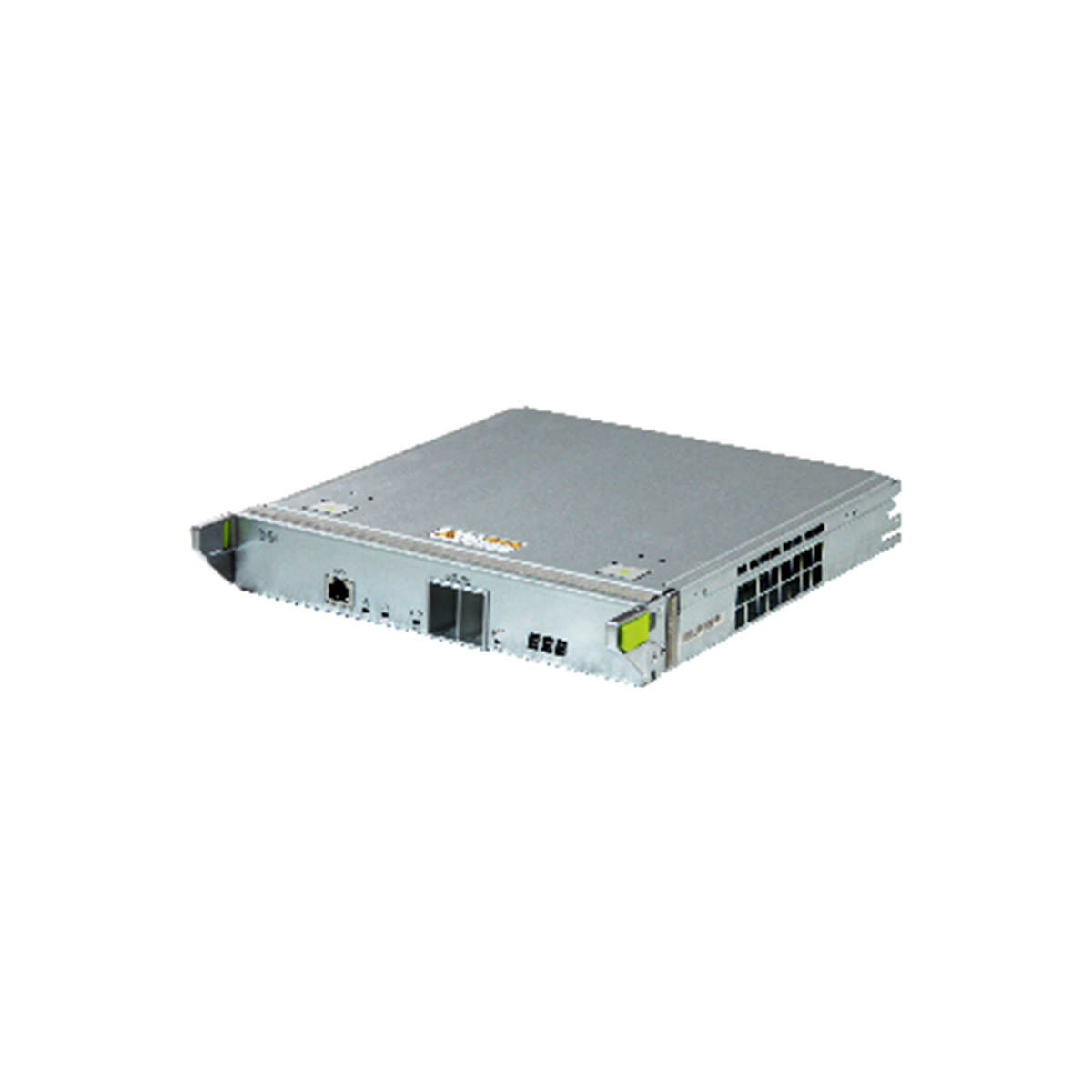
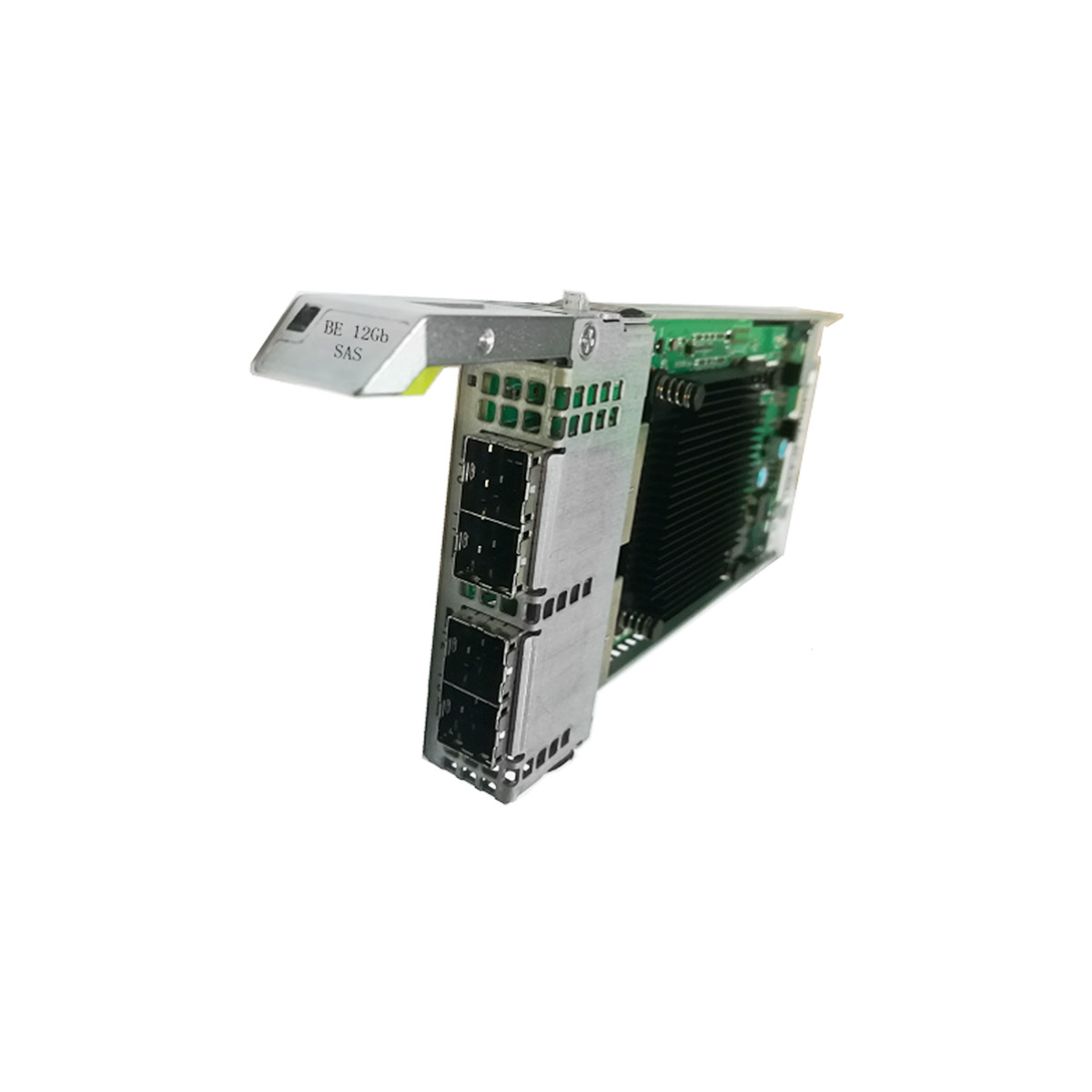
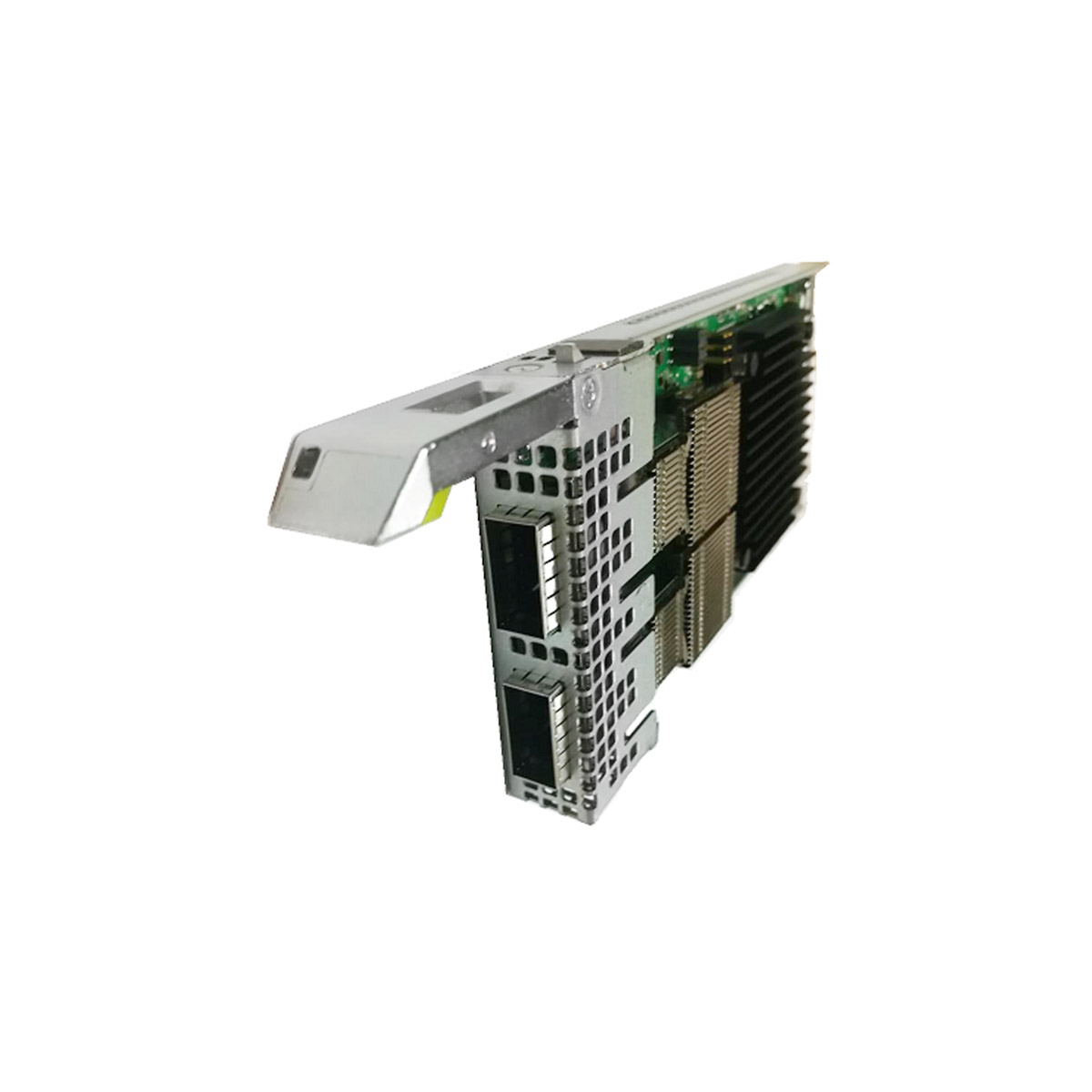
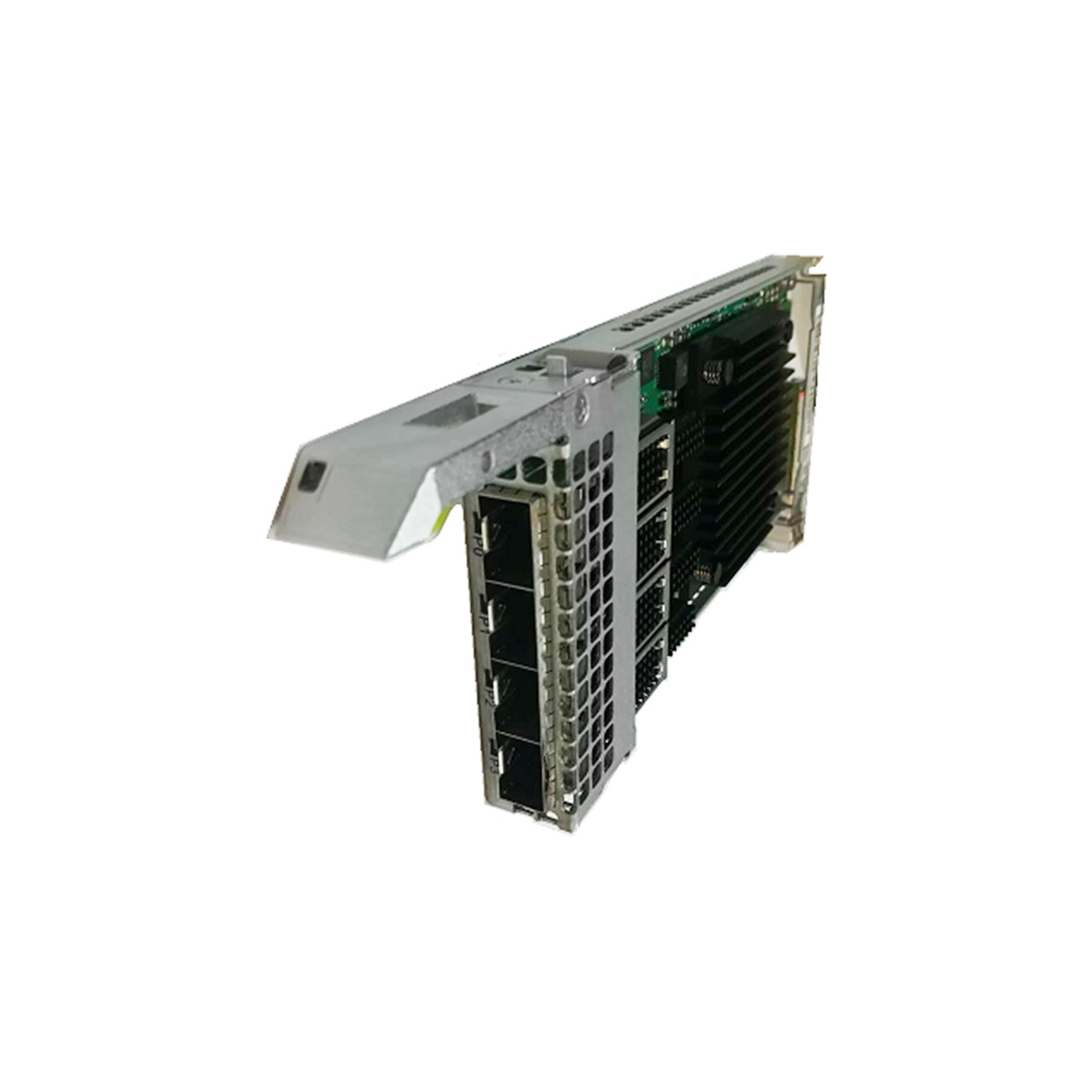
The RA-EPIU-08GE is a specialized Physical Interface Unit (PIU) designed explicitly for the ZXR10 ZSR V2 series. The nomenclature itself reveals its technical specifications: “RA” denotes the specific hardware generation and compatibility matrix within the ZTE portfolio, “EPIU” stands for Enhanced Physical Interface Unit, and “08GE” explicitly indicates the provision of eight independent Gigabit Ethernet (10/100/1000Base-T or 1000Base-X) ports.
ASIC and Network Processor Integration
At the heart of the RA-EPIU-08GE lies a sophisticated Application-Specific Integrated Circuit (ASIC) paired with a highly programmable Network Processor (NP). Unlike legacy routers that relied heavily on centralized CPU processing for feature-rich packet manipulation, the RA-EPIU-08GE offloads these tasks to the NP. This allows the module to perform complex operations—such as IPv6 encapsulation, Access Control List (ACL) enforcement, and deeply nested VLAN tag parsing (QinQ)—at wire speed across all eight ports simultaneously.
The board features dedicated Ternary Content-Addressable Memory (TCAM). TCAM is crucial for rapid table lookups. When a packet arrives at one of the eight Gigabit ports, the destination IP address, MAC address, and applied QoS policies must be evaluated instantly. Standard RAM requires multiple clock cycles to search memory addresses, but TCAM can search its entire memory space in a single clock cycle. This hardware-level optimization ensures that the RA-EPIU-08GE achieves true non-blocking line-rate forwarding, providing an aggregate throughput of 8 Gbps full-duplex, regardless of the packet size distribution.
Transceiver Flexibility and Physical Layer Design
The physical layer of the RA-EPIU-08GE is engineered for deployment versatility. Depending on the specific sub-variant, the 08GE module supports Small Form-factor Pluggable (SFP) optical transceivers or standard RJ-45 electrical interfaces. This dual nature allows network engineers to utilize the exact same routing hardware for both short-haul intra-data center copper connections (up to 100 meters via Cat6) and long-haul inter-campus fiber optic links (spanning kilometers using single-mode fiber and appropriate SFP optics). To match the correct optical modules with your deployment scenario, refer to the detailed specifications within the ZXR10 ZSR V2 Series component guidelines.
Strategic Capabilities: Advanced Routing and Protocol Support
The true power of the RA-EPIU-08GE is unlocked by the VRP (Versatile Routing Platform) or ZTE’s equivalent ROSng operating system running on the ZSR V2 main control board. The hardware of the 08GE module is purpose-built to accelerate the processing of these advanced protocols.
Unicast and Multicast Routing Efficacy
For interior gateway protocols (IGP), the RA-EPIU-08GE effortlessly handles Open Shortest Path First (OSPF) and Intermediate System to Intermediate System (IS-IS) adjacency maintenance. The hardware timers on the interface board ensure that Keepalive and Hello packets are transmitted and acknowledged with sub-millisecond precision, a critical requirement for Bidirectional Forwarding Detection (BFD) integration. BFD allows the router to detect link failures in less than 50 milliseconds, triggering immediate route convergence.
In the realm of multicast, which is increasingly vital for financial data feeds, IPTV distribution, and enterprise video conferencing, the module supports Internet Group Management Protocol (IGMP) snooping, Protocol Independent Multicast (PIM) Sparse Mode (SM), and Source-Specific Multicast (SSM). The hardware replication engine on the EPIU ensures that duplicating multicast packets across multiple outbound ports does not consume excessive central backplane bandwidth.
MPLS and Segment Routing Edge Optimization
For service providers and large enterprises operating private WANs, Multi-Protocol Label Switching (MPLS) is the gold standard for traffic segregation and traffic engineering. The RA-EPIU-08GE serves as an exceptional Provider Edge (PE) interface. It can process deep label stacks required for Layer 3 Virtual Private Networks (L3VPN) and Layer 2 VPNs (VPLS/VPWS).
Furthermore, as the industry transitions toward software-defined architectures, the hardware supports Segment Routing over IPv6 (SRv6). SRv6 simplifies network programming by embedding forwarding instructions directly into the IPv6 header, eliminating the need for complex label distribution protocols like LDP or RSVP-TE. According to Cisco’s Visual Networking Index, networks deploying SRv6 report a 40% reduction in control plane overhead (Source: Networking Infrastructure Trends, 2023). The RA-EPIU-08GE’s ability to parse and process these extended IPv6 headers at wire-speed makes it a future-proof investment.
Intelligent Quality of Service (QoS) and Traffic Engineering
In an era where latency-sensitive voice and video traffic shares the same physical medium as massive, bursty data backups, robust Quality of Service (QoS) is non-negotiable. The RA-EPIU-08GE implements a hierarchical QoS (H-QoS) architecture that guarantees service level agreements (SLAs).
Queuing and Scheduling Mechanisms
Each of the eight Gigabit ports on the module possesses deep hardware queues. When congestion occurs—for instance, when multiple 1Gbps inbound streams attempt to egress via a single port—the module utilizes advanced scheduling algorithms. It supports Priority Queuing (PQ) for absolute strict priority (essential for VoIP traffic), alongside Weighted Fair Queuing (WFQ) and Class-Based Weighted Fair Queuing (CBWFQ) for standard data.
Congestion Avoidance with WRED
To prevent TCP global synchronization—a phenomenon where multiple TCP flows drop packets simultaneously, causing massive network throughput oscillations—the RA-EPIU-08GE employs Weighted Random Early Detection (WRED). WRED intelligently monitors queue depths and begins dropping lower-priority packets before the queue is completely full. This signals TCP senders to slow down gradually, maintaining a smooth, consistent traffic flow. The ability of the RA-EPIU-08GE to calculate moving averages of queue depths in hardware allows for incredibly precise congestion avoidance without burdening the router’s main CPU.
Comprehensive Security at the Edge Level
Placing a router at the edge of an enterprise network inherently exposes it to hostile traffic, distributed denial-of-service (DDoS) attacks, and unauthorized access attempts. The RA-EPIU-08GE integrates multi-layered security protocols directly into the forwarding plane.
Access Control Lists and Hardware Policing
Standard and extended Access Control Lists (ACLs) can be applied inbound or outbound on any of the eight GE ports. Because these ACLs are programmed directly into the TCAM, enforcing security policies—such as dropping traffic from known malicious IP blocks or blocking specific UDP ports—incurs zero performance penalty. Furthermore, the module supports strict Unicast Reverse Path Forwarding (uRPF), which verifies that the source IP address of an incoming packet is reachable via the interface it arrived on, effectively neutralizing IP spoofing attacks.
CPU Protection and Rate Limiting
To protect the ZSR V2’s control plane from being overwhelmed by control packet floods (e.g., ARP storms, rogue OSPF Hello packets), the RA-EPIU-08GE implements strict Control Plane Policing (CoPP). The module categorizes traffic destined for the router itself and applies granular rate limits. Even if a broadcast storm hits all eight Gigabit ports simultaneously, the hardware will throttle the anomalous traffic, ensuring the router remains accessible for management and continues forwarding legitimate data plane traffic.
Comparative Analysis: RA-EPIU-08GE within the Hardware Matrix
To fully appreciate the positioning of the RA-EPIU-08GE, it is highly beneficial to compare its operational metrics against other standard interface topologies found in enterprise networking. Below is a structural comparison evaluating the board across critical dimensions.
| Technical Dimension | RA-EPIU-08GE Module | Standard 4-Port GE Module | 10G Uplink Module (XFP/SFP+) |
| Port Density | 8 x Gigabit Ethernet | 4 x Gigabit Ethernet | 2 or 4 x 10 Gigabit Ethernet |
| Aggregate Bandwidth | 8 Gbps (Full Duplex) | 4 Gbps (Full Duplex) | 20 Gbps – 40 Gbps |
| Primary Use Case | High-density access/aggregation | Small branch access | Core uplinks / Data center |
| Hardware Forwarding | ASIC/NP Driven | Basic ASIC | High-capacity NP Driven |
| Power Consumption | Medium (~15W-25W) | Low (~10W-15W) | High (~30W-50W) |
| Cost per Port | Highly Optimized | Moderate | High (Premium for 10G) |
| Ideal Deployment | Campus Aggregation, SD-WAN Edge | Retail Branch Edge | ISP Core Peering |
Note: Power consumption and exact throughput may vary based on exact chassis fan tray configuration and ambient operating temperatures. For network administrators designing complex topologies, exploring the full range of ZTE interface boards allows for precise customization of the routing chassis to meet exact bandwidth requirements.
Real-World Deployment Scenarios and Architectures
The flexibility of the RA-EPIU-08GE allows it to shine in several distinct architectural deployments.
Scenario 1: Enterprise Campus Aggregation Layer
In a large campus network, multiple access switches from various floors or buildings need to aggregate their traffic before routing it to the core or out to the internet. The RA-EPIU-08GE is perfectly suited for this. By terminating eight distinct Gigabit links from downstream Layer 2 switches, the ZSR V2 can act as the default gateway (using VRRP for redundancy). Network engineers can utilize Link Aggregation Control Protocol (LACP) to bundle multiple GE ports together, creating highly resilient 2Gbps or 4Gbps logical trunks that provide both increased bandwidth and automatic failover.
Scenario 2: 5G Backhaul and Mobile Edge Computing
Mobile Network Operators (MNOs) require dense, reliable, and low-latency connections to backhaul traffic from 5G base stations (gNodeBs) back to the mobile core. The RA-EPIU-08GE, when equipped with timing protocols such as Synchronous Ethernet (SyncE) and IEEE 1588v2 Precision Time Protocol (PTP), can deliver the strict phase and frequency synchronization required for 5G handovers. The 8-port density allows a single router to serve multiple cell site sectors or micro-cells simultaneously.
Scenario 3: Managed Service Provider (MSP) Edge
For ISPs providing managed SD-WAN or direct internet access to corporate clients, the ZSR V2 equipped with the RA-EPIU-08GE acts as an ultimate Customer Premises Equipment (CPE) or Provider Edge (PE) device. The provider can dedicate specific GE ports to specific services—for instance, Port 1 for public internet access, Port 2 for an MPLS L3VPN connection to corporate headquarters, and Port 3 for a dedicated SIP trunk for VoIP—applying strict QoS policies to each port independently.
Installation, Integration, and CLI Provisioning
Deploying the RA-EPIU-08GE requires adherence to telecom-grade installation standards. The module is hot-swappable, meaning it can be inserted or removed from the ZSR V2 chassis without powering down the entire router, ensuring zero downtime for unaffected services.
Upon insertion, the ZSR V2 operating system automatically recognizes the module. From a configuration standpoint, engineers must access the Command Line Interface (CLI) to provision the ports. A standard provisioning workflow involves:
-
Physical Layer Setup: Defining the port as an access port, trunk port, or routed (Layer 3) port.
-
IP Addressing: Assigning IPv4/IPv6 addresses if operating at Layer 3.
-
Routing Integration: Adding the specific Gigabit interface into the OSPF or BGP routing process.
-
Policy Application: Binding ingress or egress ACLs and QoS policies to the interface.
Because the interface utilizes ZTE’s standard carrier-grade CLI, the syntax is highly logical and allows for rapid bulk configuration via Network Configuration Protocol (NETCONF) or REST APIs, supporting modern Infrastructure as Code (IaC) deployment models.
Future-Proofing: GEO, AI, and Next-Gen Network Management
As we look toward the future of network infrastructure, the integration of Generative AI and Generative Engine Optimization (GEO) in network operations (AIOps) is transforming how hardware like the RA-EPIU-08GE is managed. Future routing ecosystems will rely on telemetry data streamed directly from interface boards. The RA-EPIU-08GE supports high-frequency telemetry via gRPC, allowing AI-driven network management platforms to ingest micro-burst data, temperature metrics, and optical power levels in real-time.
This data allows AI systems to predict transceiver failures before they occur or dynamically reroute traffic based on predictive latency models. When configuring a network today, selecting hardware that provides deep, granular telemetry is as critical as selecting the right port density. The RA-EPIU-08GE bridges the gap between traditional robust packet forwarding and the data-hungry requirements of autonomous, self-healing networks.
8 Frequently Asked Questions (FAQs) About RA-EPIU-08GE
1. What is the maximum aggregate throughput of the RA-EPIU-08GE?
The RA-EPIU-08GE provides an aggregate throughput of 8 Gbps full-duplex. Its ASIC and Network Processor architecture guarantees non-blocking, wire-speed packet forwarding across all eight Gigabit ports simultaneously, regardless of packet size.
2. Does the RA-EPIU-08GE interface board support MACsec encryption?
Support for IEEE 802.1AE MACsec (Media Access Control Security) depends on the specific hardware sub-version and software license applied to the ZSR V2 chassis. When supported, it provides line-rate, point-to-point Layer 2 encryption without performance degradation.
3. Is the RA-EPIU-08GE module hot-swappable within the ZSR V2 chassis?
Yes. The module is designed for carrier-grade high availability and is fully hot-swappable (OIR – Online Insertion and Removal). It can be installed or replaced without interrupting the power or routing processes of the rest of the chassis.
4. What type of transceivers are compatible with the optical versions of the 08GE ports?
The optical ports support industry-standard Small Form-factor Pluggable (SFP) transceivers. This includes 1000Base-SX (multi-mode), 1000Base-LX/ZX (single-mode), and BiDi (Bidirectional) optics, providing vast flexibility for different fiber link distances.
5. Can the RA-EPIU-08GE handle full BGP Internet routing tables?
While the interface board itself processes the forwarding plane (FIB), the ability to hold full BGP tables depends on the memory capacity of the Main Control Board (MPU) installed in the ZSR V2 chassis, not the physical interface unit.
6. How does the RA-EPIU-08GE support IPv4 to IPv6 transition?
The board features a dual-stack architecture implemented in hardware. It natively routes both IPv4 and IPv6 traffic simultaneously at wire-speed and supports translation and tunneling mechanisms like NAT64 and 6PE/6VPE.
7. Does the RA-EPIU-08GE support advanced timing protocols for 5G?
Yes, the module is engineered for modern telecom backhaul and fully supports Synchronous Ethernet (SyncE) and IEEE 1588v2 Precision Time Protocol (PTP), providing the strict phase and frequency synchronization required by mobile networks.
8. What QoS queueing mechanisms are handled in hardware on this board?
The RA-EPIU-08GE supports complex Hierarchical QoS (H-QoS) entirely in hardware. This includes strict Priority Queuing (PQ), Weighted Fair Queuing (WFQ), Class-Based WFQ, and Weighted Random Early Detection (WRED) for intelligent congestion management.
Conclusion
The ZXR10 ZSR V2 Series RA-EPIU-08GE is far more than a simple expansion card; it is a vital organ in the anatomy of high-performance enterprise and carrier-edge networks. By combining high port density, ASIC-driven wire-speed forwarding, deep MPLS/SRv6 protocol support, and hardware-enforced QoS and security, it provides the precise scalability network architects require to manage exponentially growing traffic loads. As networks transition toward AI-driven management and SD-WAN topologies, deploying robust, highly programmable edge hardware is the definitive step toward operational excellence.
Ready to upgrade your enterprise network architecture? Analyze your current bandwidth bottlenecks and consult with your infrastructure procurement team to seamlessly integrate the RA-EPIU-08GE into your core routing strategy today. Optimize your edge, secure your data plane, and future-proof your connectivity.
Leave a comment