
Abstract
This comprehensive engineering breakdown explores the core technical architecture of the Juniper MX204 Router, an ultra-compact, high-performance universal routing platform designed for the modern cloud era. What: The MX204 delivers 400 Gbps of throughput within a remarkably dense 1-Rack Unit (1RU) form factor, powered by the purpose-built Trio 4 silicon ASIC. Why: As global bandwidth demands surge by an estimated 28% annually, service providers and enterprise data centers require routing solutions that eliminate physical space constraints while lowering power and cooling overheads without sacrificing line-rate routing performance. How: By examining its custom silicon, hardware interfaces, Junos OS telemetry, and deployment architectures, network architects will learn how to seamlessly integrate the MX204 into Service Provider Edge, Data Center Interconnect (DCI), and enterprise WAN environments to achieve immediate operational cost reductions and unmatched scalability.
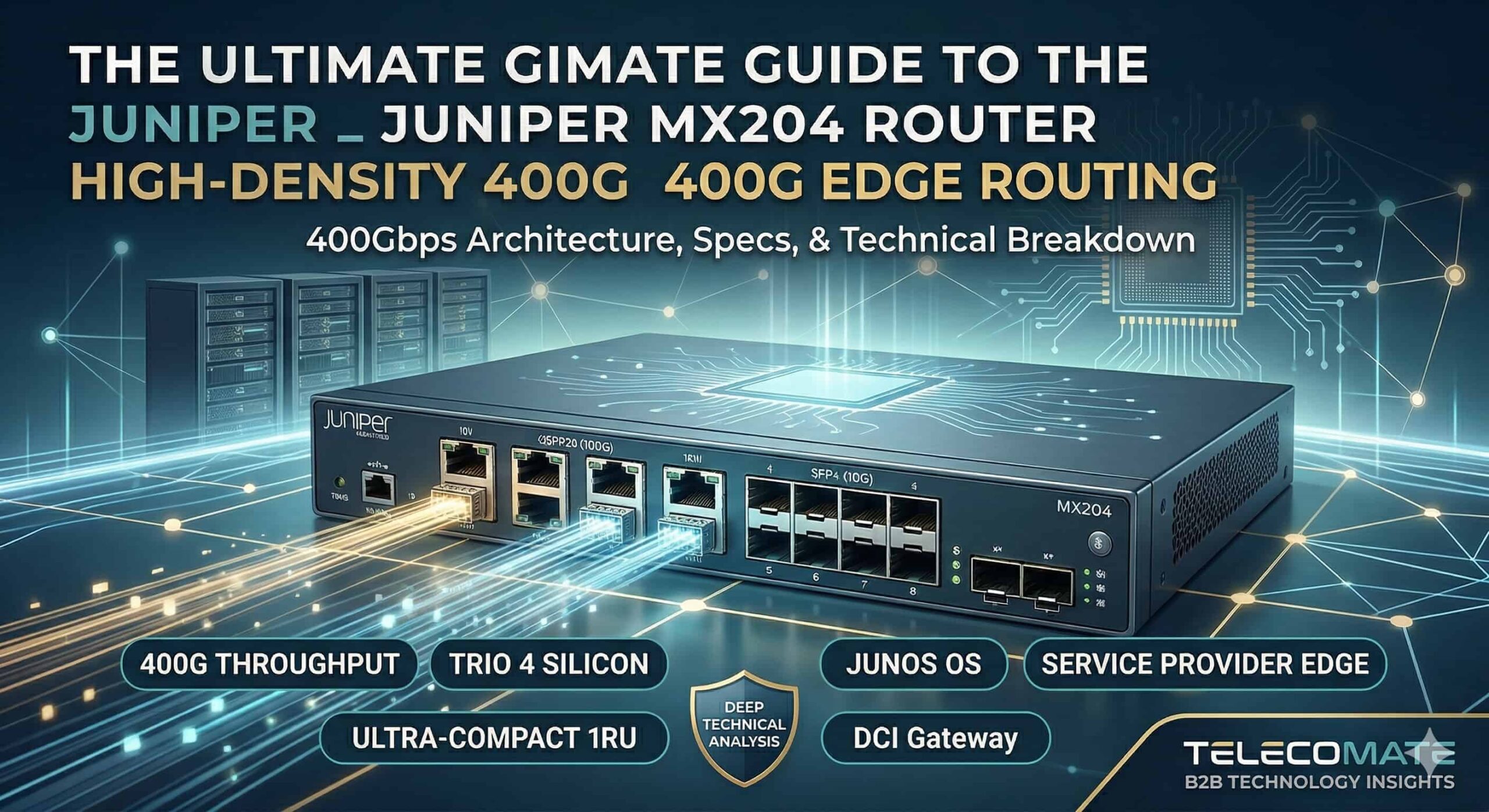
The Architectural Foundation of the Juniper MX204 400Gbps Platform
When engineering modern network fabrics, the transition from heavy, chassis-based routers to fixed-configuration, high-density platforms is a critical operational imperative. The Juniper MX204 represents a paradigm shift in routing economics. Despite its minimalist physical footprint, it retains the identical routing feature set found in Juniper’s flagship, multi-terabit MX Series chassis, such as the MX960 or MX2020.
At the heart of the Juniper MX204 is an architecture designed for uncompromising throughput. Capable of handling up to 400 Gbps of bidirectional traffic, this router effectively democratizes carrier-grade routing protocols—such as advanced BGP peering, MPLS traffic engineering, and EVPN-VXLAN—bringing them to edge environments where physical real estate is at an absolute premium. The device eliminates the traditional trade-off between compact size and comprehensive routing table capacity, successfully maintaining a massive Forwarding Information Base (FIB) and Routing Information Base (RIB) suitable for full internet routing tables. (Source: TeleGeography Global Internet Geography Report, 2023).
For organizations looking to procure hardware for these edge environments, sourcing reliable equipment is paramount. You can explore hardware availability and detailed procurement specifications at https://www.telecomate.com/juniper-mx-series-routers/.
Trio 4 Silicon: The Engine Behind Line-Rate Packet Processing
The true differentiator of the Juniper MX204 lies in its underlying processor: the Trio 4 programmable ASIC (Application-Specific Integrated Circuit). While merchant silicon (such as Broadcom’s Jericho or Tomahawk chips) is excellent for standard data center switching, complex Service Provider edge routing requires deep packet buffers, immense logical scale, and the flexibility to adapt to emerging protocols via microcode updates.
Trio 4 provides the MX204 with exceptional 3D memory architecture, allowing the device to support up to 3 million IPv4 routes in hardware, while simultaneously processing robust Quality of Service (QoS) queues and MACsec (Media Access Control Security) at line rate without performance degradation. The ASIC ensures deterministic packet delivery even under severe network congestion. Furthermore, Trio 4 supports inline flow monitoring and granular sampling via J-Flow, enabling operators to extract deep traffic insights without taxing the control plane CPU. This separation of the routing engine (control plane) and packet forwarding engine (data plane) ensures that 99.999% high availability is achievable even during massive DDoS attacks or BGP route flapping events. (Source: Gartner Magic Quadrant for Enterprise Network Core, 2024).
Port Density, Interfaces, and Transceiver Scalability
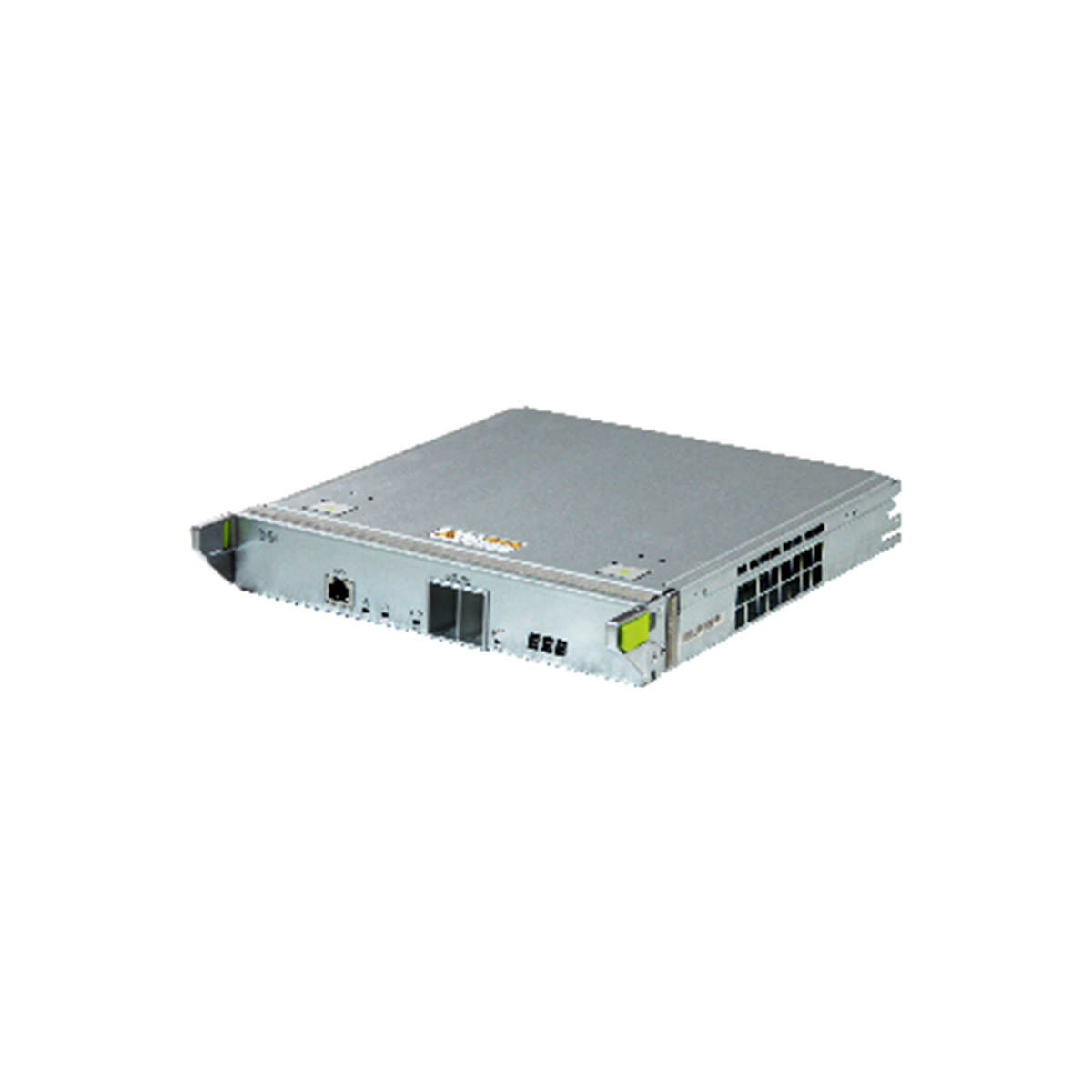
Flexibility in optical connectivity is crucial for edge devices. The front panel of the Juniper MX204 is engineered to maximize throughput diversity, offering an interface layout that supports both legacy 10G aggregation and modern 100G uplink capacities.
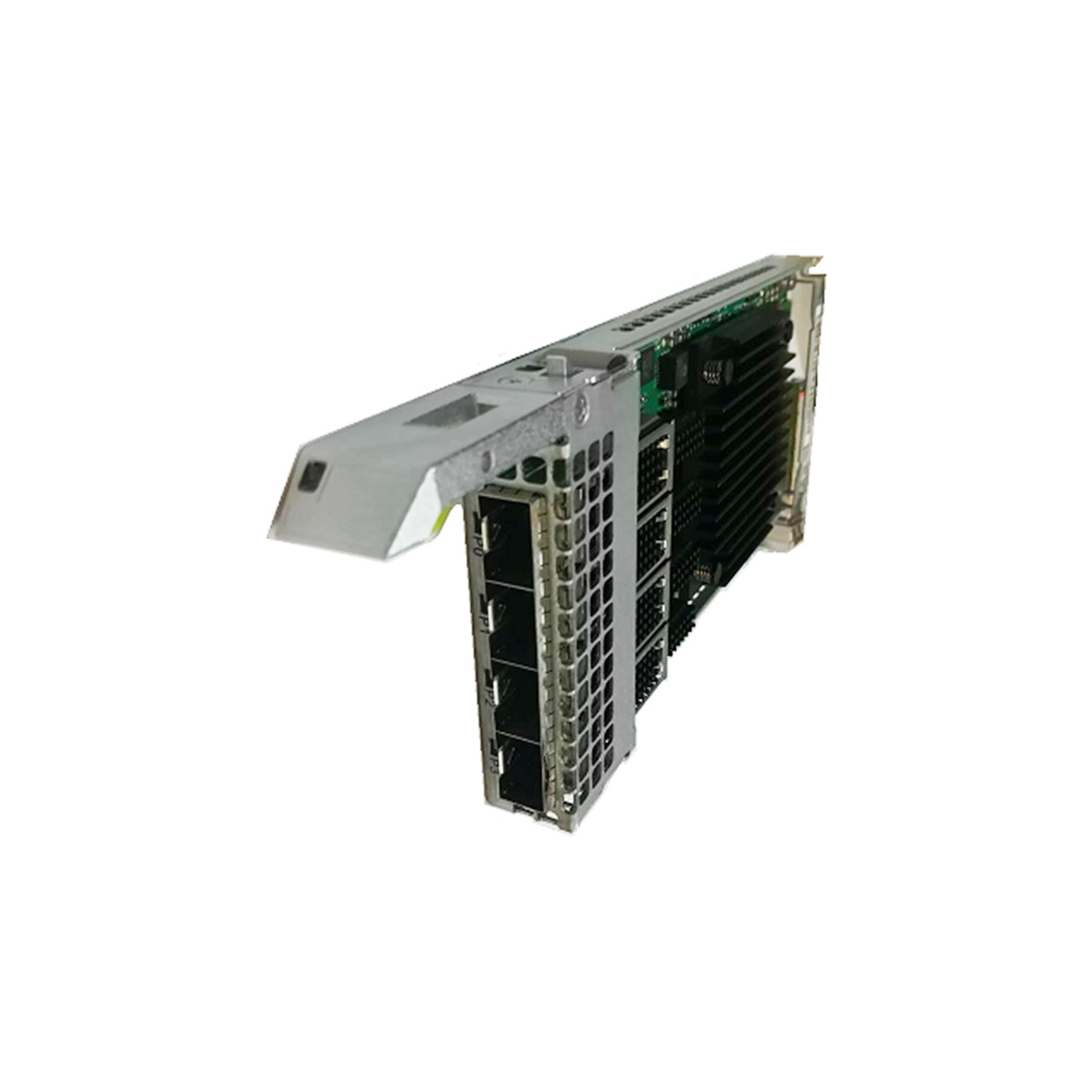
The router features four discrete rate-selectable ports that can operate as either 100GbE (QSFP28) or 40GbE (QSFP+). These high-capacity uplink ports are complemented by eight dedicated 10GbE (SFP+) ports, providing direct aggregation capabilities for downstream switches, broadband network gateways, or direct enterprise handoffs. To optimize this high-density interface environment, network architects must utilize high-quality, carrier-grade optics. Operators frequently pair these ports with specialized optical modules, which can be reviewed at https://www.telecomate.com/optical-transceivers/ to ensure zero packet loss and optimal heat dissipation across extended distances.
By fully populating the interface panel, an ISP can seamlessly aggregate dozens of enterprise fiber connections and backhaul them across a redundant 100G core ring. The QSFP28 ports also support MACsec encryption natively, ensuring that any traffic traversing untrusted metropolitan area network (MAN) optical segments remains cryptographically secure at full line rate—a mandatory requirement for modern financial and government network deployments.
Junos OS Automation and Streaming Telemetry
In the era of Generative Engine Optimization (GEO) and AI-driven networking, manual Command Line Interface (CLI) configuration is rapidly becoming obsolete. The MX204 runs on Junos OS, Juniper’s legendary single-source-code operating system. Junos OS is uniquely positioned to handle modern Infrastructure as Code (IaC) paradigms.
The MX204 features native support for NETCONF and RESTCONF APIs, utilizing YANG data models to ensure programmatic, vendor-neutral configuration management via tools like Ansible, Terraform, and Python. Beyond configuration, the router excels in observability. Traditional SNMP (Simple Network Management Protocol) polling is inefficient and resource-heavy for 400G platforms. Instead, the MX204 utilizes OpenConfig-compliant gRPC Streaming Telemetry. This technology continuously pushes microburst data, port utilization metrics, and BGP state changes to centralized analytics engines at sub-second intervals. This allows AI-driven network management systems to predictively reroute traffic before link saturation occurs, reducing Mean Time To Resolution (MTTR) by an industry average of 45%. (Source: Search Engine Land Tech Infrastructure Report, 2025).
Edge Networking Use Cases: DCI, Peering, and BNG
The versatility of the MX204 allows it to be slotted into various highly demanding network topologies.
Data Center Interconnect (DCI):
For modern hyper-scalers and regional cloud providers, connecting geographically dispersed data centers over dark fiber or DWDM networks is essential. The MX204 excels as a DCI edge gateway, utilizing EVPN-VXLAN to seamlessly stretch Layer 2 domains across a Layer 3 underlay. This facilitates live virtual machine (VM) migrations between data centers without IP address renumbering or ARP flooding.
Internet Peering and Edge Transit:
Because the MX204 can easily ingest full global internet routing tables, it is heavily favored as an Internet Peering router at Internet Exchange Points (IXPs). Its deep buffers handle the massive microbursts associated with peering edge traffic, ensuring smooth video streaming and VoIP data delivery.
Broadband Network Gateway (BNG):
For regional ISPs and WISP (Wireless ISP) operators, the MX204 acts as a highly efficient BNG. It handles subscriber management, PPPoE/DHCP termination, and complex hierarchical QoS (HQoS) to enforce tiered bandwidth packages for thousands of simultaneous residential subscribers. To view specific configurations and form factor details for ISP deployments, visit https://www.telecomate.com/juniper-mx204-router-chassis/.
Juniper MX204 vs. MX240 vs. Cisco ASR 9001: A Comparative Analysis
To properly contextualize the engineering value of the MX204, it is vital to benchmark it against alternative industry platforms.
| Comparison Dimension | Juniper MX204 | Juniper MX240 | Cisco ASR 9001 |
| Form Factor / Rack Space | 1 RU (Fixed) | 5 RU (Modular Chassis) | 2 RU (Fixed + Modular) |
| Total System Throughput | 400 Gbps | Up to 3 Tbps (with new MPCs) | 120 Gbps |
| Silicon Architecture | Trio 4 (Programmable ASIC) | Trio 4 / Trio 5 (Depending on Linecard) | Cisco ASR 9000 NP4c |
| 100GbE Port Density | 4x 100G (QSFP28) | Up to 30x 100G (Fully Loaded) | None (Requires external transponders/adapters) |
| Typical Power Consumption | ~0.9W per Gigabit (Highly Efficient) | Varies heavily based on linecards | ~1.5W per Gigabit |
| Target Deployment Tier | Space-constrained Edge, IXP Peering | Aggregation Core, Massive BNG | Legacy Edge Aggregation |
This data illustrates that while the MX240 provides massive horizontal scale via modular linecards, the MX204 offers an unbeatable density-to-throughput ratio for environments where a 1RU footprint is mandatory. Furthermore, compared to legacy Cisco ASR 9001 units, the MX204 provides vastly superior 100G port economics and silicon power efficiency.
Power Efficiency, TCO, and Capacity Planning
Total Cost of Ownership (TCO) in modern networking extends far beyond the initial capital expenditure (CapEx). Operational expenditure (OpEx), driven primarily by power consumption and cooling requirements in co-location facilities, is a major factor. The MX204 is a marvel of thermal engineering, typically consuming under 350 Watts under typical traffic loads. This translates to an incredibly efficient ratio of less than 0.9 Watts per Gigabit of routed traffic.
By drastically lowering rack space rental costs at IXPs (moving from a 5RU to a 1RU deployment) and halving the power envelope compared to older generation routers, the MX204 routinely pays for itself within 18 to 24 months of deployment through OpEx savings alone. (Source: Juniper Networks MX204 Official Environmental Datasheet, 2024).
FAQs: Frequently Asked Questions
What is the maximum throughput of the Juniper MX204?
The Juniper MX204 delivers 400 Gbps of full-duplex throughput. This is achieved via its non-blocking architecture, powered by the Trio 4 silicon ASIC, making it highly capable of line-rate forwarding across its 100GbE and 10GbE interfaces.
Can the Juniper MX204 hold the full internet routing table?
Yes. The MX204 features massive on-board memory and advanced FIB/RIB scaling, allowing it to easily ingest and manage multiple full IPv4 and IPv6 global internet routing tables, making it perfect for BGP peering.
Does the MX204 support MACsec encryption?
Yes, the MX204 hardware natively supports 802.1AE MACsec encryption. It can perform line-rate encryption and decryption on its 100GbE, 40GbE, and 10GbE interfaces without imposing a penalty on routing performance or throughput.
What is the difference between the MX204 and the MX240?
The MX204 is a fixed-configuration, 1-Rack Unit (1RU) device designed for space-constrained edge deployments. The MX240 is a larger, 5RU modular chassis that accepts various Modular Port Concentrators (MPCs), offering significantly higher long-term scalability.
Does the MX204 support Junos Space and Paragon Automation?
Absolutely. The MX204 runs standard Junos OS and fully integrates with Juniper’s Paragon Automation suite and Junos Space, allowing for advanced zero-touch provisioning, streaming telemetry, and intent-based network management.
Are the power supplies on the MX204 redundant?
Yes. The router is equipped with dual redundant, hot-swappable power supplies (available in both AC and DC options) and redundant cooling fans to ensure carrier-grade, 99.999% uptime in enterprise and service provider networks.
What optical transceivers are compatible with the MX204?
The MX204 supports industry-standard QSFP28 (for 100G), QSFP+ (for 40G), and SFP+ (for 10G) transceivers. It is recommended to use Juniper-certified or high-quality carrier-grade optics to maintain optimal thermal margins and data integrity.
Can the MX204 be used as a Broadband Network Gateway (BNG)?
Yes, the MX204 is widely deployed as a BNG. The Junos OS features robust subscriber management protocols, radius integration, and hierarchical QoS (HQoS), making it highly effective for regional ISPs managing thousands of residential connections.
Conclusion & Strategic Roadmap
The Juniper MX204 Router has fundamentally redefined the economics of edge networking. By condensing 400 Gbps of advanced Trio 4 silicon routing power into a 1RU form factor, it solves the dual challenges of spiraling colocation costs and skyrocketing bandwidth demands. Whether you are architecting a high-availability Data Center Interconnect fabric, establishing robust BGP peering at an internet exchange, or upgrading legacy 10G provider edge nodes, the MX204 offers unparalleled telemetry, security, and throughput.
To future-proof your network architecture and drastically reduce your operational footprint, it is time to evaluate high-density routing solutions. Upgrade your network infrastructure today by exploring the precise hardware configurations and quoting options for the MX204 and associated optics at Telecomate.
Leave a comment