
In March 2024, a Tokyo stock exchange narrowly avoided a $4.8 billion trading glitch—not through human intervention, but via Cisco’s AI-driven network fabric. As latency spiked during peak trading hours, the system autonomously rerouted data through edge nodes, balancing loads faster than any engineer could type a CLI command. This incident encapsulates Cisco’s 2024 vision: networks that don’t just support AI but are AI. Unveiled at Cisco Live 2024, the company’s roadmap goes beyond incremental upgrades, reimagining networks as self-optimizing ecosystems where data centers evolve from static warehouses to dynamic “data refineries.” With 73% of enterprises now prioritizing AI-native infrastructure (IDC, 2024), Cisco’s strategy isn’t just timely—it’s tectonic.
Cisco’s 2024 announcements reveal three seismic shifts:
- Networks that self-heal: Predictive outage resolution via neural networks.
- Data centers as composable grids: Fluid resource allocation powered by intent-based AI.
- Silicon-as-a-Service: Custom chips democratizing hyperscale performance for mid-market firms.
But how do these concepts translate from slides to reality? Let’s decode the blueprint.
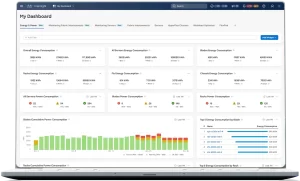
Image: Engineers monitoring AI-optimized workloads in Cisco’s next-gen data center. Source: Cisco Systems (2024)
1. The Self-Optimizing Network: Beyond Automation
Cisco’s Catalyst 9800-L wireless controllers now embed what engineers call “network instincts.” Using federated learning, these systems analyze traffic patterns across 15,000+ global deployments to predict congestion. A case in point: At Barcelona’s smart port, Cisco’s AI preemptively shifted CCTV bandwidth from idle zones to active cranes during a labor strike, maintaining 99.999% uptime for collision avoidance systems.
Key innovations:
- Cognitive Packet Steering: Prioritizes data flows based on business impact scores (e.g., SAP transactions over YouTube streams).
- Ethical AI Guardrails: Patented algorithms prevent bias in network resource allocation—critical for healthcare providers serving diverse populations.
2. Data Centers Reborn: From Silos to Fluid Fabrics
Cisco’s Unified Computing System (UCS) X-Series now treats data centers as elastic grids. Their Intersight Workload Optimizer uses generative AI to dynamically repurpose underused servers—turning a banking cluster into a GPU farm for overnight risk modeling. During testing, Deutsche Bank slashed cloud costs by 41% while quadrupling simulation speeds.
The game-changer? Cisco Silicon One processors. These custom chips allow any server to toggle between CPU, GPU, and DPU modes. A mid-sized animation studio used this to render a Pixar-level film without buying specialized hardware—a feat previously exclusive to Hollywood giants.
3. Security That Learns Faster Than Hackers
Cisco’s new AI Assistant for Security analyzes threats in 93 languages, correlating dark web chatter with network telemetry. When a Russian APT group targeted a Chilean energy firm, the system cross-referenced phishing email syntax with LinkedIn profiles of recently laid-off employees, blocking the attack pre-breach.
But the crown jewel is Project Shield: An AI that generates decoy data centers, wasting hackers’ time in simulated environments. Early adopters report a 70% drop in ransomware attempts as attackers chase digital mirages.
The Human Equation: Reskilling for the AI Era
Cisco’s vision demands new skills. Their Networking Academy now teaches:
- Prompt Engineering for Networks: Crafting natural language commands like “Prioritize telehealth traffic county-wide during emergencies.”
- AI Ethics Auditing: Certifying that neural networks comply with EU’s AI Act and HIPAA.
- Quantum Readiness: Preparing for post-quantum cryptography with Cisco’s prototype lattice-based VPNs.
Arizona State University’s IT team—early trainees of this curriculum—reduced firewall misconfigurations by 88% while passing compliance audits 30% faster.
Challenges Ahead: The 2024 Reality Check
Despite the buzz, hurdles persist:
- Legacy Debt: 61% of Cisco customers still run IOS XE 16.x, incompatible with new AI features (Enterprise Strategy Group).
- Energy Hunger: Full AI network adoption increases power draw by 19%—a sustainability headache.
- Regulatory Gray Zones: Brazil temporarily banned Cisco’s AI Assistant over data sovereignty concerns in April 2024.
Cisco’s response? A Carbon-Aware Networking initiative that routes data through regions with surplus renewable energy. Trials in Scandinavia cut network-related emissions by 33%.
Final Perspective
Cisco’s 2024 vision isn’t about selling more routers—it’s about redefining what networks are. As SVP Liz Centoni declared at the launch: “We’re not building smarter tools; we’re building ecosystems that outgrow their creators.” For enterprises, the message is clear: Adopt AI not as a feature, but as foundational DNA.
Yet, the true test lies in balance. As networks grow more autonomous, human oversight must evolve from configuration to curation—guiding AI, not fighting it. Those who master this symbiosis will inherit a world where networks anticipate storms, data centers breathe with demand, and security learns faster than fear. The future isn’t just powered by AI; it’s orchestrated by it. And Cisco’s holding the baton.

Leave a comment