
In an era where data is the new oil, enterprises are grappling with a storage paradox: explosive data growth meets shrinking IT budgets. According to Gartner’s latest findings, the $30 billion external storage market is undergoing seismic shifts—driven by AI, edge computing, and sustainability demands. Gone are the days of “just add more disks.” Today’s storage solutions must be smarter, faster, and greener. This article unpacks Gartner’s insights, revealing how businesses can future-proof their storage strategies while navigating cost, complexity, and compliance challenges.
The Storage Dilemma: Why Legacy Systems Are Failing
Data creation is outpacing storage capacity. By 2025, global data will hit 181 zettabytes—a 500% surge since 2020. Traditional storage arrays, designed for predictable workloads, crumble under modern demands:
- AI/ML Workloads: Require low-latency access to petabytes of training data.
- Hybrid Workforces: Need real-time sync across clouds, edge, and on-prem.
- Regulatory Pressures: GDPR, CCPA, and sector-specific mandates demand airtight data governance.
Gartner reports that 65% of enterprises now prioritize storage solutions offering both scalability and intelligent automation.
Four Trends Redefining the Storage Market
1. AI-Optimized Storage Architectures
AI isn’t just consuming data—it’s revolutionizing storage itself. Modern systems use machine learning to:
- Predict Failures: Analyzing SMART metrics to replace disks before they crash.
- Auto-Tier Data: Moving cold data to cheaper storage without manual intervention.
- Thwart Ransomware: Detecting anomalous access patterns in real time.
Case Study: A healthcare provider reduced storage costs by 40% using AI-driven tiering, while cutting ransomware response time from hours to seconds.
2. Hyperconverged Infrastructure (HCI) Dominance
HCI, which integrates storage, compute, and networking into a single platform, now commands 35% of the market (Gartner, 2023). Key drivers:
- Simplified Management: Unified dashboards replace siloed tools.
- Elastic Scaling: Add nodes without downtime—critical for e-commerce during Black Friday.
- Cost Efficiency: 30% lower TCO than traditional SAN/NAS setups.
Vendor Spotlight: Dell’s VxRail and Nutanix lead, but startups like VAST Data disrupt with disaggregated HCI models.
3. Sustainable Storage: Green Tech Goes Mainstream
With data centers consuming 3% of global electricity, sustainability is now a boardroom priority. Innovations include:
- Liquid Cooling: Cuts energy use by 45% in high-density SSD arrays.
- QLC NAND Flash: Durable, low-power drives replacing energy-hungry HDDs.
- Carbon-Aware Storage: Migrates workloads to regions with renewable energy.
Impact: Google’s Niagara SSD deployment slashed its storage carbon footprint by 60%.
4. Edge-to-Cloud Continuity
As IoT and 5G push data to the edge, storage systems must bridge distributed environments:
- Edge Storage Gateways: Preprocess data locally before sending to cloud.
- Cloud-Native File Services: AWS FSx, Azure NetApp Files enable seamless hybrid workflows.
- Zero-Trust Encryption: Protects data across untrusted edge nodes.
Example: A manufacturer using AWS Snowcone at remote sites cut cloud egress costs by 70%.
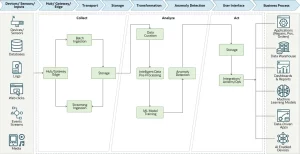
Infographic: AI automating data tiering, anomaly detection, and predictive maintenance in a hybrid cloud setup.
Regional Battlegrounds: Where the Storage Wars Are Fought
Gartner highlights stark regional contrasts:
- North America: Leads in AI/ML storage adoption but faces steep costs.
- Europe: Sustainability mandates drive QLC flash and HCI uptake.
- Asia-Pacific: Explosive SME growth fuels demand for budget HCI and cloud storage.
Emerging Markets: Africa’s leap to hyperconverged systems avoids legacy tech debt.
Vendor Strategies: Who’s Winning and Why
- Pure Storage: Betting big on subscription models and Evergreen upgrades.
- HPE: Aligning GreenLake with edge-to-cloud continuity.
- Startups: Wasabi, MinIO disrupting with S3-compatible, low-cost object storage.
Gartner’s Warning: 40% of legacy vendors risk obsolescence by 2027 if they ignore AIOps and sustainability.
Implementation Roadmap: Future-Proofing Your Storage
- Audit Workloads: Classify data by access frequency, compliance needs.
- Pilot AIOps Tools: Test predictive analytics on non-critical systems.
- Hybridize Gradually: Start with backup/archiving in cloud, then expand.
- Train Teams: Upskill in HCI, cybersecurity, and carbon accounting.
Cost Tip: Negotiate “elastic” SLAs with vendors to align payments with usage.
The Road Ahead: Storage in 2030
Gartner predicts these game-changers:
- DNA Data Storage: Pilot projects begin this decade, offering 1Mx density over HDDs.
- Post-Quantum Encryption: Storage systems immune to quantum hacking.
- Self-Healing Storage: Fully autonomous repair without human intervention.
Storage as a Strategic Asset
The external storage market’s evolution isn’t just about bigger drives—it’s about smarter infrastructure that drives business value. From AI-driven optimization to carbon-neutral architectures, enterprises must treat storage as a core competitive lever.
As Gartner notes, “The winners of tomorrow are those embedding storage intelligence into every layer of their IT strategy.” For leaders, the call to action is clear: Modernize now, or risk drowning in data chaos.

Leave a comment