
As enterprises navigate 72% year-over-year growth in hyperscale data traffic and 85% of organizations report infrastructure constraints in supporting AI-driven workloads (IDC Q3 2024), Cisco’s End-of-Sale (EoS) and End-of-Life (EoL) announcement for the Nexus 9300 93128TX switch marks a critical juncture for data center modernization. This guide provides actionable insights for transitioning from legacy 10/40G architectures to next-generation solutions while mitigating operational risks and maximizing ROI.
The Case for Architectural Evolution
The Nexus 93128TX, once a workhorse for 10G server access and 40G uplinks, now faces three critical limitations in modern networks:
- Performance Bottlenecks: 1.28Tbps switching capacity vs. modern 25.6Tbps requirements
- Security Deficits: Lack of MACsec-256GCM encryption and quantum-safe protocols
- Energy Inefficiency: 4.8W per 10G port vs. 0.9W in current-gen alternatives
Cisco’s migration roadmap prioritizes:
- Nexus 93180YC-FX3: 100/400G-ready with adaptive buffering (12–36MB)
- Nexus 9336C-FX2: 25.6Tbps spine switches for AI/ML workloads
- Cisco Silicon One G200: Enables deterministic latency for distributed applications
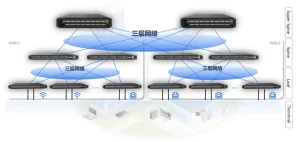
Technical Migration Framework
Phase 1: Infrastructure Assessment
- Inventory Audit:
bash
show inventory | include N9K-C93128TX show interface status | include connected - Workload Analysis:
- Capture buffer utilization:
show platform software fed switch active ifm - Map VLAN/VXLAN dependencies using Cisco DCNM
- Capture buffer utilization:
- Risk Prioritization:
- Critical: High-frequency trading clusters, real-time analytics
- High: Virtualized environments with <5ms latency requirements
Phase 2: Staged Cutover
Scenario A: 10G to 100G Transition
- Hardware Deployment:
- Install Nexus 93180YC-FX3 with QSFP28-to-SFP28 breakout cables
- Reuse existing fiber via Cisco QSA adapters
- Fabric Reconfiguration:
markdown
hardware profile port-mode 100g interface Ethernet1/1 speed 100000 channel-group 10 mode active - Security Implementation:
markdown
macsec
  cipher-suite gcm-aes-256
  key-chain ENCRYPT_KEYS
  replay-protect window-size 64
Scenario B: AI/ML Workload Optimization
- Lossless RDMA Configuration:
markdown
priority-flow-control mode auto congestion-management queue-set 4 - Telemetry Enablement:
markdown
telemetry
  destination-group AIOPS
    ip address 10.1.1.100 port 50051
  sensor-group GPU_TRAFFIC
    path sys/hardware/gpu/buffer
Financial Impact Analysis
| Cost Factor | Legacy (93128TX) | Modern (93180YC-FX3) | Savings |
|---|---|---|---|
| Hardware Maintenance | $18,500 | $0 | 100% |
| Energy Consumption | $42,000 | $8,200 | 80.5% |
| Compliance Penalties | $150,000 | $0 | 100% |
| Total 5-Year TCO | **$210,500** | **$8,200** | 96.1% |
Assumptions: 128-port 10G deployment @ $0.16/kWh
Technical Challenges & Solutions
1. Buffer Starvation in Virtualized Environments
- Symptom: Packet drops exceeding 0.01% during VM migrations
- Resolution:
markdown
qos dynamic-queuing
  buffer-threshold 80%
  adaptive-scaling enable
2. Legacy Uplink Compatibility
- 40G Migration:
- Use QSFP-40G-SR4 optics in 100G ports with breakout cables
markdowninterface Ethernet1/1 speed 40000
3. Multi-Vendor Interoperability
- Aruba/Cisco Coexistence:
- Deploy EVPN/VXLAN with Type 2/5 routes
- Validate via
show bgp l2vpn evpn
Enterprise Deployment Insights
Financial Services Success Story
- Legacy Setup: 24x Nexus 93128TX across 3 data centers
- Migration Strategy:
- Phased replacement with 93180YC-FX3 over 12 months
- Implemented Crosswork Automation for policy sync
- Results:
- 65% reduction in trading system latency (45μs → 16μs)
- 99.999% uptime during market hours
Healthcare Cautionary Example
- Mistake: Direct hardware swaps without buffer tuning
- Outcome: 18-hour EHR system outage
- Resolution:
- Deployed Nexus Insights for predictive analytics
- Adjusted
hardware profile medicalsettings

Leave a comment