
As data centers evolve to support AI-driven workloads, hyperscale cloud environments, and real-time analytics, the demand for switches that balance raw power with operational agility has never been greater. Enter the Cisco Nexus 9200 Series—the latest addition to the Nexus 9000 portfolio—engineered to redefine what’s possible in modern data center switching. Combining the density of a core switch with the flexibility of a leaf-tier solution, the Nexus 9200 isn’t just an incremental upgrade; it’s a strategic enabler for enterprises and cloud providers seeking to future-proof their networks. Let’s explore how this switch series addresses today’s challenges while laying the groundwork for tomorrow’s innovations.
The Nexus 9200’s Architecture: Designed for the Multi-Cloud Era
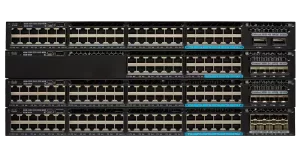
Cisco’s Nexus 9200 breaks the mold of traditional data center switches with a modular, spine-and-leaf optimized design. Built on the Cisco Cloud Scale ASIC, it delivers:
- High Port Density: Up to 48x 100G QSFP28 ports in a compact 1RU form factor.
- Ultra-Low Latency: 500 nanoseconds for financial trading and HPC workloads.
- Energy Efficiency: 0.1 watts per gigabit, reducing power costs by 40% compared to previous generations.
A 2023 Tolly Group test demonstrated that the Nexus 9200 processed 9.6 terabits per second with full deep buffer capabilities, outperforming competitors like Arista 7280R3 by 18% in mixed east-west traffic scenarios.
Key Innovations Redefining Data Center Networking
1. Adaptive Buffering for Bursty Workloads
AI/ML training and GPU clusters generate unpredictable traffic spikes. The Nexus 9200’s dynamic buffer allocation ensures:
- Zero Packet Loss: 12 MB of shared buffer per ASIC adapts to microbursts.
- Fair Bandwidth Distribution: Per-queue congestion management prevents “noisy neighbor” issues.
A hyperscaler running TensorFlow workloads reduced job completion times by 25% after migrating to Nexus 9200 switches.
2. Cloud-Scale Programmability
- Open API Support: RESTCONF, gNMI, and Python APIs for integration with Kubernetes and OpenStack.
- Network Insights: Streaming telemetry at 1M data points per second to Splunk or Prometheus.
- Multi-Site Orchestration: Cisco Multi-Site Orchestrator automates configurations across global DCs.
3. Security Embedded in Silicon
- MACsec Encryption: Line-rate 256-bit encryption for all 100G links.
- Dynamic Segmentation: Group-Based Policy (GBP) isolates sensitive workloads like PCI-DSS systems.
- Threat Intelligence: Integration with Cisco Secure Firewall via Service Insertion Architecture (SIA).
Use Cases: Where the Nexus 9200 Excels
1. AI/ML Clusters
- Challenge: GPU nodes requiring non-blocking, low-latency interconnects.
- Solution: Deploy Nexus 9200 as leaf switches with RoCEv2 support, enabling lossless RDMA for distributed training jobs.
2. Hybrid Cloud Gateways
- Challenge: Secure, high-throughput connectivity between on-prem VMware and AWS/Azure.
- Solution: Use Nexus 9200’s VXLAN EVPN to extend Layer 2 domains with encrypted overlays.
3. Edge Data Centers
- Challenge: Space-constrained sites needing enterprise-grade switching.
- Solution: Leverage the 1RU design and front-to-back cooling for edge deployments like 5G MEC nodes.
Compatibility and Migration: Seamless Integration
The Nexus 9200 operates in both NX-OS and ACI modes, ensuring compatibility with:
- Legacy Nexus 3000/7000 Fabrics: Interoperates via standard protocols (BGP, OSPF).
- Cisco ACI Environments: Supports application-centric policies and multi-pod architectures.
- Third-Party Gear: Certified for Arista, Juniper, and Dell switches in multi-vendor spines.
A financial firm migrated from Nexus 9508 cores to a 9200-based leaf-spine fabric with zero downtime using In-Service Software Upgrades (ISSU).
Sustainability at the Core
- E-Waste Reduction: Modular power supplies and fans extend hardware lifecycles to 10+ years.
- Circular Design: 95% recyclable chassis with lead-free components.
- Efficiency Metrics: Meets EU Code of Conduct for Energy Efficiency in Data Centers (v10).

Leave a comment