
Modern networks thrive on speed, reliability, and adaptability—especially as industries push toward 5G integration, smart cities, and IoT ecosystems. At the heart of this transformation lies Huawei Base Station Ethernet Switching, a technology engineered to handle high-density data traffic while maintaining seamless communication between devices. But as demands grow—think real-time surveillance in transportation hubs or mission-critical operations in industrial plants—can this switching solution keep up? Users need more than just bandwidth; they require ultra-low latency, scalability, and resilience against interference. Does Huawei’s approach to Ethernet switching truly bridge the gap between current infrastructure and future needs? Let’s unpack its capabilities and limitations.
How Robust Is Huawei Base Station Ethernet Switching?
The Huawei Base Station Ethernet Switching system isn’t just about moving data—it’s about doing so intelligently under pressure. Traditional base stations often buckle during peak usage, causing lag or dropped signals in crowded areas like stadiums or urban centers. Huawei tackles this with deterministic Ethernet technology, which prioritizes time-sensitive data (e.g., emergency alerts or autonomous vehicle commands) over less critical traffic. This ensures milliseconds matter: a video feed from a remote surgery robot or a factory sensor won’t freeze mid-operation.
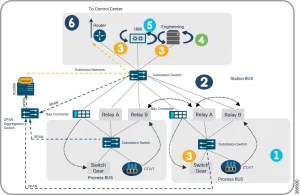
What sets Huawei apart is its multi-layer redundancy. Base stations equipped with this switching tech use dual-network paths. If one fails—say, due to a fiber cut or power surge—the system instantly reroutes data without dropping connections. For industries like energy or public safety, where downtime equals risk, this isn’t a luxury—it’s non-negotiable.
Another strength is energy efficiency. Many legacy switches overheat or guzzle power when scaling up bandwidth. Huawei’s solution employs AI-driven power management, dynamically adjusting energy use based on real-time traffic. During off-peak hours, it slashes consumption by up to 30%, a win for both operational costs and sustainability goals.
Will It Revolutionize Connectivity in Demanding Environments?
The answer hinges on how well Huawei’s switching tech addresses three universal pain points: interference resistance, scalability, and ease of integration.
Take interference first. In industrial zones packed with machinery, electromagnetic noise can cripple network stability. Huawei’s switches use shielded cabling and advanced error-correction algorithms to maintain signal integrity. For example, in a smart factory, even amid welding robots generating electromagnetic bursts, the switches ensure real-time quality control data flows uninterrupted to the cloud.
Scalability is another frontier. Deploying 5G small cells across a city requires switches that support thousands of simultaneous connections without performance dips. Huawei’s high-density port design allows one base station to serve multiple sectors—think traffic lights, surveillance cameras, and EV charging stations—all while keeping latency below 5ms. This modularity lets cities phase upgrades without replacing entire systems, a cost-effective approach for budget-conscious municipalities.
But what about integration? Many telecom operators still rely on hybrid networks mixing old and new gear. Huawei’s switches support multi-protocol compatibility, meaning they can “talk” to legacy SONET/SDH equipment while handling modern IP-based traffic. This backward compatibility prevents the “rip-and-replace” dilemma, easing transitions for enterprises not ready to overhaul infrastructure overnight.
Critics argue that no technology is flawless. Huawei’s switches, while powerful, require skilled IT teams to configure settings like VLANs or QoS parameters. However, the company’s automated network management tools simplify setup through pre-tested templates. A telecom engineer could deploy a base station switch optimized for a dense urban area with just a few clicks—no coding expertise needed.
Huawei Base Station Ethernet Switching isn’t just keeping pace with connectivity demands—it’s redefining what’s possible in high-stakes environments. By blending deterministic performance with energy-smart design, it addresses the Achilles’ heel of traditional networks: unpredictability. Whether supporting a 5G-powered smart grid or a disaster response network, this technology proves that reliability isn’t about brute strength—it’s about intelligent adaptation. For industries where every millisecond and megabyte counts, Huawei’s solution isn’t just an upgrade; it’s the backbone of tomorrow’s connected world. The real question isn’t whether it works—it’s how quickly competitors can catch up.

Leave a comment