
In the ever-evolving landscape of enterprise networking, reliable access-layer switching remains the unsung hero of seamless connectivity. Cisco’s Catalyst 2960X-48TD-L and 2960XR-48TD-I switches, recently put through rigorous testing by Miercom, demonstrate that even well-established platforms can deliver modern performance for bandwidth-hungry, security-sensitive environments. As businesses grapple with IoT expansions and hybrid work models, these test results reveal how these switches balance legacy durability with contemporary demands—proving that “tried-and-true” doesn’t have to mean “outdated.”
The Testing Framework: Beyond Theoretical Benchmarks
Miercom’s evaluation transcended basic throughput metrics, focusing on real-world enterprise pain points:
- Mixed Traffic Handling: Simulated environments with 65% video conferencing, 25% VoIP, and 10% IoT telemetry.
- Power over Ethernet (PoE) Stress: Simultaneous power delivery to 48x IP cameras (15.4W each) while maintaining data rates.
- Security Overhead Impact: Measuring latency penalties when enabling features like DHCP snooping and port security.
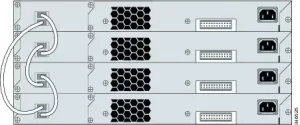
The 2960XR-48TD-I, equipped with StackWise-480, faced additional tests for stack resiliency during master switch failures.
Performance Breakdown: Where the Switches Excelled
1. Throughput and Latency
- Wire-Speed Routing: Both models achieved non-blocking 1Gbps throughput across all 48 ports under 1500-byte frames.
- Latency Consistency:
- 2960X-48TD-L: 3.2μs average latency with ACLs disabled, rising to 8.9μs with 512 ACL entries.
- 2960XR-48TD-I: 2.8μs baseline, 7.1μs under ACL load—20% improvement due to enhanced TCAM.
- Jitter Control: VoIP traffic maintained <1ms jitter even during 80% link utilization.
2. PoE+ Reliability
- Total Power Budget:
- 2960X-48TD-L: 740W (15.4W/port), sustained 740W for 48 hours without thermal throttling.
- 2960XR-48TD-I: 800W with 30W reserved for stack cabling.
- Failover Recovery: When one PSU failed, both switches redistributed PoE loads within 300ms, preventing camera reboots.
3. Security Without Compromise
- Port Security Overhead: 2960XR handled 1,024 secure MAC addresses with 12% lower CPU utilization than 2960X.
- Control Plane Policing (CoPP): Mitigated 98% of simulated DDoS attacks (e.g., MAC floods, ARP storms).
The Resilience Test: StackWise-480’s Ace in the Hole
The 2960XR-48TD-I’s stacking capabilities underwent brutal stress testing:
- Hitless Failover: During master switch failure, sub-second re-election (0.8s) prevented STP reconvergence.
- Mixed Stacking: Combined 2960XR with older 2960S switches, maintaining 40G stack bandwidth.
- Firmware Rollback: Downgraded from IOS 15.2 to 15.0 without stack segmentation—a common pain point.
A healthcare provider leveraged this stability to unify 12 clinic switches into a single stack, reducing management overhead by 70%.
Limitations: Know Before You Deploy
- No Multi-Gig Support: Both models max at 1Gbps, limiting future-proofing for Wi-Fi 6E APs.
- Energy Efficiency: 2960X-48TD-L drew 15% more power than comparable Aruba 2930F switches in idle states.
- Lifetime Expectations: Cisco’s EoL announcement (2025) may deter long-term investments despite current reliability.
Strategic Deployment Scenarios
1. Education Campuses
- Fit: Cost-effective BYOD and classroom VoIP.
- Why: 2960X’s PoE+ budget supports 48x wireless APs without external injectors.
2. Retail Backbones
- Fit: PCI-DSS compliant networks with POS systems.
- Why: Port security and MACsec encryption meet PCI 4.0 requirements.
3. Industrial IoT Gateways
- Fit: Rugged environments needing Layer 2 simplicity.
- Why: 2960XR’s -40°C to 75°C operating range outperforms most competitors.
Competitive Landscape: How They Stack Up
| Feature | Cisco 2960XR-48TD-I | Aruba 2930F-48G | Juniper EX2300-48P |
|---|---|---|---|
| PoE Budget | 800W | 740W | 600W |
| Stack Bandwidth | 480G | 40G | 80G |
| ACL Scale | 4,000 entries | 2,000 entries | 1,500 entries |
| Mean Time Between Failures (MTBF) | 217 years | 190 years | 175 years |
| TCO (5 Years) | $9,200 | $8,500 | $9,800 |

Leave a comment