
Staring at Huawei’s switches models feels like browsing a tech menu where every option promises speed, security, and scalability—but picking the wrong one leaves you with expensive underutilization or chaotic bottlenecks. For network architects scaling offices, factories, or campuses, choosing between S5720, S6700, and CE8800 series isn’t academic—it dictates daily performance. Each model targets specific pain points: access-layer user density, aggregation-tier uplink pressure, or data-center virtualization strains. Ignoring these distinctions risks deploying switches that can’t handle your traffic spikes, frustrate IT teams with rigid configurations, or bottleneck future AI/IoT integrations. The backplane bandwidth, port flexibility, and stacking capabilities embedded in Huawei’s design philosophy directly translate to fewer downtime nightmares or budget blowouts. Cutting corners here is like buying sports cars for delivery fleets—impressive specs that solve the wrong problems.
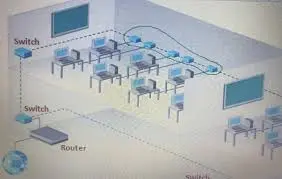
Which model genuinely aligns with your infrastructure? Let’s break down real-world scenarios:
- Access Layer (Branch Offices/Classrooms): Models like S5720-LI prioritize cost and simplicity without sacrificing critical features. They handle basic segmentation via VLAN commands (vlan batch 10,20) but lack heavy routing horsepower. Need PoE for IP phones or cameras? S5735-S models deliver 370W PoE+ per device—ideal for cramming 50+ devices across a floor without separate power injectors. Skip pricier cores here; overpaying cripples budgets for minimal gains.
- Aggregation/Core (Mid-Sized Sites): When departments share switches, bottlenecks emerge. S6730-H tackles this with 480G stacking bandwidth, merging 4 physical switches into one logical unit. Your engineers configure them once—stack port enable—instead of managing each box. VLAN routing between finance and HR? Inter-VLAN routing commands (ip route-static) on these prevent latency when teams access shared NAS storage. Opting for lower-tier models here causes packet loss during backups or video conferences.
- Data Center/High-Density (Cloud/VM Hosts): Here, CE8800 switches dominate. Their 100G ports and lossless fabric handle east-west traffic between virtualized servers. If you’re running hyper-converged infrastructure (Nutanix/VMware), VXLAN commands (tunnel vxlan) create overlay networks bypassing legacy VLAN limits. Forgetting deep buffers? Expect dropped packets during VM migrations.
Still uncertain? Analyze these gaps:
- Port Speeds & Uplinks: Needing 10G uplinks soon? S6720S-26Q-SI offers 4x10G slots for under $1K. Ignoring this traps you with 1G bottlenecks forcing premature upgrades.
- Scalability Tools: Sites adding IoT devices demand MACsec encryption (configured via macsec enable)—only in S5730-HI series or higher. Budget models expose you to snooping risks.
- Automation Needs: Managing 100+ switches? S6730-S supports Python scripts and NetConf—cutting deployment from hours to minutes. Manual configs on basic models drain IT time.
One recurring oversight? Underestimating stacking. Huawei’s iStack/CSS tech (e.g., S6720-30C-EI) lets teams merge bandwidth across switches, avoiding costly chassis replacements. But using non-stackable models (like early S5700S) forces complex LACP designs that failover slower.
Investing in Huawei switches models demands matching silicon to strategy—not specs alone. A warehouse deploying S5735S-L24P4S-A for PoE cameras gains plug-and-play simplicity, while hospitals running S12700E cores ensure zero-loss MRI data transfers. The right choice eliminates those “why’s the network slow?” tickets by aligning switching capacity, threat defense (acl 3001), and future headroom. If scaling to 400G seems distant today, remember: Huawei’s model consistency (like CLI commands working across generations) lets you mix CE6850-48S6CQ and S6730-S switches without relearning workflows. Procuring mismatched tiers, however, strands teams with fragmented tools and surprise license costs. Prioritize flexibility over raw numbers; a S5720-28X-LI-24S-AC might not dazzle with throughput but will silently optimize a school network for years. In short: let operational realities—not datasheets—drive your selection.

Leave a comment