
That familiar switch Huawei S1700 humming away in your comms closet has probably been your network’s workhorse for years. It’s reliable, solid, maybe a tad unremarkable compared to flashier new models. For countless small offices or retail back-ends handling routine email, point-of-sale, and basic inventory tasks, it just works. But complacency is the enemy in IT. Have you ever paused to consider what happens to that trusty workhorse when the demand on your network explodes? Picture this: a massive seasonal rush hits your online storefront, your warehouse implements real-time IoT tracking, or you suddenly onboard two dozen new VoIP phones for remote staff. Overnight, the comfortable trickle of data becomes a torrent. That steady, reliable switch is suddenly front-line defense against a flood of packets. It’s precisely at these pressure points – when user count soars, traffic patterns shift violently, and every millisecond counts – that the hidden strengths or unexpected weaknesses of core infrastructure like your access switch get brutally exposed. Performance doesn’t just degrade gracefully; it often collapses spectacularly when demand exceeds capacity. The question isn’t if demands will surge, but when and how much. Is your foundational gear merely surviving the quiet days, or truly engineered to conquer the noisy storms? The answer often rests on the capabilities locked within hardware deployed years ago – hardware like the switch Huawei S1700. What really unfolds when the user load doubles overnight? The outcome directly shapes customer satisfaction, employee productivity, and ultimately, your bottom line.
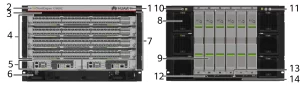
So, what does happen to a legacy switch Huawei S1700 when faced with a sudden, massive spike in user demand or network traffic? The reality is rarely a simple slowdown. Instead, several critical pressure points tend to buckle, often simultaneously, turning reliable infrastructure into a frustrating bottleneck. Understanding these specific failure modes reveals why staying complacent with aging access-layer tech isn’t an option in a dynamic business environment.
First, bandwidth saturation hits fast. The Huawei S1700 series encompasses various models, many equipped with 100Mbps (Fast Ethernet) ports to end devices and possibly a 1Gbps (Gigabit) uplink. Under normal load, this feels adequate. But double the active users, introduce bandwidth-intensive apps like video conferencing, cloud backups kicking off simultaneously, or large file transfers across the LAN? That backbone uplink can choke instantly. When the cumulative traffic from all ports exceeds the trunk capacity, packets get buffered. When buffers overflow? Packets get dropped. Think frozen video calls, interrupted cloud syncs, timeouts loading documents – a direct hit to productivity and workflow. Imagine processing twice as many customers online or handling warehouse IoT sensor data simultaneously; this uplink congestion rapidly becomes a critical choke point limiting everything upstream.
Second, packet processing power becomes a major constraint. Enterprise switches aren’t dumb hubs; they constantly inspect frame headers, make forwarding decisions, apply basic quality of Service (QoS) tagging, manage ARP requests, and process broadcast/multicast traffic. An older generation switch like many S1700 variants relies on internal ASICs and CPUs designed for simpler traffic profiles years ago. Suddenly demanding tasks flood it. Layer 2 MAC address table lookups? Takes longer. Applying QoS priorities to ensure VoIP traffic gets through? Delayed or skipped under intense load. The entire switching fabric gets overwhelmed, leading to increased latency (delay) and jitter (uneven delays), making real-time communication like VoIP calls choppy or unintelligible. The switch isn’t failing outright; it’s just so busy making decisions it grinds to a crawl, negatively impacting applications sensitive to any delay.
Third, broadcast storms amplify lethally. Networks inherently generate broadcast traffic (ARP requests, service discovery protocols like LLDP or even NetBIOS over Ethernet). Most switches, including the Huawei S1700, handle this fine within sane limits. But double the number of devices? You potentially double the volume of routine broadcast chatter. Worse, if a misconfigured device or faulty network card starts spewing excessive broadcasts or multicasts – a relatively common occurrence – an older switch can rapidly become the epicenter of a network storm. Its buffer gets overwhelmed trying to replicate this traffic out every relevant port. This doesn’t just slow the switch; it can paralyze every device on that VLAN segment as their own network interfaces drown in garbage traffic the switch is forced to propagate. A resilient network design anticipates this, but an overwhelmed access switch becomes the critical amplifier of such failures.
Finally, features matter… or the lack thereof. Modern network demands frequently involve logically segmenting traffic for security or performance (VLANs), prioritizing critical applications (QoS), managing Power over Ethernet (PoE) for IP phones or wireless access points, and ensuring basic security via MAC filtering or port security. While the S1700 supports many core Layer 2 features, performance under extreme stress varies significantly by model and firmware. Handling deep queues for QoS, maintaining large MAC tables reliably across multiple VLANs, or managing complex PoE budgets consistently when every device is powered on and pushing limits? That’s where aging hardware often falls short, failing to enforce the policies designed to mitigate congestion. It’s not just about raw speed; it’s about whether the switch has the muscle and features to manage chaos and maintain critical traffic flows when things get wild. An S1700 configured years ago for a quiet office may simply lack the config or processing power to handle the nuanced demands of a suddenly complex, high-traffic environment. This lack of policy enforcement under duress allows congestion to cripple everything indiscriminately.
Beyond pure bandwidth, the resilience baked into switching architecture becomes paramount under stress. The S1700 range includes stackable models (like certain S1720 variants). Stacking intelligently consolidates bandwidth and management. Non-stackable models operating as independent devices create natural bottlenecks at their uplinks. Similarly, advanced queuing and traffic-shaping capabilities separate modern gear from basic Layer 2 switches. When faced with torrential traffic, intelligent management is the difference between a slow network and a usable one prioritizing essential services. Legacy switching infrastructure pushes operational teams into reactive firefighting instead of proactive network management during critical surges. The capability gap isn’t about being broken; it’s about being ill-equipped to manage modern demands. Performance is defined not just by headline bandwidth figures, but by how effectively the access layer controls and directs the surge when all devices scream for network resources simultaneously. Features like robust buffer sizes and sophisticated traffic processors become non-negotiable. The switch Huawei S1700 installed long ago might function, but it’s unlikely to excel under that unprecedented overnight load surge – the surge that inevitably comes. Your business resilience hinges on more than just basic connectivity; it demands an access layer robust enough to absorb shock, adapt intelligently, and keep vital applications flowing even when demand skyrockets. Ask yourself: is that switch Huawei S1700 truly ready for tomorrow’s storm, or just comfortably coping with yesterday’s calm? The next unexpected surge will deliver the answer in real-time – to your users, your customers, and your bottom line. Proactive infrastructure evaluation is key; your capacity to thrive under pressure demands it.

Leave a comment