
For anyone sweating over deployment logistics, that mess of tangled wires and power bricks behind the rack isn’t just an eyesore—it’s a ticking time bomb of operational headaches. If you’re researching Cisco PoE Powered Switch options, you’re likely wrestling with more than just connectivity. It’s the frustration of finding an outlet for that last security camera halfway up a warehouse wall. It’s the vulnerability of critical VoIP phones going dead during a storm surge because their wall warts failed. It’s the sheer cost and complexity of running separate electrical drops to dozens of access points. Standard switches plug devices into the network; a strategically chosen Cisco PoE Powered Switch plugs them into both the network and reliable power, eliminating a whole layer of infrastructure chaos and potential points of failure. That consolidated approach isn’t just convenient; it fundamentally shifts how quickly and reliably you can deploy endpoints where they’re needed most.
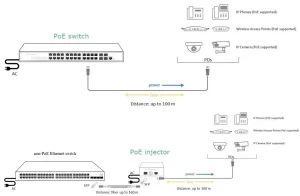
So, here’s the real test: Does smarter power management truly unlock deployment freedom you thought impossible?
Without a doubt. The agility promise of Power over Ethernet (PoE) only materializes fully when the underlying switch platform is engineered to deliver it consistently, intelligently, and with the headroom to grow. Choosing the right Cisco PoE Powered Switch means moving beyond simply counting PoE ports to understanding three critical pillars:
- Beyond Port Count: Decoding the True PoE Powerhouse: The biggest rookie mistake? Assuming a 48-port PoE switch can magically power 48 power-hungry devices. The crucial spec is the Total PoE Budget, measured in Watts. This is the pool of available power the switch can dish out across all its ports simultaneously. A switch might boast 48 PoE ports but only offer a total budget of 380W. High-draw devices like advanced 802.11ax (Wi-Fi 6E/7) access points, pan-tilt-zoom (PTZ) security cameras, or digital signage can easily consume 20W, 30W, or even 50W+ each. Budget too low? Critical devices shut down or refuse to start when the budget is exhausted. Always match the PoE budget to the projected combined wattage of all your PoE devices, plus a 20-30% buffer for peak demands and future additions. Cisco PoE Powered Switches offer tiers: PoE+ (802.3at, 30W/port), UPOE (60W/port), and PoE++ (802.3bt, up to 90W/port), catering to everything from basic phones to LED lighting and kiosks. Knowing your devices’ actual power needs is non-negotiable.
- Operational Resilience Wired In: Power failure shouldn’t mean network failure. Think of a PoE switch as a strategic power distribution point. Premium Cisco PoE Powered Switch models integrate hot-swappable, redundant power supplies (RPS). If the main supply dies, the backup instantly takes over – no dropped calls, no blinking security feeds. Features like Per-Port Power Cycling via the management interface let techs remotely reboot a frozen camera or access point in seconds, saving costly truck rolls to remote sites. Robust Environmental Monitoring tracks internal temperature and fan health, critical because PoE switches generate significant heat. Consistent power delivery requires consistent cooling. Models like the Cisco Catalyst 9300 Series often include these features as standard, turning power distribution into a managed, resilient service rather than a passive feature. This reliability isn’t optional for critical infrastructure; it’s mandatory for maintaining trust in the network’s backbone.
- Deployment Agility Unleashed: This is where the rubber meets the road. Cisco PoE Powered Switch technology tears down traditional barriers. Need an IP security camera overlooking a parking lot with no nearby AC outlet? PoE makes it trivial. Deploying 20 Wi-Fi access points across an open office floor? PoE allows placement at exact optimal RF points, not just where the electrician happened to drop conduit. Rolling out VoIP phones at remote, under-desk locations? One cable handles connectivity, audio, and display power. The logistical freedom is transformative. Suddenly, upgrades become faster: swap out an old phone for a newer model without rewiring the power brick behind the desk. Expand surveillance? Run Cat6 to the new camera location; avoid the cost and disruption of coordinating licensed electricians, permits, and drywall repairs. Building management becomes simpler: centralized power control for digital signage, lighting controllers, or occupancy sensors becomes possible from a single, manageable PoE powered switch rack. Locations constrained by physical space or lacking robust electrical infrastructure (temporary sites, warehouses, retail floors) gain enormous flexibility.
- Intelligent Power: More Than Just Watts: Smarter Cisco PoE Powered Switch devices offer granular power management. It’s not just about delivering power; it’s about managing it proactively. Cisco EnergyWise technology (on compatible models) allows for monitoring power consumption and even implementing policies – perhaps automatically throttling back PoE power to non-critical devices like hallway signage during off-hours for significant energy savings. Visibility features show real-time power draw per port, helping identify malfunctioning devices drawing excessive power before they damage the switch or disrupt other devices. Advanced Quality of Service (QoS) prioritization can ensure power-critical devices maintain their power allocation even if a network scan pushes bandwidth utilization, guaranteeing mission-critical operations aren’t starved. This intelligence turns power from a dumb utility into a manageable network resource.
Simply having PoE ports is like having a car without knowing its horsepower rating or fuel efficiency. Selecting the right Cisco PoE Powered Switch demands matching the PoE standard (PoE+, UPOE, PoE++), the total budget, and the resilience features to your specific devices and operational demands. Overspend on massive PoE++ ports for basic phones? You wasted budget. Underpower an office relying heavily on Wi-Fi 6E? You created deployment blockers. Failing to budget for redundancy? You gamble with downtime.
Investing strategically in a Cisco PoE Powered Switch delivers a double payoff: dramatically streamlined physical deployments and rock-solid operational resilience. The immediate advantage is undeniable – slashed installation costs, faster deployment times for new endpoints, and the sheer elegance of a cabling closet free of tangled AC adapters. But the long-term value runs deeper. Reduced dependency on localized electrical work translates into unprecedented site agility; devices can move and grow anywhere your network cable can reach. Centralized power management transforms a chaotic overhead into a measurable, controllable cost center, boosting efficiency. Redundant power supplies minimize the critical vulnerability of single points of power failure that plague legacy setups. Reliable power delivery directly translates into consistent uptime for essential collaboration tools, security systems, and business applications. Ultimately, the true power of a well-chosen Cisco PoE Powered Switch lies not just in delivering volts down an Ethernet cable, but in unlocking a level of deployment flexibility and operational reliability that fundamentally rewrites what’s possible with your network infrastructure. Stop letting power constraints dictate your network design; let the right PoE powered switch unlock your potential.

Leave a comment