
That spinning beachball during video conferences? Backups crawling overnight? Virtual machines gasping during peak loads? The obvious target is speed. Dropping in a shiny switch 10GbE Cisco promises to bulldoze those limits—after all, it’s ten times the throughput of old 1GbE links. You imagine servers humming, transfers blazing, latency vanishing. It’s tempting to see the upgrade as an instant cure, especially when teams scream for bandwidth relief. But raw 10GbE port capacity alone is often a mirage in complex networks. Slapping faster links onto a foundation riddled with constraints just shifts the choke point, frustratingly transforming one performance headache into another, often more sinister, problem. The bottleneck doesn’t disappear; it cunningly relocates, sometimes leaving you worse off than before the expensive upgrade.
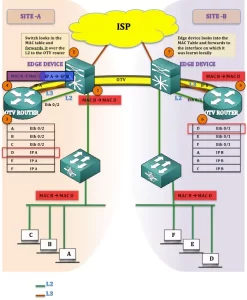
So, where exactly do bottlenecks reconvene after introducing blazing 10GbE ports? Let’s map the frustrating new terrain created by unbalanced upgrades. Oversubscribed Access Ports are a prime culprit. Imagine servers connected via 10GbE NICs hammering a top-tier Cisco Catalyst 9300 switch… but workstations remain plugged into ancient 1GbE access switches. Now, transfers between servers fly, but user access to those server resources remains throttled at a sluggish gigabit. Your expensive core upgrade delivers no real-world user acceleration. The true bottleneck migrated downstream to the neglected access layer. Next, Storage Controller Saturation. Pumping data from ten virtualized hosts screaming 10GbE simultaneously into a legacy storage array with 1GbE iSCSI ports (or worse, an internal controller capped at 2Gbps) creates instant gridlock. The flashy new switch 10GbE Cisco isn’t the issue; the storage becomes the immovable object. Insufficient Buffer Depth kills real-world application performance. Cheap 10GbE switches boast line rate but skimp on packet buffers critical for handling traffic bursts. A switch with shallow buffers (<1MB per port) hits congestion instantly when multiple 10GbE servers initiate backups simultaneously or VMs sync data. Packets drop aggressively, triggering TCP retransmissions and application timeouts, nullifying the raw link speed advantage. Expensive hardware outperformed by poor queue management. CPU Processing Bottlenecks emerge elsewhere. Your new 10GbE core switch effortlessly forwards terabits, but the adjacent next-gen firewall or IPS appliance tasked with decrypting/scanning all that encrypted traffic at 10GbE line rate simply lacks the specialized ASICs or CPU muscle. Security becomes the crushing choke point, adding debilitating latency even though the switch itself performs perfectly. Finally, WAN Link Disparity. Investing heavily in 10GbE Cisco switches internally only to connect branches or the cloud via a sluggish 20Mbps MPLS circuit? Users experience zero improvement accessing critical cloud services. The internal speed simply exposes the external constraint with brutal clarity.
Ultimately, deploying a switch 10GbE Cisco as a standalone solution misses the strategic point. Achieving genuine performance transformation requires a holistic bandwidth audit. First, ruthlessly profile where and why traffic stalls:
- Measure actual server/workstation NIC utilization. Is the user access layer stuck at 1GbE?
- Assess storage array throughput limits (NIC speeds, controller processing power).
- Verify firewall/VPN/IPS appliance specifications – can they truly handle aggregated 10GbE traffic, especially encrypted streams?
- Map WAN/internet egress speeds – are they synchronized with internal upgrades?
- Scrutinize switch hardware tables: buffer depth per port is critical for absorbing bursty application traffic without drops; true non-blocking fabric ensures internal capacity matches port speed sums.
The most powerful Cisco Catalyst Nexus 9000 series or Catalyst 9500 switch operating at 10GbE becomes an expensive placebo if downstream access ports are constrained, storage controllers lag, firewalls drown, or WAN links remain narrow. Target your entire data pathway – modernize end-to-end:
- Access Tier: Deploy multi-gigabit (2.5G/5G) or 10GbE switches where high-performance users or devices reside.
- Storage: Ensure arrays feature sufficient 10GbE iSCSI/Fibre Channel ports and controllers capable of saturating them.
- Security Appliances: Invest in devices explicitly rated for high-throughput encrypted traffic inspection.
- WAN Optimization: Match internal speeds with appropriate WAN accelerators or upgraded carrier circuits.
- Switch Selection: Prioritize models boasting deep packet buffers per port (8MB+ ideal) and genuine non-blocking architecture, not just headline port speeds.
True digital agility comes from balanced infrastructure, not isolated sprints. A Cisco 10GbE switch is a vital component, but deploying it strategically within a fully capable ecosystem ensures bottlenecks vanish entirely, not merely relocate to a more expensive neighborhood. Don’t buy speed; engineer performance harmony. That’s where investments translate into transformative operational gains. Understand your flow, then build the conduit capable of sustaining it seamlessly. The bottleneck shouldn’t move; it should be eradicated.

Leave a comment