
That blinking amber light signaling a trunk port failure after a seemingly minor tweak represents more than a temporary glitch—it’s the visceral panic of a network segment collapsing unexpectedly. Missteps during change encapsulation cisco switch port operations expose the critical brittleness of trunk links, threatening VLAN segmentation, application access, and network stability. Fumbling an encapsulation shift from ISL to dot1q or altering native VLAN settings isn’t merely inconvenient; it’s guaranteed disruption cutting users off databases, crashing VoIP calls, and crippling security zoning. The transition requires surgical precision—misalign timing, overlook dependencies, or botch verification, and you transform planned modernization into crisis management hell overnight. Understanding how to execute encapsulation changes reliably separates seamless network evolution from career-limiting meltdowns.
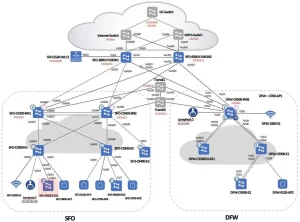
So, precisely how can you change encapsulation on a Cisco switch port while dodging catastrophic disruptions? Forget simplistic commands; survival demands methodical discipline across four critical phases. Phase one is scoping impact ruthlessly. Never change trunk settings blind. Identify every device connected downstream – physical switches, firewalls, routers, or hypervisors. A server NIC configured for 802.1Q tagging with a specific native VLAN expects its uplink switch port to mirror that encapsulation perfectly. Use show cdp neighbors detail and show mac address-table on your switch to map dependencies. Changing a trunk port serving a downstream Catalyst switch stack risks collapsing multiple access layers unless they’re reconfigured simultaneously. Document configurations for all impacted endpoints before touching your trunk. Phase two locks down the execution sequence. Trunk ports transition best during strict maintenance windows. Access the switch via console (avoid remote SSH – losing IP connectivity locks you out!). On the Cisco IOS command line, navigate to the interface (conf t, int gi1/0/1). First, temporarily remove non-native VLANs: switchport trunk allowed vlan remove 10,20,30. This prevents tag mismatches mid-change. Next, change encapsulation decisively: switchport trunk encapsulation dot1q (replace dot1q if using ISL). Reset the native VLAN if required: switchport trunk native vlan 99. Apply changes immediately: end + write mem ensures persistence through reboots. Skipping the write risks reverting if the switch crashes during further tasks. Phase three verifies relentlessly. Don’t assume success. Verify the new encapsulation with show interfaces gi1/0/1 trunk – confirm “Encapsulation” reflects dot1q/isl and “Native VLAN” is correct. Check operational state: show interfaces gi1/0/1 status should show “connected” and “trunking.” Test downstream connectivity immediately – ping gateways, access shared resources. Monitor logs aggressively (show log | include Gi1/0/1) for sudden CRC errors or input/output pauses indicating frame tagging mismatches. Missing this exposes lingering misconfigurations silently corrupting traffic. Phase four addresses rollback readiness. Despite planning, failures occur. Prepare an automated rollback script saved on the switch (using kron or EEM applet): trigger commands to revert encapsulation, native VLAN, and allowed VLANs if key destinations become unreachable within five minutes post-change. Alternatively, pre-stage manual rollback commands: switchport trunk encapsulation <ORIGINAL> and switchport trunk native vlan <ORIGINAL_ID> ready to paste. Hesitation during rollback widens the outage window. Ignoring these layered precautions guarantees VLAN leakage, routing black holes, or extended downtime from overlooked encapsulations or dependencies.
Successfully altering switch port encapsulation isn’t just entering commands; it’s orchestrating a high-risk migration under operational constraints. Embedding ruthless scoping, locked execution sequences, immediate multi-layered verification, and instant rollback preparedness transforms trunk transitions from Russian roulette into predictable evolution. When core distribution switch ports shift between dot1q and ISL seamlessly, or native VLANs realign without dropping VoIP streams, network modernization accelerates confidently. This meticulous approach neutralizes chaos, ensuring VLAN integrity persists through changes, security boundaries remain enforced, and user experience stays uninterrupted. Don’t gamble with ad-hoc trunk adjustments—master the encapsulation change procedure as controlled infrastructure surgery. Your network’s resilience, security posture, and operational sanity hinge upon getting it consistently right. That amber light stays green when transitions are engineered, not improvised.

Leave a comment