
For network engineers and IT decision-makers, choosing the right access switch is a critical foundation for building a reliable, secure, and scalable network. The Cisco Catalyst 9200 Series emerged as the successor to the wildly popular Catalyst 2960X, setting a new benchmark for what businesses should expect from a fixed enterprise switching platform. This isn’t just a simple refresh; it represents a fundamental architectural shift designed for a modern era that demands heightened security, greater resilience, and deep programmability. If you’re managing an aging 2960X deployment or planning a new network rollout, understanding the tangible differences between these two series is essential. This analysis goes beyond mere spec sheets to explore what these differences mean for day-to-day operations, total cost of ownership, and future-proofing your network infrastructure against emerging challenges.
A New Era of Access Switching: The Cisco Catalyst 9200 Series
The Cisco Catalyst 9200 isn’t just another switch; it’s the cornerstone for modern Cisco Software-Defined Access (SD-Access) architectures. Designed from the ground up, it integrates security, resiliency, and programmability into its core, moving beyond the capabilities of traditional access switches.
One of the most significant upgrades is in hardware reliability. The 9200 series introduces Field-Replaceable Unit (FRU) power supplies and fans, a major benefit for minimizing downtime. If a component fails, you can swap it out quickly without replacing the entire switch chassis. This is complemented by modular uplinks, giving you flexibility in connectivity options post-purchase.
For environments powered by PoE, such as those with extensive IoT deployments, IP phones, and wireless access points, the 9200 is a game-changer. It supports an external power supply, enabling a much higher maximum PoE budget—up to 1440W compared to the 2960X’s 740W. This means the ability to power more devices simultaneously and support future high-power equipment. Features like eternal and fast PoE ensure connected devices remain operational even during a switch reboot or power cycle, which is critical for mission-critical endpoints.
The Established Workhorse: Cisco Catalyst 2960X Series Switches
The Catalyst 2960X Series has been a trusted and reliable workhorse in countless networks. These fully managed switches provide robust Layer 2 and Layer 3 features and optional PoE+ in a stable, well-understood platform. They are designed for operational simplicity, which helped many organizations minimize their total cost of ownership. Their strengths lie in providing essential intelligent services for scalable and secure operations, improving application visibility, and ensuring network dependability. For many years, it was the default choice for a solid, no-fuss access layer solution.
Head-to-Head: A Detailed Hardware and Capability Comparison
The transition from the 2960X to the 9200 is more than a generational leap; it’s a architectural evolution. The below comparison highlights why the 9200 is considered a future-proof platform.
Processing and Memory
The 9200 is built on a far more powerful foundation. It features an embedded quad-core CPU running at 1.4 GHz, a substantial upgrade from the dual-core 600 MHz processor in the 2960X. This extra processing power is necessary for handling advanced features like programmability and enhanced security protocols. Similarly, DRAM jumps to 4GB (or 2GB on certain models) from 512MB, and onboard flash memory increases to 4GB from a maximum of 256MB. This allows for larger software images, more logs, and better performance.
Modern Connectivity and Stacking
The 9200 series introduces mGig (Multi-Gigabit Ethernet) ports, allowing you to support speeds beyond 1 Gigabit on existing copper cabling—a key feature for future-proofing against faster wireless access points. Perhaps the most dramatic upgrade is in stacking technology. The 9200 uses StackWise-160/80, offering a massive 160 Gbps or 80 Gbps backplane bandwidth, doubling the capacity of the 2960X’s FlexStack-Plus (80 Gbps). This creates a more robust and highly available stacked infrastructure.
Resiliency and Manageability
The 9200 shines with its highly resilient design. It supports two FRUable, platinum-rated power supplies for maximum efficiency and redundancy, a feature not available on the standard 2960X. From a management perspective, the 9200’s dedicated management port is a Gigabit Ethernet interface with support for Virtual Routing and Forwarding (VRF), allowing for secure separation of management traffic from data traffic. The 2960X uses a Fast Ethernet management port without VRF support. The 9200 also includes helpful physical features like a blue beacon LED for locating a specific switch in a rack and an RFID tag for simplified asset tracking.
Making the Strategic Choice for Your Network
The decision between the Catalyst 9200 and the older 2960X ultimately boils down to your organization’s specific needs, budget, and future roadmap. The 2960X remains a capable switch for basic Layer 2 access connectivity where advanced security, IoT power demands, and network automation are not immediate concerns. However, for any new deployment or network refresh, the Catalyst 9200 is the unequivocal choice for those looking ahead.
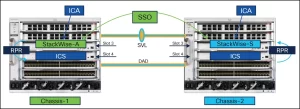
Investing in the 9200 series is an investment in the future of your network. Its programmability through APIs paves the way for automation, reducing manual configuration errors and saving valuable time. The massive boost in PoE budget and support for mGig ensures your network can handle the next wave of connected devices and higher-speed wireless standards. The enhanced resiliency features like redundant power supplies and stateful switchover (SSO) in stacks directly translate to higher network availability and reduced downtime.
In summary, while the Catalyst 2960X served its purpose with distinction, the Catalyst 9200 represents the new baseline for enterprise access switching. It provides the necessary hardware foundation for modern architectures like SD-Access, offering superior performance, security, and manageability. For a detailed look at specific models, configurations, and competitive pricing, visiting telecomate.com can provide the resources needed to make the most informed decision for your networking environment.

Leave a comment