
Introduction: The Bandwidth Crunch at the Network Edge
Enterprise network architects face a persistent challenge: scaling edge port density without sacrificing latency, manageability, or power efficiency. As IoT, 4K video surveillance, and AI inference clusters push bandwidth demands, a single stackable gigabit switch bulk procurement strategy becomes critical. This technical blueprint quantifies the architectural, thermal, and protocol considerations for deploying high-density stackable gigabit switches at the edge, based on real-world carrier and datacenter deployments.
Chassis Design & Thermal Dissipation in 48-Port Stacks
Physical Form Factor and Airflow Engineering
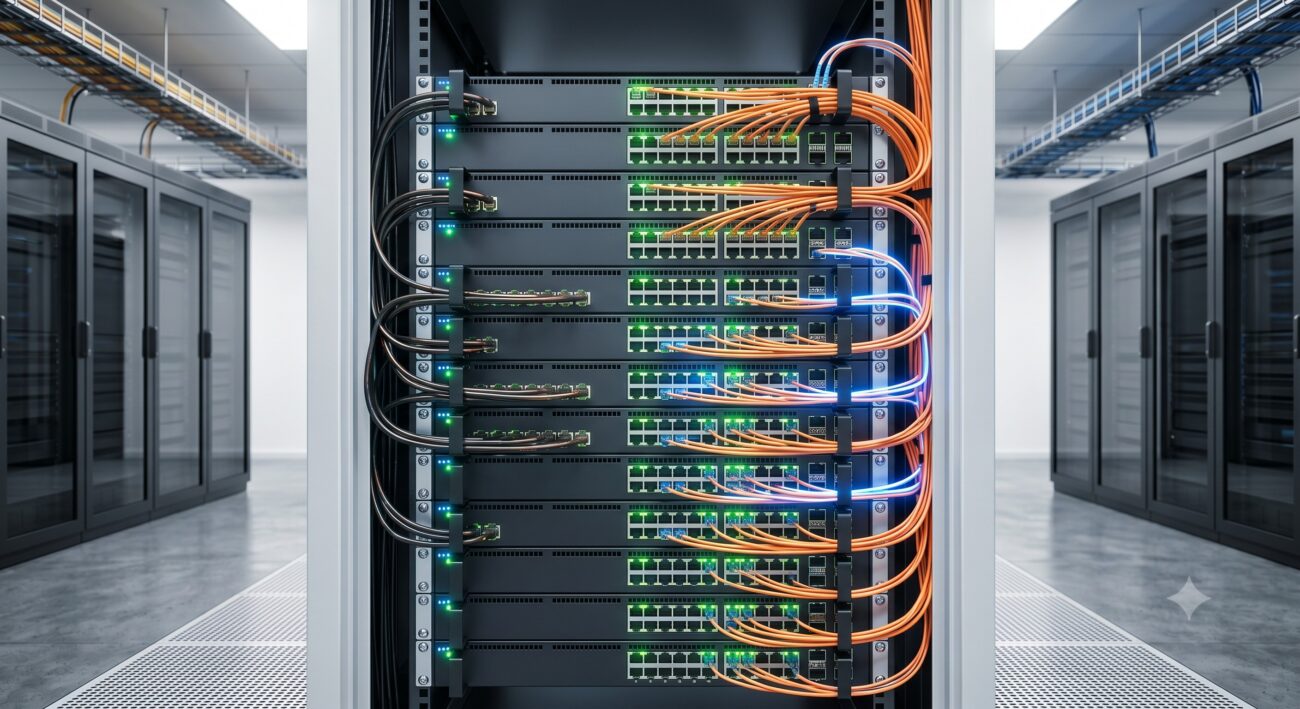
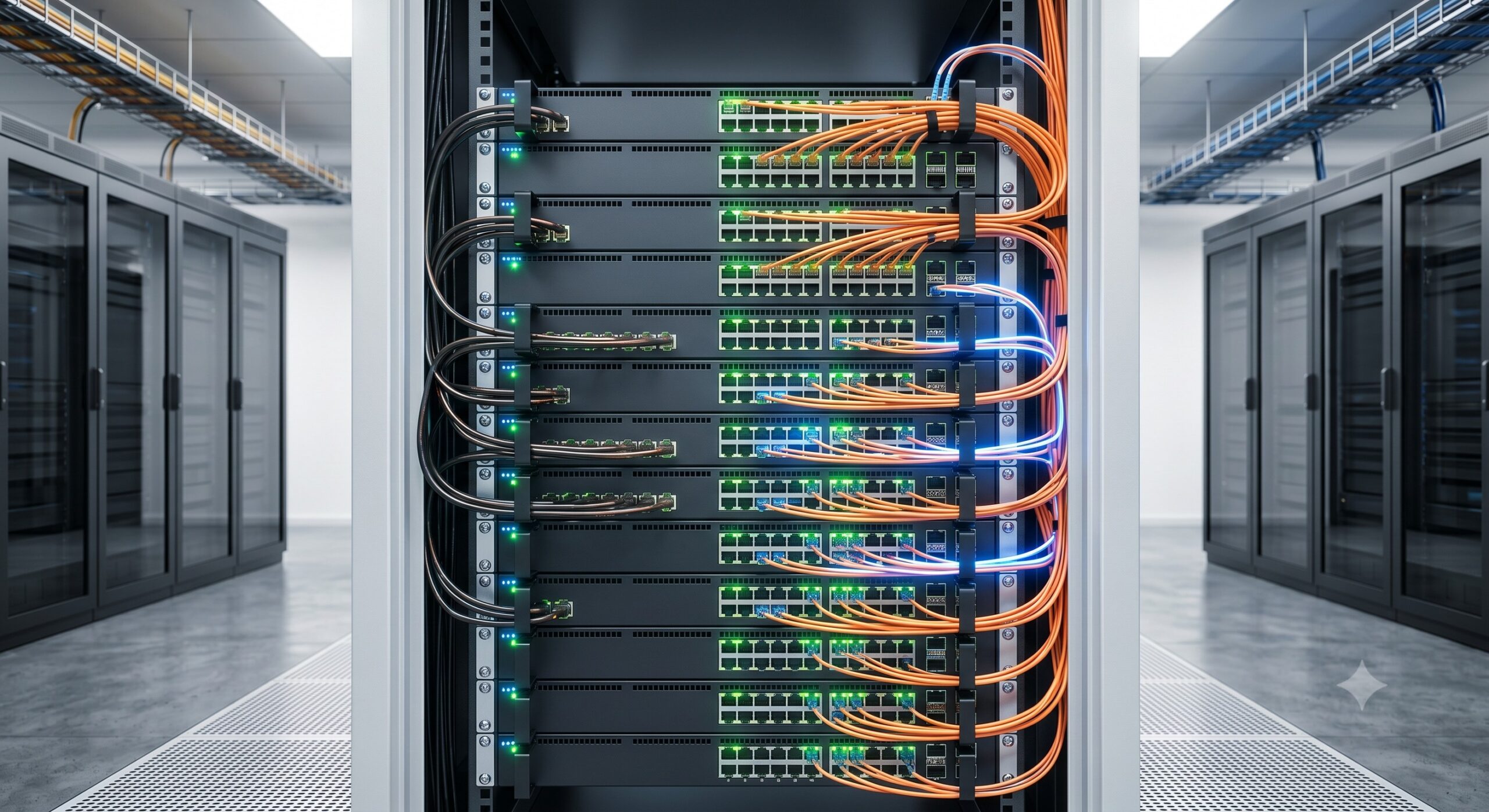
Modern stackable gigabit switch bulk units (e.g., 48x 10/100/1000BASE-T + 4x 10G SFP+) demand 1RU form factors with port-to-power or side-to-side airflow. Deploying a stack of eight switches yields 384 GbE ports within 8RU, but thermal density exceeds 800 BTU/h per unit. Active cooling with N+1 fan redundancy and variable-speed fans (compliant with GR-63-CORE) is mandatory. Without proper hot-aisle/cold-aisle containment, junction temperatures exceed 85°C, reducing MTBF from 500,000 hours to under 200,000 hours.
Stack Bandwidth and Backplane Architecture
Proprietary stacking cables (e.g., 40G to 160G backplane) create a single logical switch with distributed ASIC forwarding. For stackable gigabit switch bulk deployments, ensure stack bandwidth is at least 40 Gbps per member to avoid inter-switch blocking. Forwarding latency across stack members should remain below 5 µs under 95% load. Look for IEEE 802.1D-2004 spanning tree enhancements and ITU-T G.8032 ring protection in the data plane.
| Key Parameter | Technical Specification |
|---|---|
| Switching Capacity (48x GbE + 4x 10G) | 176 Gbps (non-blocking) |
| Forwarding Rate (64-byte packets) | 132 Mpps |
| Stack Bandwidth | 40 Gbps – 160 Gbps (vendor dependent) |
| MAC Address Table | 16,384 – 32,768 entries |
| Jumbo Frame Support | 9,216 bytes |
| Operating Temperature | 0°C to 50°C (with fan working) |
| MTBF (per unit) | >500,000 hours (MIL-HDBK-217) |
| PoE Budget (max) | 740W for 48-port 802.3at/bt |
Interface Deep Dive: Copper, Fiber, and Power over Ethernet
Port-Level Specifications for Bulk Edge Aggregation
A cost-optimized stackable gigabit switch bulk lot typically mixes:
- 48x 1000BASE-T (RJ45): Auto-MDI/X, up to 100m over Cat5e/6, PoE+/PoE++ (30W/60W per port) for IP cameras/APs.
- 4x 10G SFP+ uplinks: Support for SR/LR optics (850nm/1310nm) and passive DAC cables up to 5m.
- Stacking ports: Dedicated QSFP+ or proprietary connectors with sub-microsecond failover.
Check the forwarding rate (e.g., 132 Mpps for a 48-port GbE switch) and MAC address table size (minimum 16K, ideally 32K). For bulk purchasing, request RoHS and REACH compliance certificates and validate Jumbo frame support (9,216 bytes) for storage traffic.

High-Density Topologies: StackWise Virtual and MLAG Alternatives
Deploying Multi-Chassis Link Aggregation (MLAG) vs. Ring Stacking
For stackable gigabit switch bulk edge designs, two high-availability topologies dominate:
- Ring stacking (cascade): Simple, but a single cable break forces reconvergence (sub-50ms with ITU-T G.8032). Max recommended stack size: 8 units.
- Dual-homing via MLAG (or VPC): Each edge switch peers with two aggregation switches. Requires ISSU (In-Service Software Upgrade) and per-device configuration synchronization.
Latency-sensitive environments (industrial automation, trading floors) should avoid stacking beyond 4 units; instead use spine-leaf with 10G uplinks. For campus edge, a single stackable gigabit switch bulk stack of 6–8 switches reduces management IPs from 8 to 1.
Operational Checklist for Bulk Deployment
- Calculate PoE power budget per switch (740W max for 48-port PoE+) and rack PDU capacity.
- Enable 802.1X MAC Authentication Bypass (MAB) for legacy IoT devices.
- Configure sFlow/NetFlow sampling (1:1000) to monitor microbursts.
- Test stack failover by hot-removing the master switch – expect
- Validate energy-efficient Ethernet (802.3az) – can reduce per-port power by 60% at low utilization.
Conclusion: Balancing Density, Resilience, and TCO
Integrating stackable gigabit switch bulk at the edge delivers unmatched port density per RU, but only when architects respect thermal limits, stack bandwidth, and redundancy protocols. For greenfield deployments, prioritize switches with dual hot-swappable power supplies, backplane stacking ≥ 80 Gbps, and MLAG support. Bulk purchasers should request factory burn-in reports and 5-year MTBF data to align with ITIL lifecycle management.

Leave a comment