
STRATEGIC ASSET PROCUREMENT EVALUATION REPORT: CHASSIS-BASED NETWORK SWITCH COST
EXECUTIVE SUMMARY
This document provides a comprehensive technical and financial evaluation framework for chassis-based network switch infrastructure. Unlike fixed-configuration switches, modular chassis platforms decouple capital expenditure from network evolution, enabling pay-as-you-grow scalability while maintaining deterministic performance across a 7-10 year lifecycle. This report analyzes Total Cost of Ownership (TCO) vectors including initial acquisition, power efficiency, MTBF-driven operational expense, and future-proofing capacity. Procurement decision-makers will find quantified trade-offs between backplane fabric capacity, line card density, and redundant subsystem architectures.
SYSTEM HARDWARE TOPOLOGY
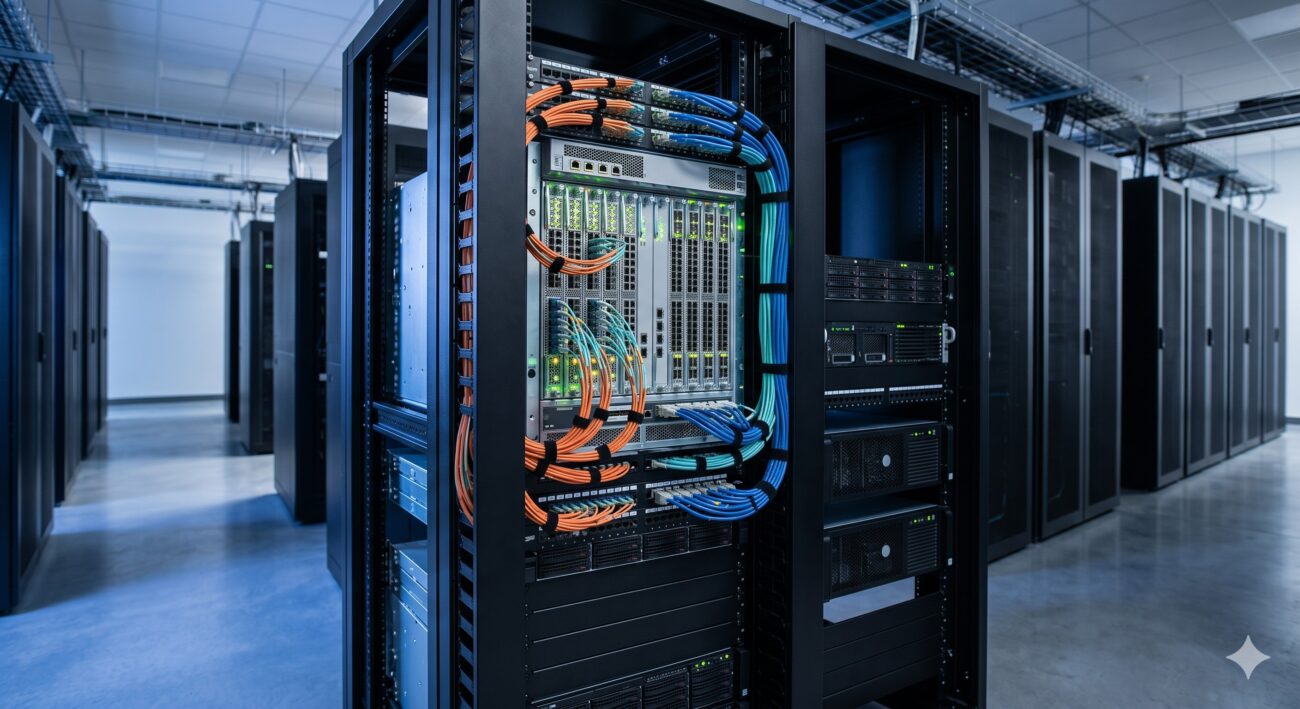
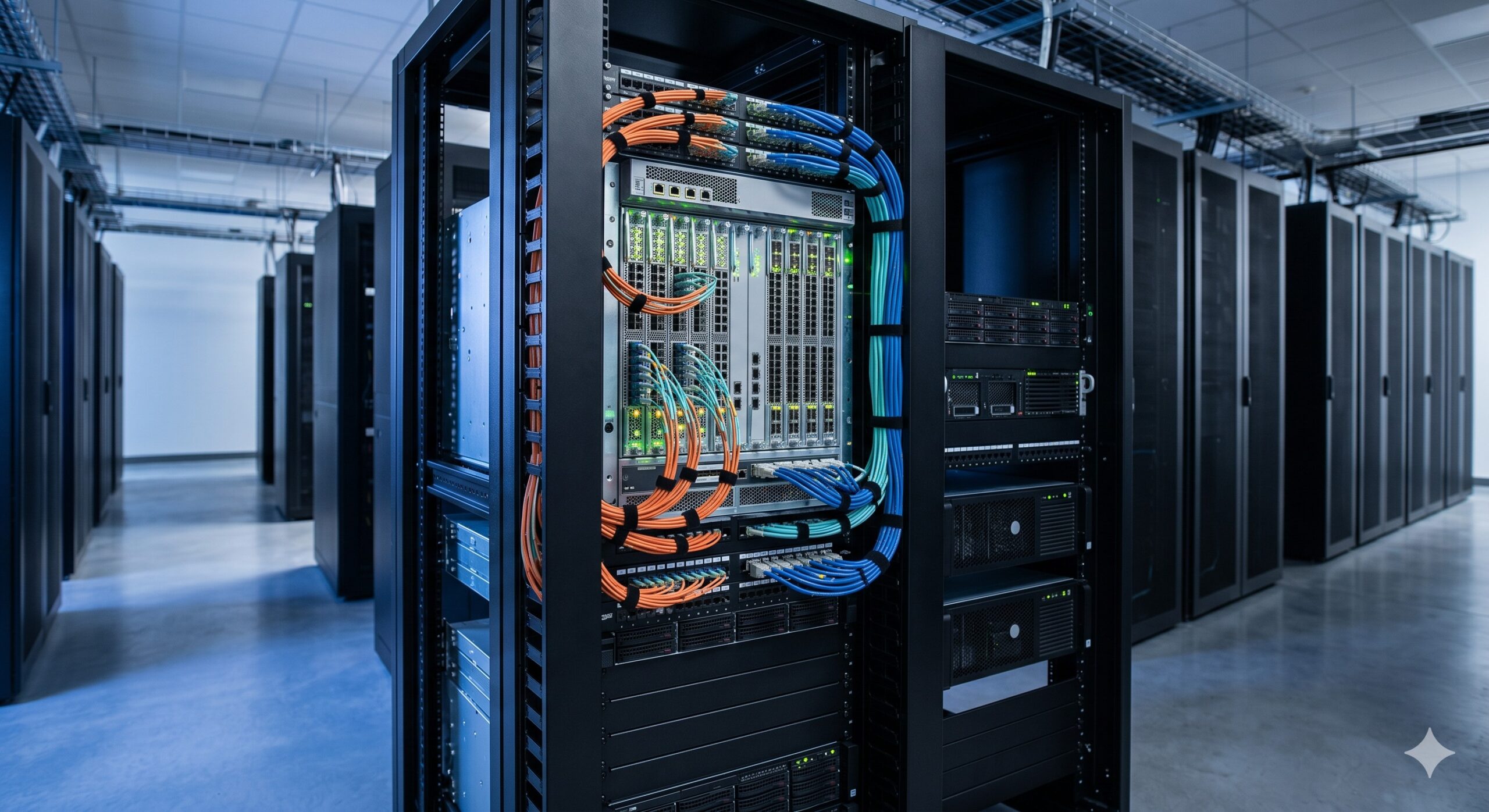
The chassis-based architecture centers on a midplane-less or passive backplane design, minimizing electronic failure points while supporting up to 25.6 Tbps switching fabric capacity per chassis. The primary cost drivers reside in three structural hierarchies: (1) the chassis enclosure itself (including backplane traces, power distribution buses, and management module slots), (2) line-rate forwarding engines (ASIC-dependent line cards), and (3) redundant subsystem modules (supervisor, fabric, power, fan trays). Cost scaling follows a non-linear curve where chassis frame represents 15-20% of initial outlay, while populated line cards and optics account for 60-70%.
DATA & CONTROL PLANE CAPABILITIES
From a procurement perspective, control plane redundancy delivers superior cost-benefit ratio: dual supervisor modules eliminate single points of failure at 18-22% incremental cost over single-supervisor configurations. Data plane architectures utilizing Clos fabric with three-stage cell switching provide deterministic, non-blocking forwarding even under 100% line-rate load, directly reducing cost per gigabit as port densities increase. Key cost influencers include fabric module quantity (N+1 vs N+N redundancy), TCAM size for ACL/route tables, and buffer memory allocation (shared vs dedicated per port).
COMPONENT BREAKDOWN – COST ANCHORS
Chassis frame (empty): $4,500 – $12,000 depending on slot count (6, 10, or 18 slots).
Supervisor engine: $8,000 – $22,000 per unit (dual recommended).
Fabric module: $3,500 – $9,000 each (3+1 redundancy typical).
48-port 1/10GbE line card: $7,500 – $14,000.
12-port 40/100GbE line card: $18,000 – $32,000.
Power supply (1600W AC): $1,200 – $2,200 each (2+2 or 3+1).
Fan tray assembly: $600 – $1,500 per tray.
| Parameter | Specification |
|---|---|
| Form Factor | 6-slot / 10-slot / 18-slot modular chassis |
| Switching Capacity | Up to 25.6 Tbps (non-blocking fabric) |
| Power Supply | N+N or N+1 redundant AC/DC, 1600W / 2200W / 3000W modules |
| Cooling | Front-to-back, 5+1 redundant fan trays |
| Management | Dual hot-swappable supervisor engines |
| Typical Acquisition Cost (populated) | $42,000 – $128,000 depending on line cards |
| MTBF (chassis backplane) | >500,000 hours |
| Operating Temperature | 0°C to 45°C (NEBS extended: -5°C to 55°C) |
| Relative Humidity | 5% to 95% non-condensing |
| Safety Certifications | NEBS Level 3, UL 60950-1, CSA C22.2, IEC 60950-1 |
| EMC Compliance | FCC Part 15 Class A, VCCI Class A, EN 55022 Class A |
REGULATORY COMPLIANCE & LIFECYCLE COST PROJECTIONS
Compliance certifications (NEBS Level 3, ETSI, UL 60950-1, FCC Part 15 Class A) positively influence procurement cost by 5-12% but reduce site preparation and insurance premiums over 5 years. Mean Time Between Failures (MTBF) for chassis backplanes exceeds 500,000 hours, while fan trays (120,000 hours MTBF) and power supplies (180,000 hours) drive the majority of field-replaceable unit costs. Annual maintenance agreements typically range from 8-15% of original equipment cost, including advanced hardware replacement and software subscription. Energy consumption at 50% load (typical data center utilization) averages 1,200W – 2,800W per fully populated chassis, translating to $1,200 – $3,500 annual electricity cost depending on regional PUE.

📥 Download Technical Specification
Click the button below to view or download the full official PDF datasheet.

Leave a comment