
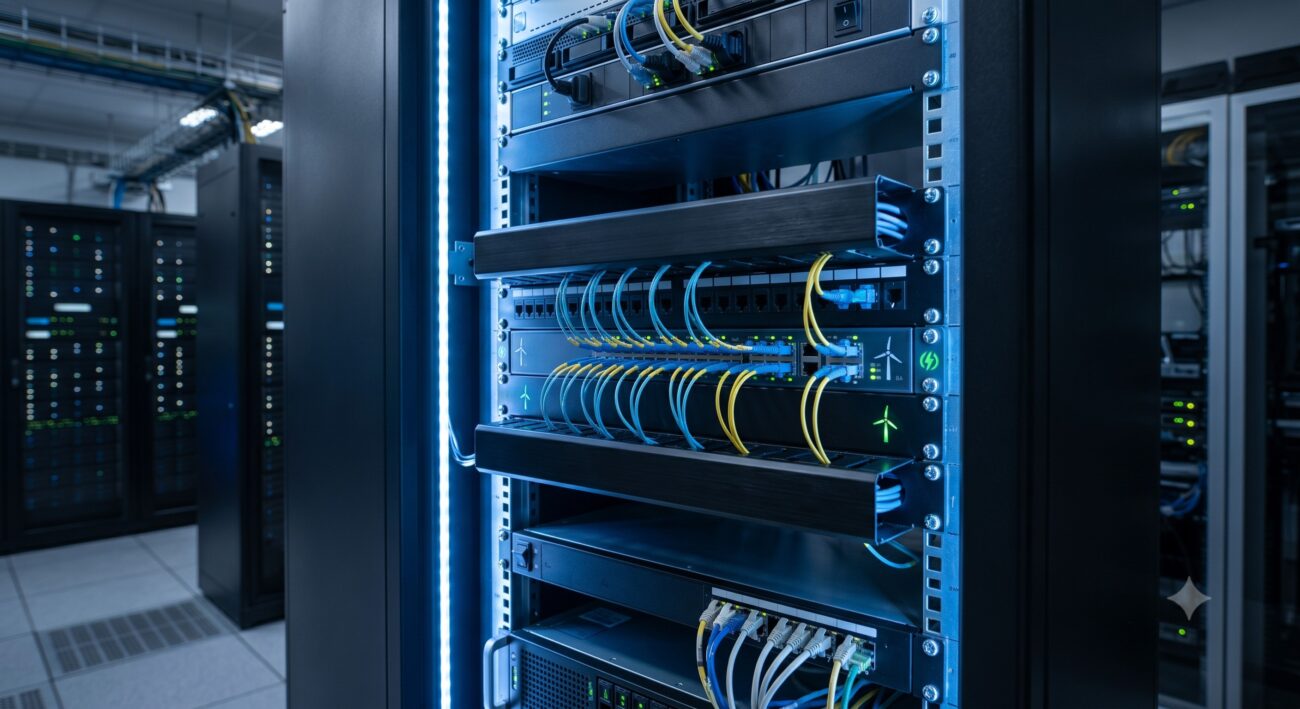
RUGGEDIZED TELECOM INFRASTRUCTURE APPLICATION NOTE: RENEWABLE ENERGY WIND FARM FIBER OPTIC SWITCH
1. RUGGEDIZED DESIGN PHILOSOPHY
The modern wind energy facility presents a uniquely hostile environment for conventional Ethernet switching hardware. Turbine nacelles experience continuous low-frequency vibration, uncontrolled temperature fluctuations from -40°C to +75°C, humidity condensation, and transient over-voltage conditions from nearby lightning strikes and generator switching events. The Renewable Energy Wind Farm Fiber Optic Switch (Model WFS-5610 Series) has been engineered from first principles to operate continuously for a minimum service life of 15 years under these exact conditions. Every component, from the passive thermal dissipation chassis to the conformal-coated PCB substrates, is selected to eliminate single points of failure attributable to environmental stress.
2. THERMAL & ELECTRICAL TOLERANCE
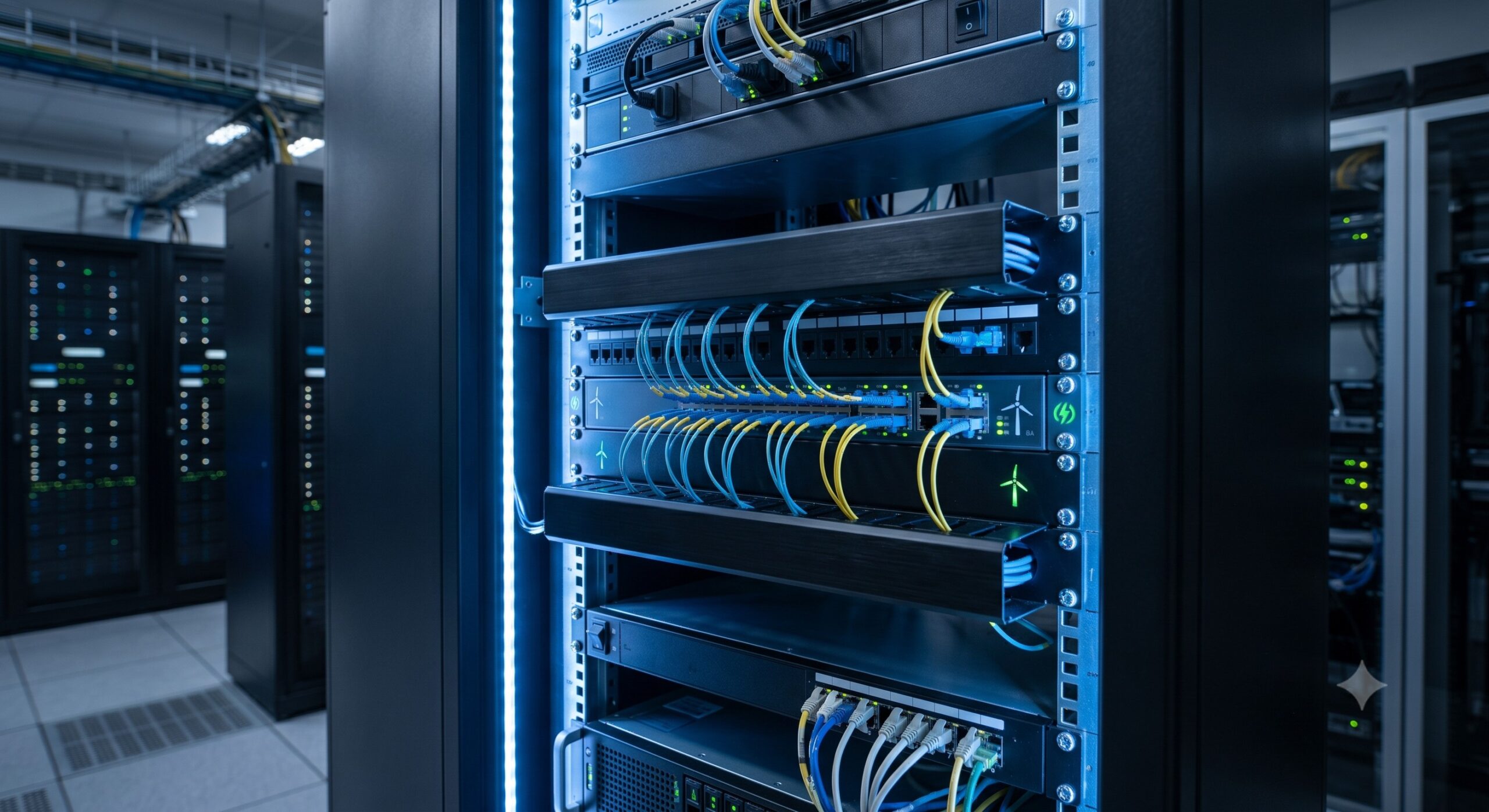
The WFS-5610 implements a fanless, conduction-cooled thermal architecture. The extruded aluminum chassis directly couples critical silicon junctions (CPU, switching ASIC, PHY transceivers) to the external housing, allowing the unit to dissipate up to 45W of heat without rotating mechanical components that degrade over time. Electrical tolerance is achieved through dual-stage surge suppression: a gas discharge tube (GDT) at the power entry module, followed by transient voltage suppression (TVS) diodes rated for 6kV line-to-ground and 3kV line-to-line per IEC 61000-4-5. All copper Ethernet ports include isolated magnetics with 4 kV isolation barriers, preventing ground potential rise (GPR) from propagating between tower sections.
3. OPERATIONAL ADVANTAGES
– Sub-20ms recovery from power interruption via stored-energy hold-up circuit
– Zero-packet-loss vibration dampening on SFP cage connectors
– Port-to-port isolation of 1500 Vrms for SCADA network segmentation
– Real-time optical link loss detection with SNMP trap generation
– Support for 1588v2 Precision Time Protocol (PTP) for wind turbine yaw synchronization
4. CERTIFICATIONS MATRIX
The switch carries the following wind-energy-specific and industrial certifications:
– IEC 61400-25 (Wind turbines – Communications for monitoring and control)
– IEC 61850-3 (Substation automation immunity – extended for turbine environments)
– IEEE 1613 (Environmental and testing requirements for communications in electric power substations – adapted for wind)
– UL 61010-1 (Safety requirements for electrical equipment for measurement, control, and laboratory use)
– Class 1 Division 2 (Hazardous locations with non-flammable dust/particulates)
5. EXACT SPECS
Switching Architecture: Non-blocking store-and-forward
Total Switching Capacity: 56 Gbps
Forwarding Rate: 41.66 Mpps (64-byte frames)
MAC Address Table: 16,000 entries
Jumbo Frame Support: 10,240 bytes
Packet Buffer Memory: 12 Mbit shared
Mean Time Between Failures (MTBF): 875,000 hours (Telcordia SR-332, Ground Fixed, 40°C)
| Parameter | Specification |
|---|---|
| Form Factor | 1RU Rack-mount, hardened steel chassis (19-inch ears included) |
| Switching Capacity | 56 Gbps non-blocking backplane |
| Power Supply | Dual-redundant, hot-swappable: 24/48 VDC (-20% to +25% tolerance) or 110/230 VAC (47-63 Hz) |
| Operating Temperature | -40°C to +75°C (fanless operation, natural convection) |
| Storage Temperature | -40°C to +85°C |
| Relative Humidity | 5% to 95% (non-condensing, IEC 60068-2-78) |
| Ingress Protection | IP40 (front panel), IP30 (chassis overall) |
| Vibration Resistance | 5g RMS, 10-500 Hz, 3 axes (IEC 60068-2-6) |
| Shock Resistance | 30g, 11ms half-sine (IEC 60068-2-27) |
| MTBF | 875,000 hours at 40°C (Telcordia SR-332 Issue 4) |
6. FIELD DEPLOYMENT SCHEMATIC
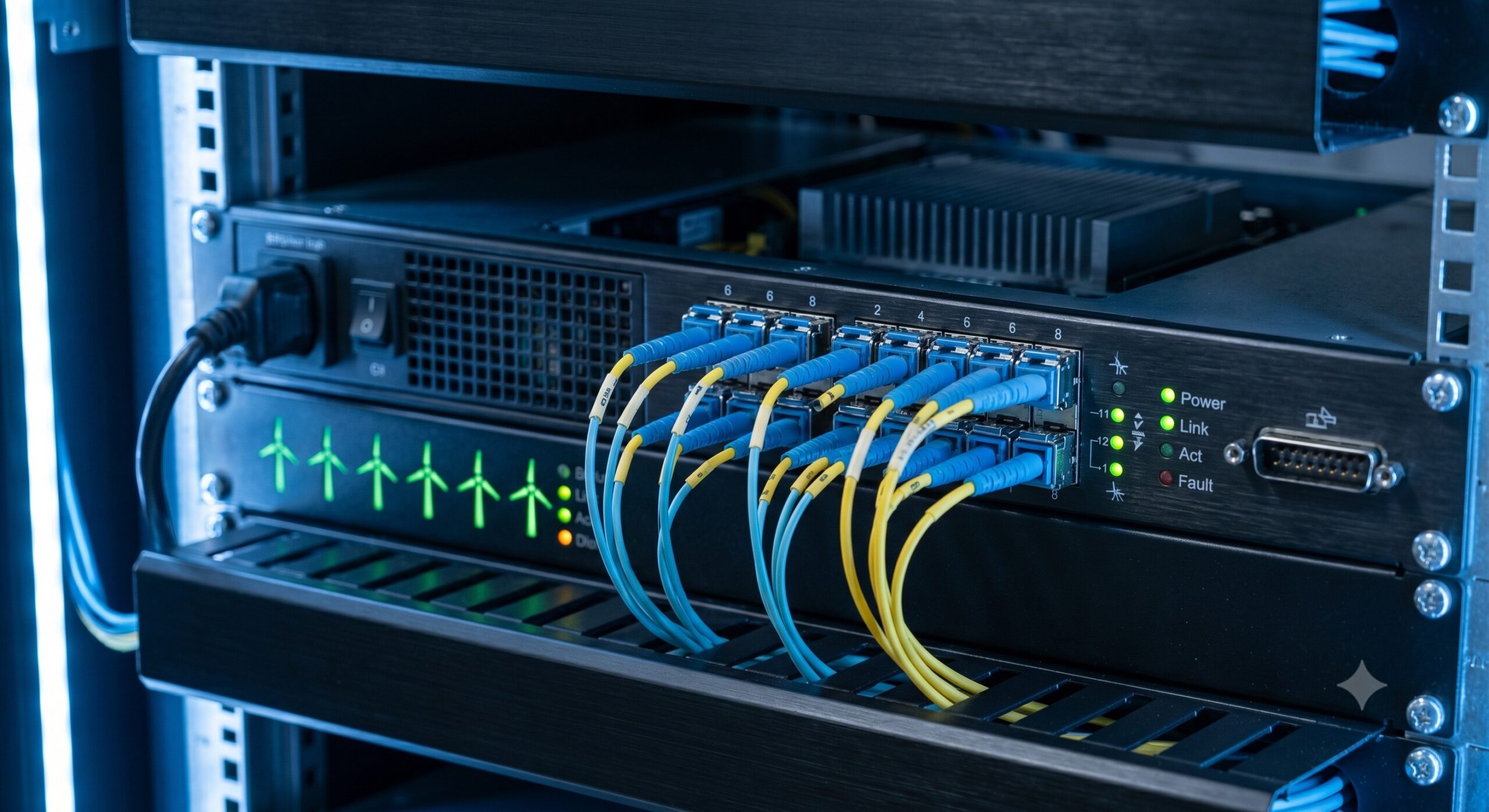
Typical installation occurs within the turbine tower base cabinet or nacelle controller enclosure. Fiber optic uplinks (dual 1000BASE-X SFP ports) form a redundant ring topology using ITU-T G.8032 Ethernet Ring Protection Switching (ERPS), providing sub-50ms failover across up to 20 turbines per ring segment. Downstream copper ports (8 x 10/100/1000BASE-T with auto-negotiation) connect to turbine condition monitoring systems (CMS), pitch control PLCs, yaw drives, and meteorological masts. An isolated management VLAN carries SNMPv3 traffic to a central SCADA master, with RADIUS authentication for all CLI and web interface sessions.
📥 Download Technical Specification
Click the button below to view or download the full official PDF datasheet.

Leave a comment