
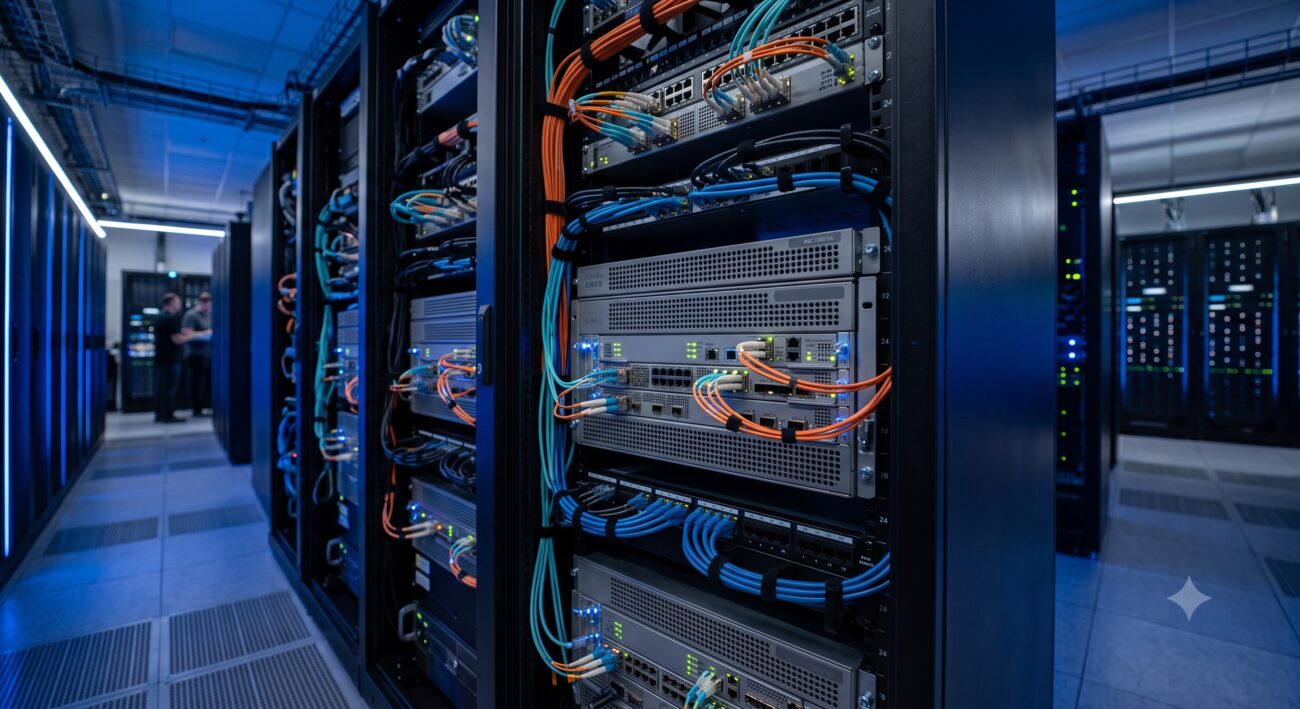
SYSTEMS ENGINEERING TECHNICAL REFERENCE MANUAL: CISCO ASR 1000 SERIES MAINTENANCE MANUAL
1. PRODUCT IDENTIFICATION & PLATFORM OVERVIEW
The Cisco ASR 1000 Series Aggregation Services Routers represent a paradigm shift in edge routing technology, purpose-built to meet the stringent demands of service provider and enterprise WAN edge environments. This series establishes a new price-performance tier, enabling unprecedented service agility, high availability, and intelligent traffic management . As a cornerstone of the Cisco IOS XE Software architecture, the ASR 1000 family separates control and data plane operations, providing a resilient foundation for both hardware and software redundancy .
This engineering document serves as the definitive reference for the hardware architecture, maintenance procedures, and technical specifications of the ASR 1000 Series. It is intended for network operators, systems engineers, and maintenance technicians responsible for the deployment and lifecycle management of these platforms.
The ASR 1000 portfolio comprises a diverse range of models—from the compact ASR 1001-X to the high-density ASR 1013—each sharing a common architecture built around the innovative Cisco Flow Processor (FP). This commonality simplifies operations, sparing utilization, and software image management across the entire deployment .

2. SYSTEM HARDWARE TOPOLOGY & ARCHITECTURE
The architectural philosophy of the ASR 1000 Series revolves around a unique chipset that decouples the control plane from the data plane. This design ensures deterministic high performance regardless of network complexity .
2.1 Cisco Flow Processor (FP): At the heart of the system lies the Cisco Flow Processor, an innovative ASIC that delivers a quantum leap in network processor performance and resiliency. The FP embeds a rich set of services, including encryption, firewalling, QoS, and Network-Based Application Recognition (NBAR), enabling line-rate service performance from 2.5 Gbps up to 200 Gbps .
2.2 Control Plane & Route Processor: The control plane is managed by a dedicated Route Processor (RP) running the modular Cisco IOS XE operating system. This separation allows the system to maintain forwarding operations even during control plane disruptions or software upgrades.
– Software Redundancy: Models like the ASR 1001-X and ASR 1002-X utilize software-based failover mechanisms for the Route Processor .
– Hardware Redundancy: High-end models such as the ASR 1006-X, 1009-X, and 1013 provide fully hardware-redundant RP and ESP (Embedded Services Processor) modules, ensuring carrier-grade availability .
– Power & Cooling: All chassis support 1+1 AC or DC power supply redundancy and field-replaceable fan trays.
3. COMPONENT BREAKDOWN & MAINTENANCE INTERFACES
Understanding the physical components is critical for effective hardware maintenance. The ASR 1000 chassis are modular, designed for ease of serviceability with minimal downtime.
3.1 Field-Replaceable Units (FRUs):
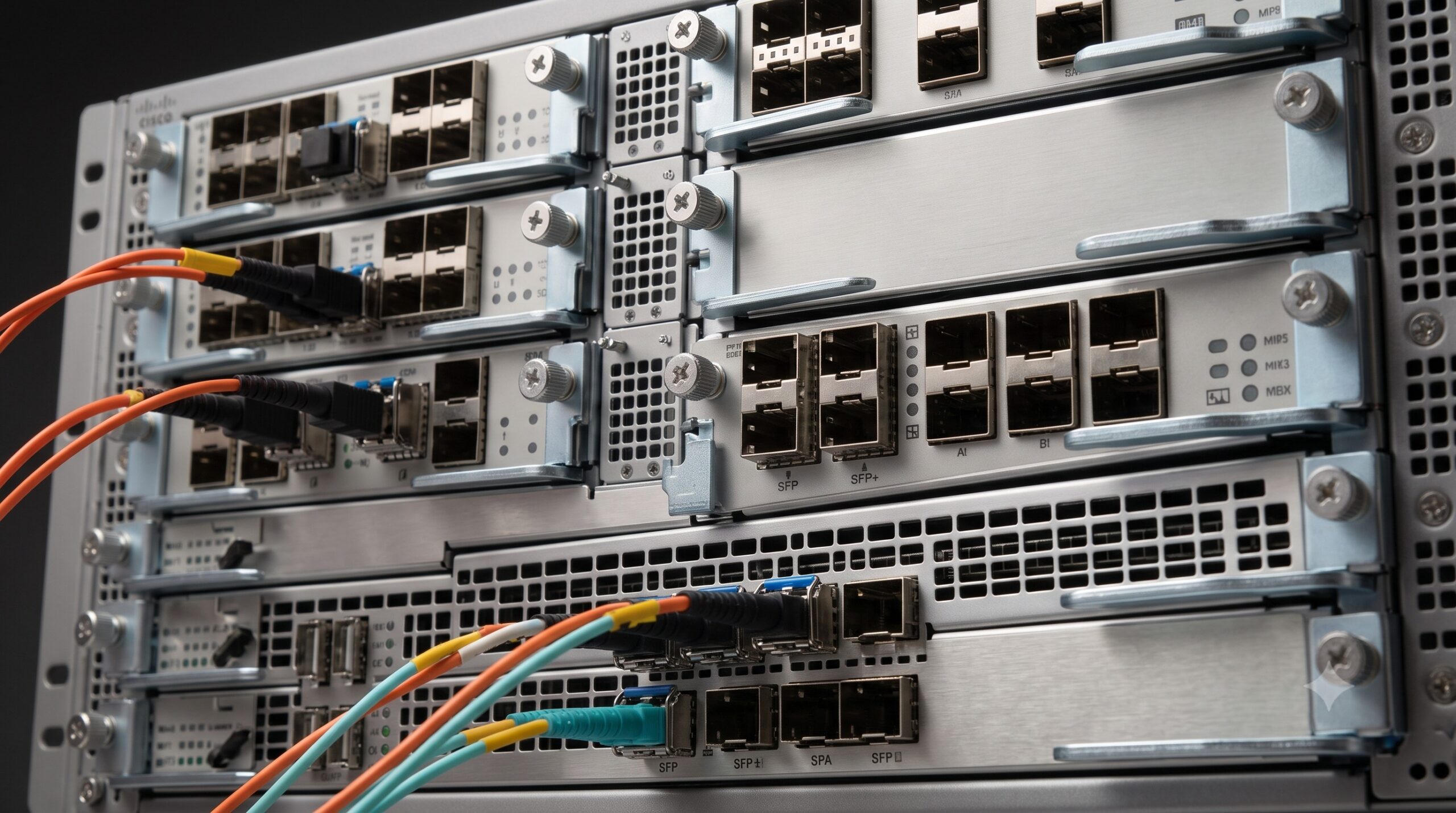
– Route Processor (RP): The system brain. Provides management, routing protocol processing, and control plane functions .
– Embedded Services Processor (ESP): Dedicated to high-speed data forwarding and service processing. Scalable to meet throughput requirements .
– Shared Port Adapters (SPAs) and Ethernet Port Adapters (EPAs): Flexible interface modules that provide physical connectivity (e.g., Gigabit Ethernet, 10-Gigabit Ethernet, OC-3 POS). Inventory varies by model .
– Power Supply Units (PSUs): Hot-swappable AC or DC units.
– Fan Trays: Hot-swappable cooling units that provide N+1 redundancy.
3.2 Maintenance Operations: The Operations and Maintenance Guide outlines standardized procedures for verifying hardware installation using LEDs and show commands, monitoring hardware status via alarms (visual, audible, syslog, SNMP), and managing file systems .
3.3 Field Programmable Hardware Devices: Upgrading field-programmable hardware devices (such as ROMmon images) is a critical maintenance task. The system supports upgrades to images like ROMmon Release 12.2(33r)XND to ensure compatibility and security .
TECHNICAL SPECIFICATIONS
4. OPERATIONAL SPECIFICATIONS MATRIX
The following specifications represent the nominal operational parameters for the ASR 1000 Series chassis. Actual values are model-dependent.
| Parameter | Specification (Representative Values) |
|---|---|
| Form Factor | 2RU to 6RU modular chassis |
| Throughput Capacity | Up to 200 Gbps aggregate (model dependent) |
| Supported Modules | Route Processor (RP), Embedded Services Processor (ESP), Shared Port Adapters (SPAs) |
| Redundancy | 1+1 RP Failover (Hardware), N+1 Power, N+1 Fan |
| Power Supply | 1+1 Redundant AC/DC, Hot-swappable |
| Operating Temperature (Nominal) | 0°C to 40°C |
| Relative Humidity (Nominal) | 5% to 85% (Non-condensing) |
| Routing Protocols | OSPF, BGP, IS-IS, EIGRP |
| Security Features | IPsec Encryption, Secure Boot, Tamper-resistant Design |
| Software | Cisco IOS XE |
5. REGULATORY COMPLIANCE & SECURITY POSITIONING
The Cisco ASR 1000 Series is engineered to meet rigorous global regulatory and security standards, positioning it as a trusted platform for critical infrastructure .
5.1 Security Integrity: The platform incorporates a tamper-resistant hardware design. The latest embedded technologies protect the hardware from snooping and physical attacks throughout the supply chain and in remote deployments .
5.2 NIST & NATO Compliance: The ASR 1000 has been evaluated and listed on the NATO Information Assurance (NIA) product list, confirming its suitability for sensitive and classified network environments .
5.3 Secure Boot: The platform supports secure boot mechanisms to prevent loading of unauthorized software and features specific procedures for addressing hardware tampering vulnerabilities .
5.4 Encryption Performance: With leading encryption performance, the ASR 1000 provides line-rate data privacy without compromising forwarding capacity .
📥 Download Technical Specification
Click the button below to view or download the full official PDF datasheet.

Leave a comment