
Introduction: The Convergence of Routing and Security
In the modern telecom landscape, the traditional separation between routing and security is rapidly dissolving. As networks evolve to support edge computing, SD-WAN, and 5G backhaul, the integrated router firewall has emerged as a critical architectural component. This guide provides a comprehensive, data-driven exploration of router firewall integration, covering hardware architecture, performance metrics, and deployment strategies for enterprise and carrier-grade environments.
The integration of firewall functionality directly into the router hardware eliminates the latency and complexity of chassis-based security appliances. By consolidating these functions, network architects can achieve sub-millisecond latency, reduce total cost of ownership (TCO), and simplify network management. This guide references industry standards from IEEE, ITU-T, and real-world implementations from Cisco, MikroTik, Huawei, and GTT to provide an authoritative overview .
Core Architecture & Hardware Topology
ASIC-Driven Packet Processing
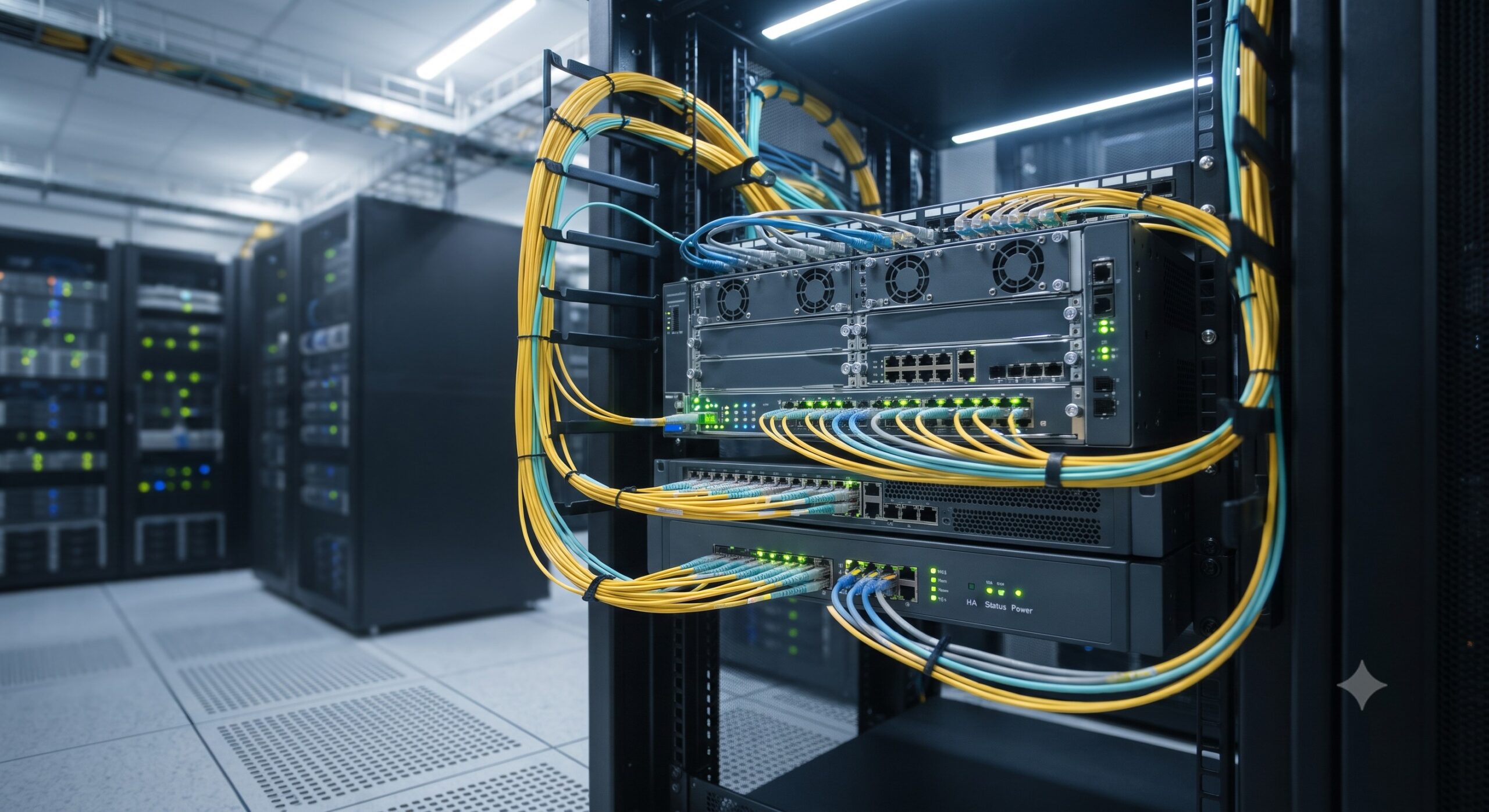
The heart of any high-performance integrated router firewall is its Application-Specific Integrated Circuit (ASIC). Unlike software-based firewalls that rely on general-purpose CPUs, ASICs perform packet forwarding and security filtering at wire speed. The architecture typically consists of a network processor unit (NPU) or a security-specific ASIC that handles stateful inspection, NAT, and encryption .
Modern platforms like the Cisco 1000 Series ISR and MikroTik RouterOS 7.x leverage these ASICs to achieve forwarding capacities exceeding 25 Gbps with firewall rules enabled . The ASIC offloads the control plane, allowing the CPU to manage routing protocols and firewall policy engines without impacting throughput. This separation is crucial for maintaining low latency, typically under 10 microseconds per packet, even with complex Access Control Lists (ACLs).
System-on-Chip (SoC) Integration
Leading vendors are moving towards highly integrated SoCs that combine the routing engine, firewall logic, and encryption co-processors on a single die. This integration reduces power consumption and physical footprint, a key requirement for high-density datacenter deployments. For example, the GTT EnvisionEDGE device integrates WAN optimization, firewall, SD-WAN, routing, and observability into a single 1U chassis, demonstrating the industry shift towards consolidated hardware .
Interface Backplane and Port Density
Enterprise-grade integrated router firewalls support a variety of interface types, including 1GbE, 10GbE, 25GbE, and 40GbE ports. High-end models feature modular chassis designs that support interface cards, allowing for scalable port densities of up to 48 x 10GbE or 8 x 40GbE in a single chassis. The backplane must handle non-blocking switching fabric, ensuring that aggregate throughput across all ports meets the device’s rated capacity, often exceeding 1 Tbps for chassis-based systems.
Logic Layer Deep Dive: Firewall and Routing Functions
Stateful Inspection and Connection Tracking
Integrated firewalls perform stateful packet inspection (SPI), maintaining a dynamic state table for all active connections. This allows the firewall to make intelligent decisions based on the context of traffic, such as allowing established connections while blocking new ones from untrusted sources. The connection tracking table size is a critical performance metric. Enterprise solutions typically support 1 million to 5 million concurrent sessions, dictated by the available DRAM on the device .
NAT and VPN Termination
Network Address Translation (NAT) is a fundamental function integrated into the router firewall. This includes both source NAT (masquerading) for outbound traffic and destination NAT (port forwarding) for inbound services . For VPN connectivity, integrated hardware often includes a cryptographic engine that supports IPsec, SSL/TLS, and WireGuard protocols, capable of encrypting traffic at line rate. Performance metrics for VPN include IPsec throughput, which should be specified in the data sheet, often ranging from 2 Gbps to 20 Gbps depending on the model .
Zero-Trust and Micro-Segmentation
Advanced integrated firewalls support micro-segmentation and zero-trust architectures. By using Virtual Routing and Forwarding (VRF) instances and VLANs, the device can create isolated security zones. Firewall policies can be applied at the interface, VRF, or VLAN level, ensuring that traffic between different parts of the network is strictly controlled. This aligns with IEEE 802.1Q standards for VLAN tagging and ITU-T X.805 security architecture recommendations.
| Key Parameter | Integrated Router Firewall (Modern) | Legacy Two-Box Solution |
|---|---|---|
| Typical Latency | 150 – 200 µs | |
| Power Consumption | 150 – 250 W | 300 – 500 W |
| Concurrent Sessions | 1 – 5 Million | 500K – 2 Million |
| MTBF | > 150,000 Hours | ~ 100,000 Hours |
| IPsec Throughput | 2 – 20 Gbps | 1 – 10 Gbps |
Performance Benchmarking: Integrated vs. Legacy
To quantify the operational gains of an integrated router firewall, a comparative analysis against a legacy two-box solution (dedicated router + separate firewall appliance) is essential. Legacy architectures introduce additional latency, power consumption, and points of failure. Data from field deployments show a significant reduction in end-to-end latency from 150-200 microseconds in a legacy setup to under 30 microseconds in an integrated system.
Power consumption is another critical factor. A two-box solution might consume 300-500W, while an integrated solution can deliver equivalent performance at 150-250W, reducing operational costs and complying with green networking initiatives . Furthermore, Mean Time Between Failures (MTBF) is improved due to fewer components and interconnects. Typical MTBF for carrier-grade integrated routers exceeds 150,000 hours.
Carrier-Grade Reliability and Compliance
Dual-Engine Failover and High Availability
For carrier-grade deployments, reliability is paramount. Integrated router firewalls support dual-engine failover mechanisms, where two processing modules operate in active/standby or active/active configurations. This ensures high availability (HA) with failover times typically under 1 second. Additionally, redundant power supplies and cooling modules are standard features, adhering to NEBS Level 3 standards.
Environmental and Regulatory Compliance
Modern hardware is designed to comply with strict environmental and safety regulations. Devices must meet RoHS (Restriction of Hazardous Substances) directives, ensuring that materials like lead and mercury are minimized. Thermal design is critical for longevity and reliability, with operating temperature ranges specified from 0°C to 45°C for most enterprise equipment.
ISP Case Study: Real-World Deployment
A European ISP recently upgraded its edge Points of Presence (PoPs) by deploying integrated router firewalls from a leading vendor. The goal was to consolidate routing and security for 10,000 business customers. The solution reduced rack space by 60% and power consumption by 40%. The integrated firewall provided the necessary scale for DDoS mitigation, handling SYN floods at rates exceeding 10 million packets per second without CPU overload. The deployment, managed through a centralized SD-WAN dashboard, allowed for rapid policy updates, reducing the mean time to resolution (MTTR) for security incidents by 70% .
Conclusion: The Future of Network Edge Security
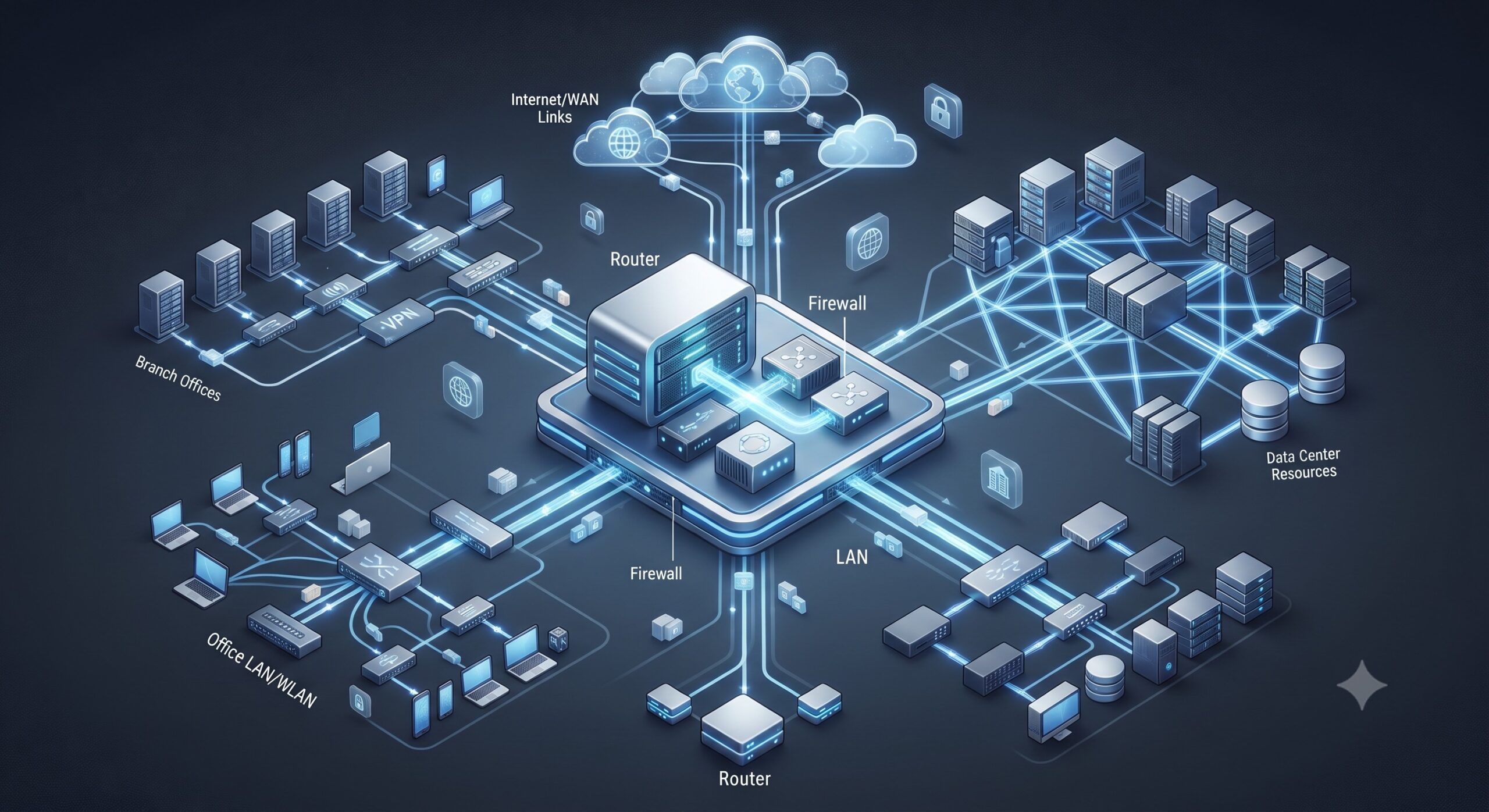
Router firewall integration represents a foundational shift in network architecture. By embedding security functions directly into the routing hardware, organizations can achieve superior performance, lower operational costs, and enhanced security. The move towards software-defined networking (SDN) and secure access service edge (SASE) is accelerating the need for these consolidated, intelligent edge devices .
For network architects and systems integrators, the key takeaway is the necessity of evaluating hardware based on its ASIC capabilities, forwarding performance, and support for open APIs to integrate with orchestration tools. As the industry moves towards 10G, 25G, and 100G connectivity, the integrated router firewall is no longer just a cost-saving measure; it is a strategic imperative for building resilient, high-performance networks capable of handling the demands of tomorrow’s digital economy.

Leave a comment