
Introduction: The Unseen Criticality of Telecom Shelter Power
In the realm of telecom infrastructure, the conversation often centers on throughput, latency, and packet processing. Yet, the silent bedrock of every carrier-grade network is its power design. A sophisticated telecom shelter housing advanced routing and switching equipment is rendered inert without a robust, resilient, and highly available power architecture. This article moves beyond basic specifications to deliver a deep technical evaluation of telecom shelter power design, focusing on the key metrics of Mean Time Between Failures (MTBF), redundancy topologies, and operational resilience. We analyze the engineering principles that ensure five-nines (99.999%) availability, even in the harshest environmental conditions, aligning with IEEE and ITU-T standards for mission-critical deployments.
Understanding the Stakes: SLA Demands and Environmental Stressors
Modern Service Level Agreements (SLAs) for carrier and enterprise networks demand near-perfect uptime. A single hour of downtime can translate into millions of dollars in lost revenue and eroded customer trust. The telecom shelter, often located in remote or environmentally challenging locations, must contend with a host of stressors including extreme temperatures, humidity, power surges, and even physical intrusion. The power design is the first line of defense against these threats. It must not only convert and distribute power efficiently but also actively manage failures, isolate faults, and maintain service continuity. Industry data suggests that power-related issues account for over 40% of all network outages, underscoring the critical need for a meticulously engineered power infrastructure from the ground up.
Core Architecture of a Resilient Shelter Power System
Dual-Engine Failover Architecture
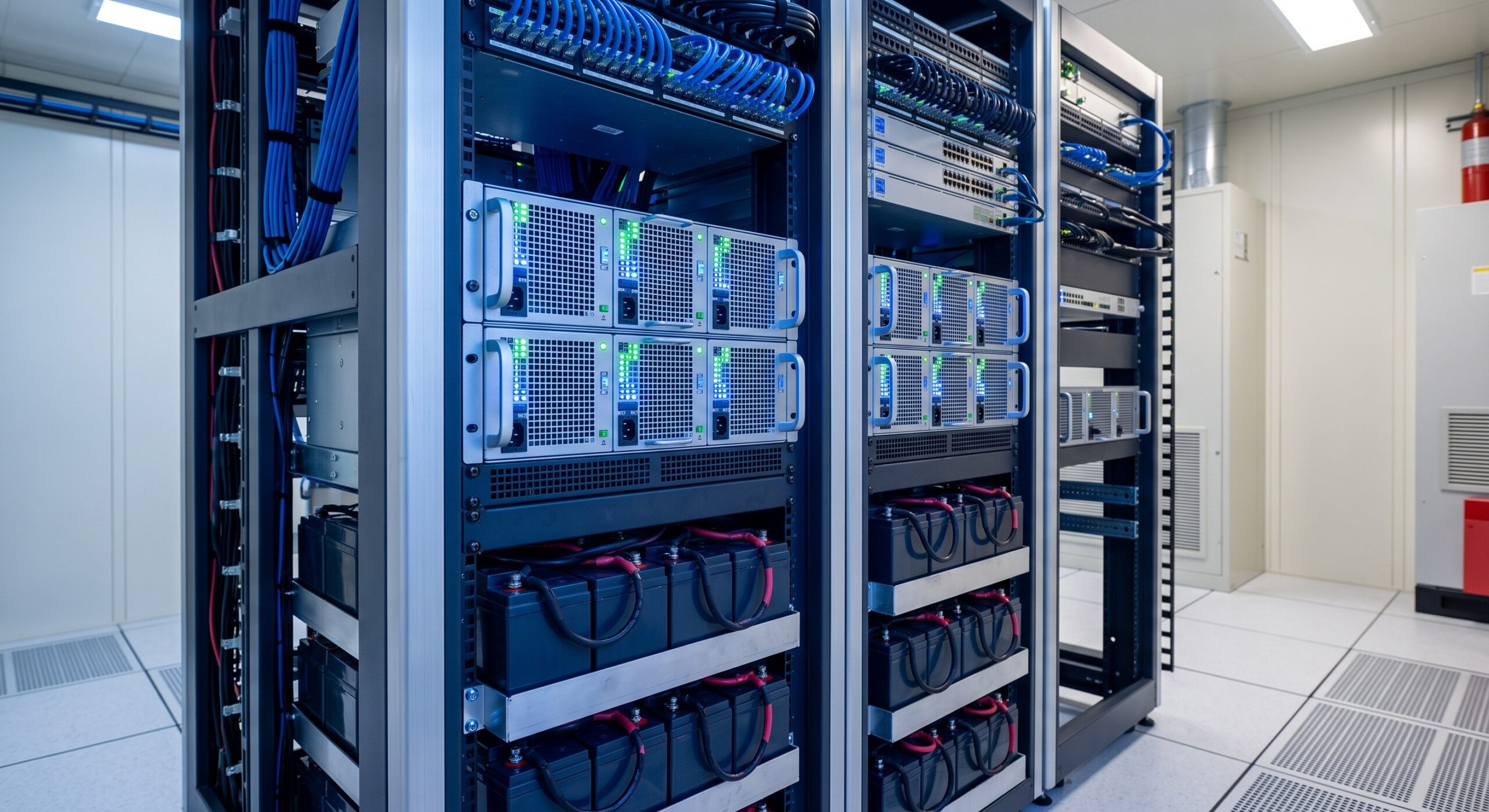
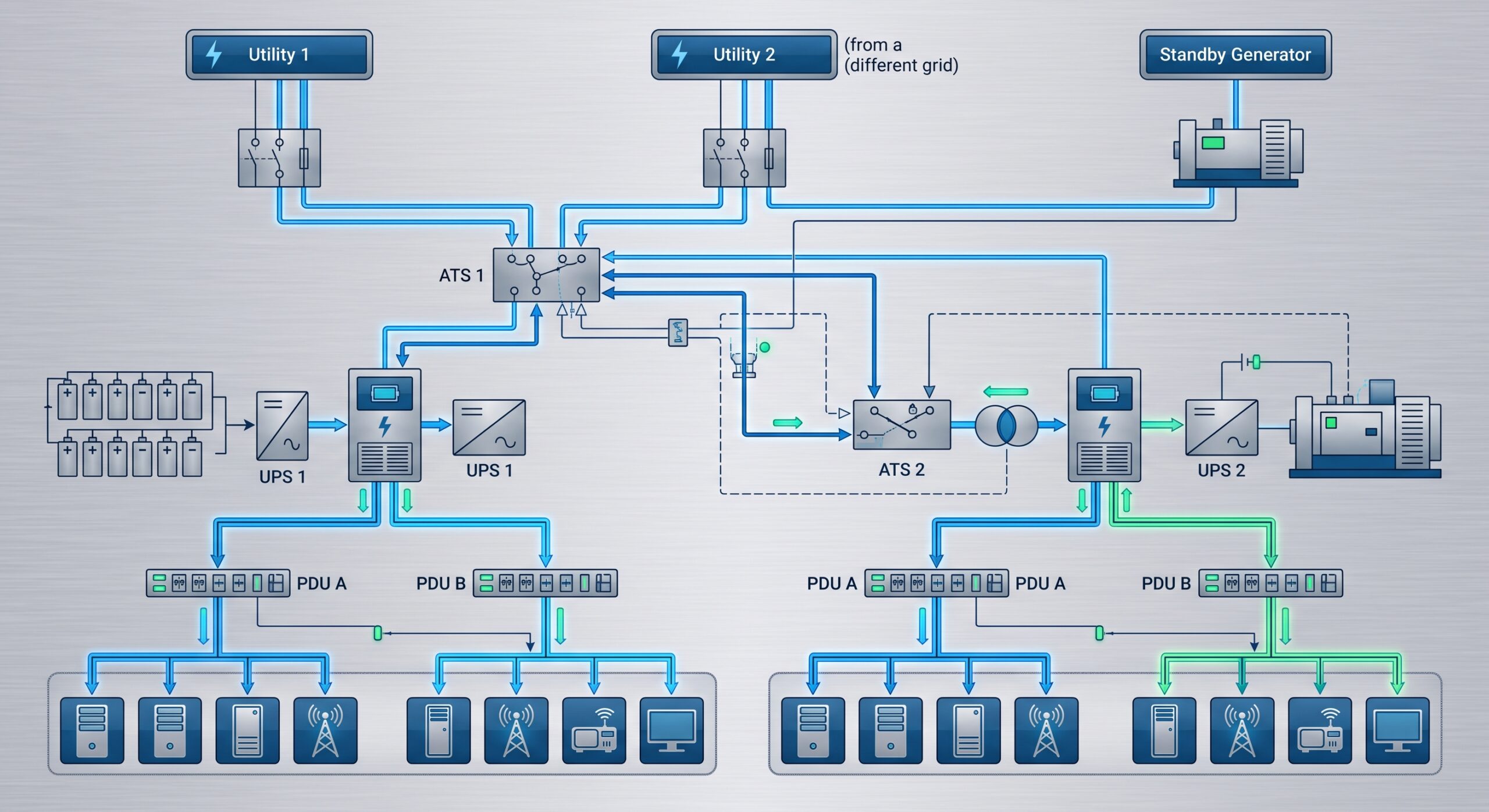
The cornerstone of carrier-grade reliability is a fully redundant, dual-engine power architecture. This design eliminates single points of failure by providing two independent power paths, each capable of sustaining the entire shelter load. This typically involves redundant rectifier shelves, distribution panels, and battery strings. The automatic transfer switches (ATS) and static transfer switches (STS) are crucial components, enabling instantaneous switching between the primary and secondary power sources. The transition is seamless, often occurring within sub-cycle times to prevent any disruption to sensitive networking equipment, which is a critical requirement for maintaining low-latency and high-throughput data flows.
Battery Backup and Uninterruptible Power Supply (UPS)
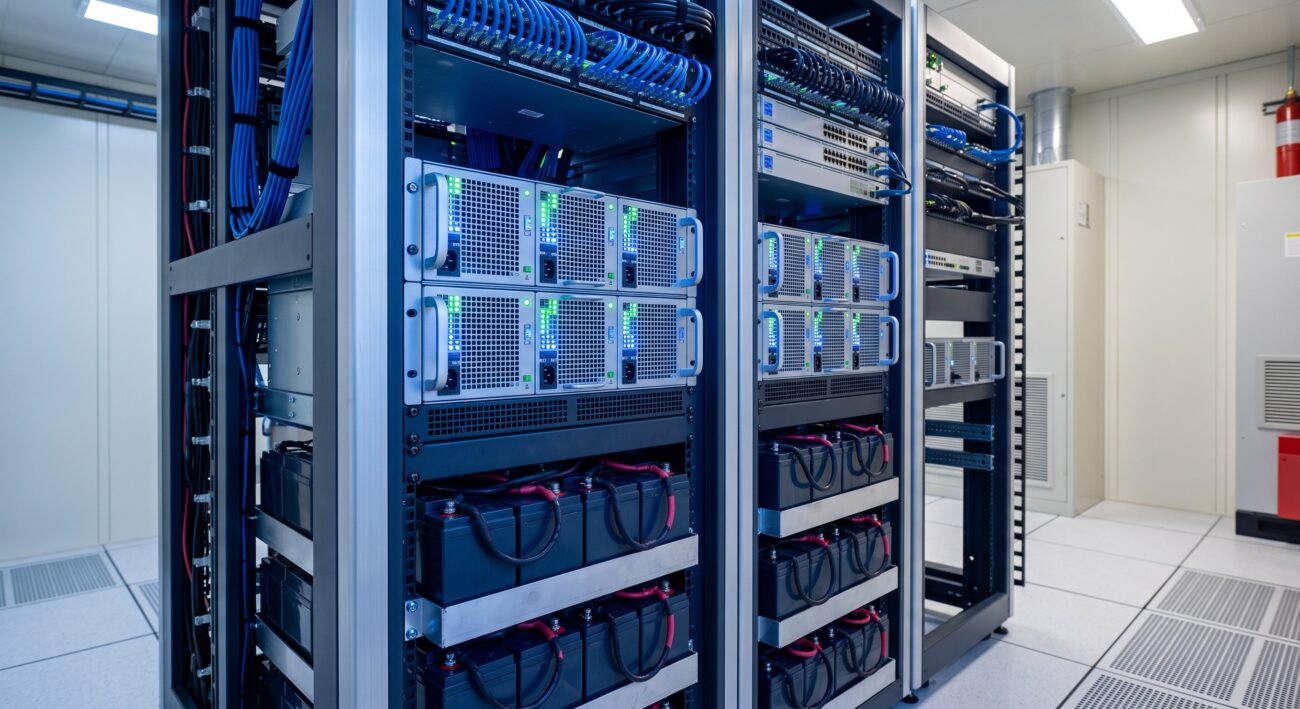
Battery strings form the energy reservoir that bridges the gap between a primary power failure and the startup of backup generators. Valve-Regulated Lead-Acid (VRLA) batteries or Lithium-Ion (Li-Ion) batteries are commonly deployed. The choice between them involves trade-offs in energy density, lifecycle, and total cost of ownership. The power design must account for the battery’s discharge characteristics, temperature compensation, and recharge cycles. A properly sized UPS system ensures that the telecom hardware remains operational for a specified duration, typically 15-30 minutes, until the diesel or natural gas generators can synchronize and assume the load. This ride-through capability is essential for protecting sensitive ASICs and line cards from sudden power loss.
Quantifying Reliability: MTBF and MTTR Analysis
Mean Time Between Failures (MTBF) and Mean Time To Repair (MTTR) are the key quantitative metrics used to evaluate system reliability. For a telecom shelter power design, the system MTBF is calculated based on the parallel/series configuration of its components. A fully redundant architecture can achieve a system MTBF that is orders of magnitude higher than that of its individual components. For example, while a single rectifier module might have an MTBF of 500,000 hours, a redundant set of 5 modules (N+1 configuration) can push the system-level MTBF into the range of several million hours. This statistical approach, guided by standards like Telcordia SR-332, provides a data-driven basis for predicting system longevity and maintenance schedules.
| Key Parameter | Technical Specification | Carrier-Grade Standard |
|---|---|---|
| System MTBF (N+1 Redundancy) | > 2,000,000 hours | Telcordia SR-332 |
| Rectifier Efficiency | > 95% at 50% load | 80 PLUS Titanium |
| Input Voltage Range | 85-300 VAC | ITU-T K.20 |
| Output Voltage Regulation | ±1% | ETSI EN 300 132-2 |
| Operating Temperature Range | -40°C to +65°C | GR-3108-CORE |
Furthermore, MTTR is equally critical. The power design must facilitate rapid identification and replacement of faulty modules. Hot-swappable rectifiers, intelligent battery monitoring systems, and clear alarm signaling are essential features that reduce MTTR. A lower MTTR directly contributes to higher availability, as per the formula: Availability = MTBF / (MTBF + MTTR).
Operational Parameters and Performance Specs
Voltage and Current Regulation
Maintaining a stable DC voltage (typically -48 VDC in telecom environments) is paramount. The power system must provide tight voltage regulation, often within ±1% of the nominal value, to protect sensitive electronic components from voltage sags or spikes. Current sharing between parallel rectifiers ensures that no single module is overloaded, extending its operational life and improving overall system reliability. Advanced digital signal processing (DSP)-controlled rectifiers offer superior regulation and dynamic response to load transients.
Thermal Management and Efficiency
Power conversion inefficiency manifests as heat. A high-efficiency power design (e.g., >95% efficiency) minimizes energy waste and reduces the thermal load on the shelter’s cooling systems. This is a critical factor in green networking initiatives and lowering OpEx. The thermal design must ensure that components operate within their specified temperature ranges to maintain high MTBF. This often involves forced-air cooling, heat sinks, and, in extreme environments, liquid cooling solutions. The power system’s own thermal management is a key aspect of its overall reliability.
Mission-Critical Deployments: Case Study in Resilience
Consider a tier-1 ISP deploying a new edge Point of Presence (PoP) in a tropical region. The site is subject to high temperatures and frequent lightning storms. The telecom shelter power design for this location must include robust surge protection, redundant battery strings with enhanced thermal monitoring, and a sophisticated generator control system. During a recent regional grid failure, the shelter’s power architecture seamlessly transitioned to battery and then to generator power without any packet loss, ensuring uninterrupted service for thousands of subscribers. This real-world example validates the efficacy of a well-engineered, redundant power design against severe environmental and infrastructural challenges.
Conclusion: Power is the Network’s Foundation
Telecom shelter power design is not a peripheral concern; it is the fundamental bedrock of network reliability. By focusing on MTBF, MTTR, and intelligent redundancy topologies, engineers can build a power infrastructure that supports the ever-increasing demands of 5G, IoT, and edge computing. A deep understanding of architectural choices, component specifications, and environmental factors is essential for achieving the carrier-grade reliability required by today’s digital economy. The investment in a robust power design pays dividends in operational continuity, brand reputation, and long-term profitability.

Leave a comment