
Staring at network congestion alerts at 3 AM wasn’t my idea of productivity. As racks of outdated switches blinked like faulty traffic lights, our logistics center’s automation systems sputtered, costing six figures in delayed shipments that quarter. Legacy layers of complexity choked real-time inventory tracking, and forklift sensors dropped connectivity mid-operation. That’s when we tore down the three-tier mess and plugged in Huawei’s CE6800 series. The shift wasn’t incremental—it was surgical precision replacing duct tape.
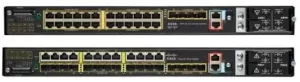
Why Spine-Leaf Over Traditional Three-Tier?
Forget nostalgic loyalty to traditional core-aggregation-access layouts. If your applications demand zero tolerance for latency—think AI-driven predictive maintenance or real-time robotics—collapsed layers strangle throughput. The CE6800 flips the script with spine-leaf architecture. Here’s how it guts bottlenecks:
- Spine Switches (like CE6800 spines) become non-blocking traffic highways. They’re not glorified aggregators; they’re wire-speed multicast bulldozers. One misconfigured legacy core switch could sink your VOIP clarity or Industrial IoT sync. The CE6800’s low-latency cut-through forwarding? 200ns. That’s the difference between a seamless AR assembly line and robotic arm collisions.
- Leaf Switches connect servers/storage directly into spines. No more hopping through tiers like a broken elevator. Need to scale GPU clusters next quarter? Add leaves on-demand without rewiring spines. The CE6800’s EVPN-VXLAN lets you stitch Layer 2 across Layer 3 fabrics. Translation: your backup servers in Building B behave like they’re plugged into the same rack as your primary database—zero re-IPing headaches.
Where Rivals Stumble (And How CE6800 Plants Its Flag)
Competitors push spine-leaf as a buzzword. Huawei CE6800 engineers it for merciless environments:
- Thermal Runaway? Not Here. Ever felt a switch’s exhaust mimic a hairdryer? Dust-clogged fans in warehouses murder airflow. The CE6800’s side-to-front airflow and 56°C operating ceiling laugh at desert heat or un-air-conditioned edge sites. Rack it beside ovens in a factory? Done.
- Buffer Bloat = Revenue Bleed. When NAS backups swamp links during peak hours, shallow-buffered switches drop packets like hot rivets. The CE6800’s 12 MB packet buffer per device acts like a surge tank—so your SAP HANA queries won’t time out because someone dumped 4K surveillance footage.
Silent Killer: CE6800’s Hidden Ops Hack
Nobody admits it, but CLI junkies burn hours troubleshooting via putty. Huawei’s iMaster NCE-Fabric auto-provisions underlays/overlays with drag-drop templates. Rolling out micro-segmentation for PCI DSS compliance? Point-click your payment VLANs into encryption zones while isolating POS systems. Audit logs auto-generated. No SSH required.
Deploying the CE6800 spine-leaf fabric was the silent reboot our ops team needed. Four months post-cutover, warehouse sensors pinged with sub-millisecond consistency, autonomous carts routed flawlessly, and that 3 AM alert stack? Gathering digital dust. In mission-critical environments, future-proof connectivity isn’t a luxury—it’s the steel foundation under your automation crown jewels. Skip the duct-tape upgrades. Your network’s missing link? It’s likely buried in flexible spine-leaf layers waiting to unlock trapped agility. Demand switches engineered for chaos, not conference rooms. The CE6800 doesn’t just move packets—it moves business needles.







Leave a comment