
Selecting the right networking switch is one of the most critical decisions for any business looking to build or upgrade its infrastructure. The wrong choice can lead to performance bottlenecks, unexpected costs, and scalability issues that haunt IT managers for years. For many organizations, the decision often comes down to balancing immediate budget constraints against long-term growth requirements. Two models that frequently come into consideration for gigabit connectivity are the Telecomate S3410-48TS and the S5810-48TS. While they might appear similar at a glance, understanding their nuanced differences is key to making an investment that pays off over time. This comparison goes beyond basic specifications to explore how each switch performs in real-world environments, examining the underlying hardware, software capabilities, and ideal deployment scenarios. We’ll break down exactly where each model excels, helping you determine whether your operation needs the cost-effective efficiency of the S3410-48TS or the advanced, feature-rich performance of the S5810-48TS to ensure your network becomes a competitive advantage, not a liability.
Breaking Down the Core Specifications
Before diving into performance nuances, it’s essential to establish a clear foundation by comparing the fundamental specifications of these two switches. The S3410-48TS and S5810-48TS share a similar physical port layout, each offering 48 x 10/100/1000BASE-T RJ45 ports for connecting desktop computers, phones, and wireless access points, along with 4 x 1G/10G SFP+ uplink ports for high-speed connectivity to the network core. Both deliver a switching capacity of 176 Gbps and a forwarding rate of 132 Mpps, which provides ample bandwidth for demanding data transfers and multimedia applications. However, the similarities start to diverge when we look at the components that drive these capabilities.
The most significant difference lies in the core switching chip. The S3410-48TS is powered by the Broadcom BCM56150, a highly reliable and efficient chipset that delivers excellent performance for essential Layer 2 and basic Layer 3 functions. It’s a workhorse designed for stability and cost-effectiveness. In contrast, the S5810-48TS leverages the more powerful Broadcom BCM56340. This chipset provides greater processing headroom, supporting more complex operations, larger table sizes, and advanced features that are crucial for networks with sophisticated routing and security policies. This fundamental distinction in silicon is what primarily drives the difference in price and target application.
Performance and Hardware Deep Dive
Switching Capacity and Processing Power
On paper, both switches boast identical switching capacity and forwarding rates. However, the real-world experience is shaped by the capabilities of the underlying chipset. The BCM56340 in the S5810-48TS is engineered for more computationally intensive tasks. If your network relies heavily on inter-VLAN routing, access control lists (ACLs) applied across multiple ports, or quality of service (QoS) policies for latency-sensitive traffic like VoIP, the additional processing power of the S5810-48TS becomes a significant advantage. It handles these tasks without introducing latency, whereas the S3410-48TS, while perfectly capable for standard routing and switching, is best suited for environments where such advanced features are used more sparingly.
Memory and Scalability
A key differentiator often overlooked is the memory allocation, which directly impacts the switch’s ability to scale and maintain stability under load. The S3410-48TS comes with 256MB of flash memory, 512MB of SDRAM, and a 1.5MB packet buffer. It supports a MAC address table of 16,381 entries. These specifications are more than adequate for a typical access layer deployment in a small to medium-sized office, connecting end-user devices and providing basic network segmentation.
The S5810-48TS, however, is built for a larger scale. With 512MB of flash, 1GB of SDRAM, a 4MB packet buffer, and support for 65,536 MAC addresses, it is designed to operate effectively as an aggregation or core switch. The larger packet buffer is particularly important in environments with bursty traffic or where devices operating at different speeds are connected, as it helps prevent packet loss during congestion. The expanded MAC address table is essential for large campus networks where the switch needs to learn the addresses of thousands of devices connected to multiple access switches downstream.
Reliability: Power and Cooling
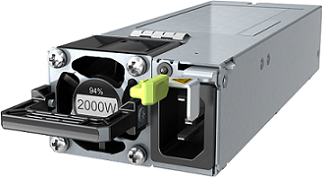
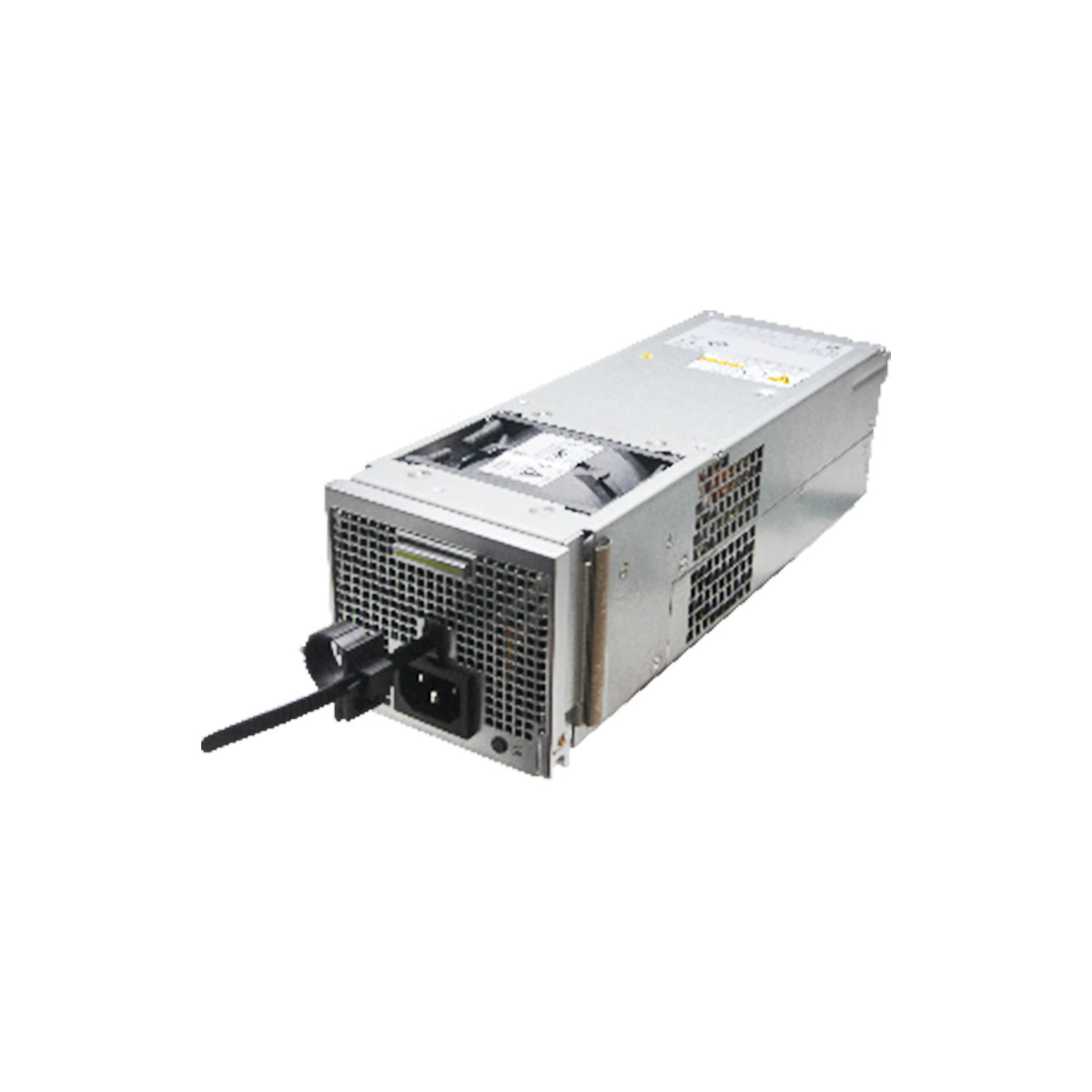
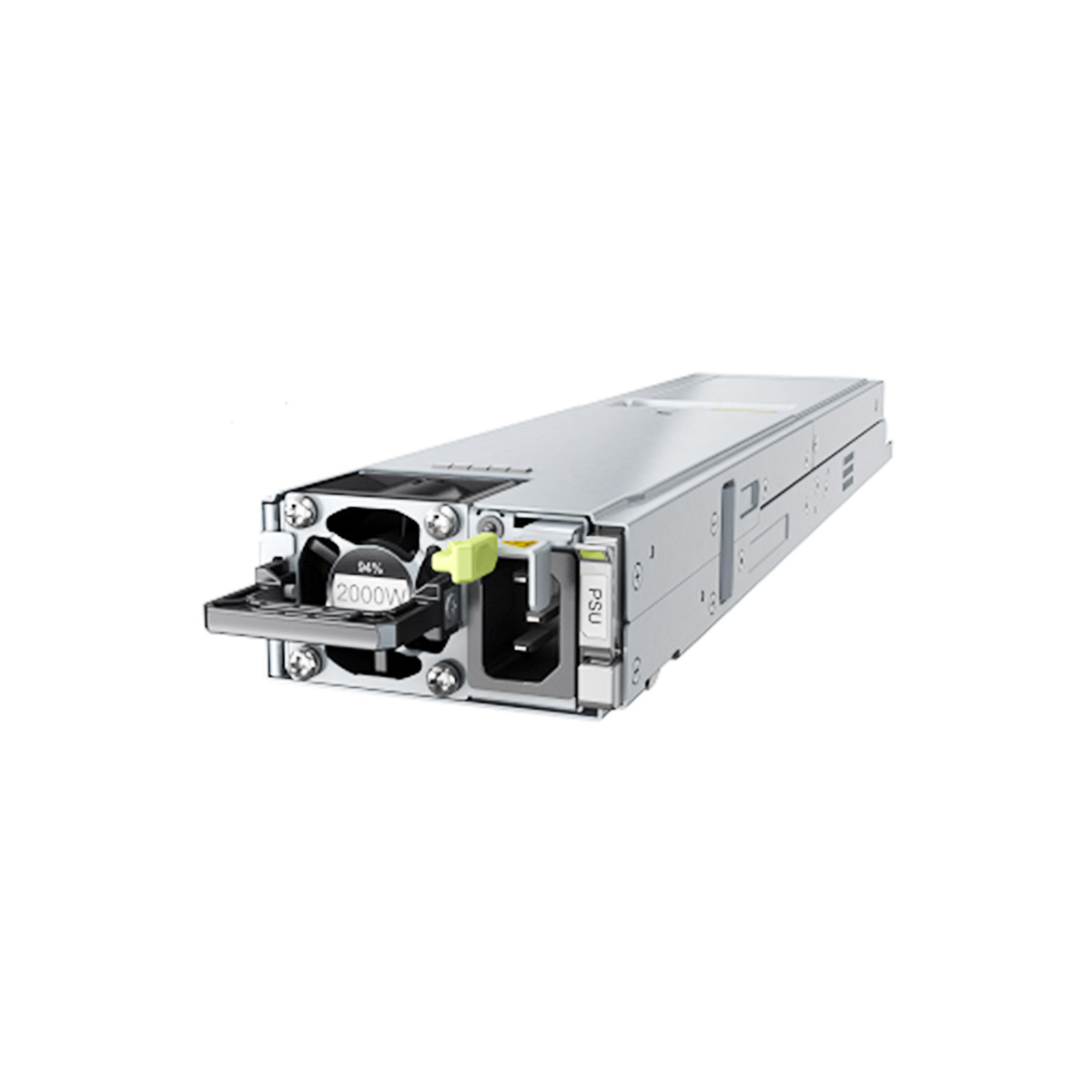
Both models feature a robust power design with two hot-swappable power supplies configured for 1+1 redundancy. This is a critical feature for business continuity, allowing a failed power supply to be replaced without shutting down the switch. The difference emerges in the cooling solution. The S3410-48TS utilizes a single built-in fan, which provides sufficient airflow for its components in a standard office environment. Its airflow direction is right-to-left.
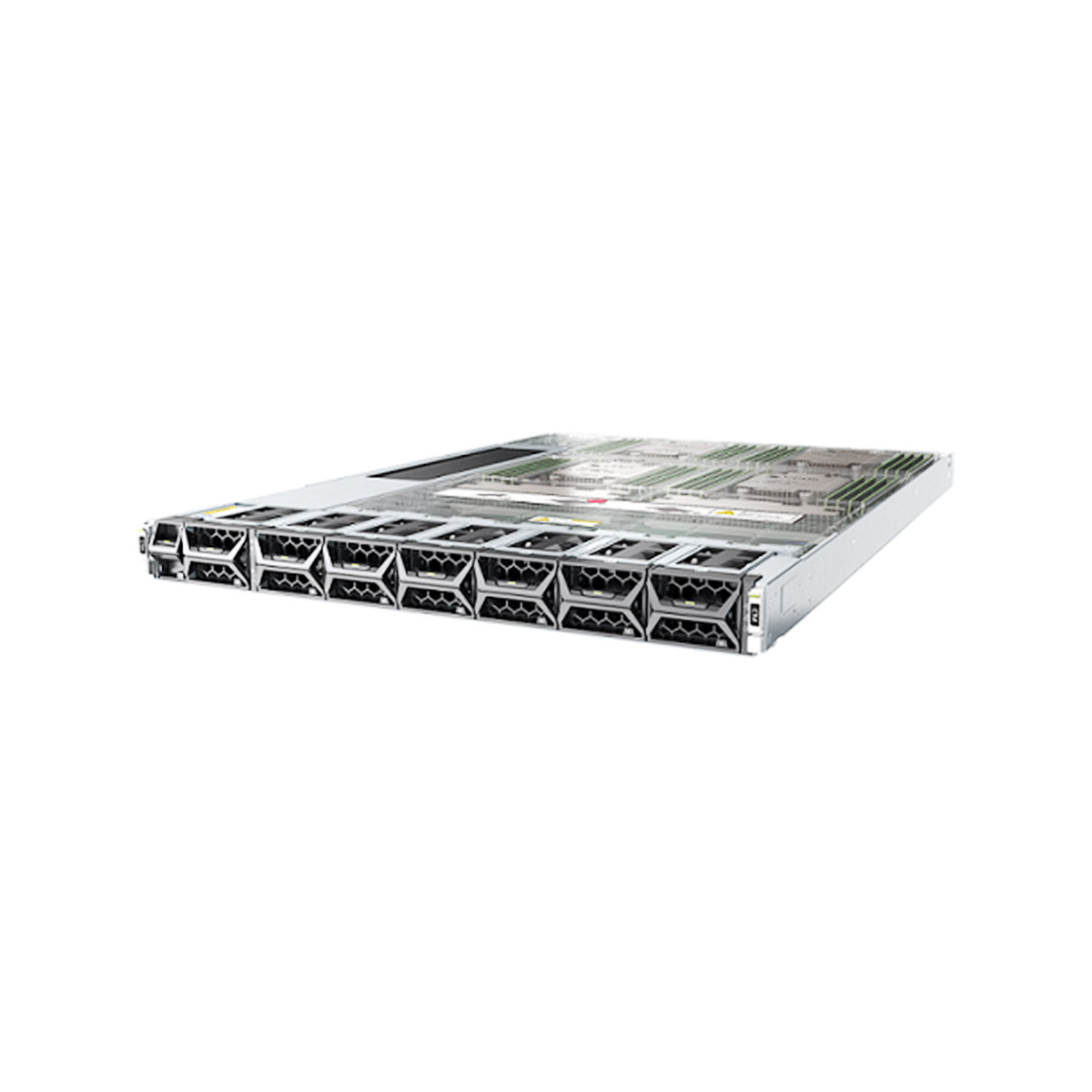
The S5810-48TS, anticipating deployment in more demanding conditions or denser equipment racks, employs a more resilient cooling system with three built-in fans in a 2+1 redundant configuration. This means that even if one fan fails, the remaining two can maintain adequate cooling to keep the switch operational until a replacement is made. Its airflow is left-to-right, a detail that is crucial to consider for proper rack layout and thermal management. This makes the S5810-48TS the more suitable option for environments where maximum uptime is non-negotiable.
Software and Management Capabilities
The PicOS® Operating System
Both switches run on Telecomate’s PicOS®, a modern operating system that provides a consistent management experience. It offers strong security features, including RADIUS and TACACS+ for authentication, SSH for encrypted management, and Dynamic ARP Inspection to prevent spoofing attacks. Both support essential protocols like MLAG for multi-chassis link aggregation and VRRP for router redundancy.
The significant software difference lies in the management layer and advanced features. The S3410-48TS operates as a Layer 2+ switch, meaning it handles core switching and VLANs brilliantly and can perform basic static routing. The S5810-48TS is a full Layer 3 switch. This grants it support for dynamic routing protocols like OSPF and BGP, enabling it to make intelligent routing decisions within a larger network infrastructure. It also supports IPv4/IPv6 dual-stack, a necessity for future-proofing networks as the transition to IPv6 continues.
AmpCon™ Management Platform
Another advantage for the S5810-48TS is its current compatibility with the AmpCon™ management platform. AmpCon™ provides a centralized interface for automating configurations, monitoring network health, and simplifying operations across multiple switches. While the S3410-48TS is slated for future AmpCon™ support, the S5810-48TS offers this advanced management capability today, which can significantly reduce operational overhead in larger deployments.
Ideal Application Scenarios
Where the S3410-48TS Excels
The Telecomate S3410-48TS finds its strength as a high-value access layer switch. It is an ideal solution for branch offices, small to medium-sized businesses, and as a top-of-rack switch in mid-sized campus networks. In these roles, its primary job is to connect end-user devices reliably and cost-effectively. For example, in a typical office, it would connect computers, printers, and IP phones, with its 10G uplinks aggregating traffic to a core switch or router. It delivers the performance needed for everyday business applications without the cost of features that may never be used.
Where the S5810-48TS is Essential
The S5810-48TS is engineered for more demanding roles. It performs brilliantly as a distribution/aggregation switch in a large campus or as the core switch for a growing medium-sized enterprise. Imagine a network connecting several buildings on a university campus or a corporate office with multiple floors. Access switches in each location would connect to a central S5810-48TS, which would then handle the routing between different VLANs (e.g., for HR, Finance, and Engineering), enforce security policies at the network core, and use its 10G uplinks to connect to data center or internet gateway routers. Its advanced routing and greater scalability make it ready to handle network expansion and more complex traffic patterns.
Making the final choice between the Telecomate S3410-48TS and S5810-48TS hinges on a clear-eyed assessment of your current network demands and a realistic forecast of future growth. The S3410-48TS represents a smart, economical choice for organizations whose primary need is robust, reliable Layer 2 connectivity with basic routing capabilities. It delivers exceptional value and is more than capable of supporting the vast majority of small to medium business applications. The S5810-48TS, commanding a higher investment, is justified for networks that require advanced Layer 3 dynamic routing, are expected to scale significantly, or where its enhanced buffers and redundant cooling system will contribute directly to achieving higher uptime service level agreements. There is no universal “best” switch—only the best switch for your specific operational context and strategic goals. By carefully weighing the hardware distinctions, software features, and ideal use cases outlined above, you can move forward with confidence, ensuring your network infrastructure aligns perfectly with your business objectives. For detailed pricing and to discuss specific configuration needs, reach out to the technical team at telecomate.com.
Leave a comment