
That Cisco 2960 Catalyst switch feels like a trusted old workhorse – solid, predictable, humming reliably in closets for years. You know its quirks, its IOS quirks, its reassuring blue LEDs blinking away. When expanding or replacing old kit, the urge to stick with what’s known is strong. Why risk new complexities when the 2960 “just works” for basic patching? Especially when budgets are tight, grabbing another familiar model feels safe, efficient. But clinging to this icon is like relying on a dependable old truck in a world demanding electric semis. Modern operations aren’t just connecting PCs anymore. Exploding demands for intelligent power, stringent security, real-time collaboration, multi-gigabit wireless, and IoT integration demand an infrastructure built for tomorrow, not preserved from yesterday. Your Cisco 2960 Catalyst switch, while stalwart, has likely become a silent anchor on growth, security posture, and operational flexibility – freezing your network capabilities in an era that demands constant thawing and adaptation.
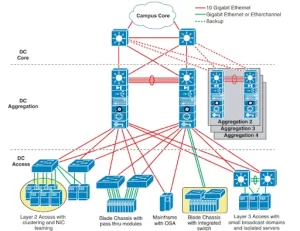
So, what specific future-proofing limitations lock you out when relying on these aging workhorses? The freeze is happening in five critical areas. PoE Power Famine: That 2960 Catalyst likely maxes out at PoE+ (30W per port) with a modest total budget. Modern Wi-Fi 6E/7 Access Points, advanced pan-tilt-zoom security cameras, interactive displays, and medical IoT sensors demand UPoE/UPoE++ (60W-90W per port). Trying to deploy these devices means scrambling for external injectors, sacrificing functionality, or hitting hard power ceilings – effectively blocking innovation projects reliant on power-hungry endpoints. It’s like needing high-octane fuel but only having access to kerosene. Speed Ceiling & Uphill Bottlenecks: While it supports 1GbE to the desktop, its uplinks are firmly capped at 1Gb. Modern Wi-Fi clients easily saturate 1Gb backhaul links, video production workflows demand multi-gig speeds, and NVMe storage arrays scream for 2.5GbE/5GbE/10GbE connectivity. Your 2960 Catalyst acts as a decisive bottleneck before traffic even reaches the core or cloud, crippling performance for anything beyond basic file access. Security Freeze-Out: The hardware simply lacks muscle for modern threats. Essential protections like MACsec encryption for wired ports? Not happening. Granular, identity-based segmentation (TrustSec SGTs)? Forget it. Robust visibility into application-level threats? Limited. Integrated threat defense? Absent. Relying on 2960s leaves gaping security holes attackers eagerly exploit, making compliance with evolving standards a constant struggle. Feature Ice Age: The 2960 Catalyst IOS can’t join modern automation kingdoms like Cisco DNA Center. Zero hope for SD-Access adoption. Cloud monitoring dashboards? No integration. API-driven automation? Minimal to none. Modern troubleshooting requires telemetry and granular flow data this hardware can’t provide. You’re stuck managing everything via CLI fragments, isolated from the streamlined operations tools revolutionizing network management. Stackability & Scalability Gap: Need more ports? Adding another standalone 2960 means managing yet another distinct box – separate configurations, separate monitoring, complex inter-switch links. Modern stackable switches (like Catalyst 9200/9300) behave as a single logical unit, simplifying scaling immensely. The 2960 era forces network fragmentation as you grow, increasing complexity and management overhead exponentially. These aren’t minor inconveniences; they are deliberate barriers preventing evolution.
Ultimately, sticking with the Cisco 2960 Catalyst switch for anything beyond maintaining extremely static, non-critical connections isn’t conserving resources; it’s incurring massive technical debt paid in operational friction and strategic paralysis. That comforting familiarity masks the true cost: inability to adopt power-hungry innovations, bandwidth ceilings throttling digital transformation, heightened vulnerability to sophisticated attacks, exclusion from efficiency-boosting automation, and inflexibility driving up complexity during growth. Modern networking demands agility woven into its fabric. The current Catalyst 9000 series (9200L, 9300, 9400) isn’t just a replacement; it’s the necessary evolution – offering ample PoE++ power budgets, multi-gigabit access (including mGig ports on some models), robust uplinks (2.5G, 5G, 10G), hardware-backed MACsec encryption, native integration with Cisco DNA Center and SD-Access, full stacking capabilities, and cloud-ready management. Transitioning isn’t merely swapping hardware; it’s liberating your network from constraints preventing future readiness. The Cisco 2960 Catalyst switch had its era, but clinging to it now guarantees your infrastructure remains frozen in capabilities while the world accelerates forward. Choose switches designed to evolve with your ambitions, not limit them. Thaw the freeze and build a network foundation that propels you forward. Familiarity is comforting, but future-proofing is survival.
Leave a comment