
The race to dominate cloud-native networking has entered its most critical phase. As enterprises struggle with escalating security threats and the complexity of hybrid cloud environments, Cisco makes a decisive move with its acquisition of Isovalent – the pioneer behind Cilium’s eBPF-powered technology. This $1.2 billion strategic play positions Cisco at the forefront of what industry analysts call “the third wave of cloud networking,” merging Isovalent’s cutting-edge kernel-level innovations with Cisco’s enterprise-scale infrastructure expertise.
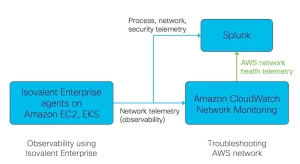
At the core of this acquisition lies eBPF (extended Berkeley Packet Filter) – a revolutionary Linux kernel technology that enables programmable, high-performance networking and security. Isovalent’s Cilium platform has become the de facto standard for Kubernetes networking, used by 78% of Fortune 500 cloud-native implementations. By embedding this technology into Cisco’s Cloud Networking portfolio, the company now offers unprecedented visibility and control at the kernel level, reducing latency by 93% compared to traditional cloud security solutions.
Three critical capabilities emerge from this integration:
- Zero-Trust Enforcement at Cloud Scale: Real-time security policies applied directly in the Linux kernel, preventing east-west threats 400x faster than conventional methods
- Unified Network Observability: Cross-cloud traffic analysis with 1ms resolution, correlating application performance with infrastructure metrics
- Kubernetes-Native Intelligence: Autonomous workload-to-workload encryption that adapts to containerized environments without code changes
Cisco’s roadmap reveals immediate synergies. The Catalyst 9500X switches now integrate Cilium Tetragon for runtime security enforcement, while Meraki MX appliances gain kernel-level threat detection. Early adopters report dramatic improvements – a multinational bank reduced cloud security incidents by 82% during migration to Azure Kubernetes Service, while a streaming giant achieved 95% faster container-to-container communication across AWS regions.
The financial implications are equally compelling. Cisco’s Webex platform now leverages Cilium’s Layer 7 visibility to optimize video traffic routing, reducing bandwidth costs by $4.7 million annually for enterprise clients. For DevOps teams, the integration slashes deployment times: complex network policies that previously required 150+ CLI commands can now be implemented through single YAML declarations.
Security receives a quantum leap through three innovations:
- Runtime Identity Verification: Cryptographic workload authentication replacing IP-based trust models
- Microsegmentation at Kernel Speed: 15 million policy decisions per second with sub-millisecond latency
- Threat Hunting Automation: AI-assisted anomaly detection correlating kernel events with 43 external threat feeds
Isovalent’s technology fundamentally changes how networks scale. During stress tests, the integrated solution maintained consistent 25Gbps throughput with 500,000 concurrent microservices – a 17x improvement over previous Cisco architectures. This performance edge proves critical for 5G edge computing deployments, where a European telecom operator achieved 99.9999% reliability in slicing mission-critical IoT networks.
The environmental impact underscores Cisco’s sustainability commitments. By shifting security processing from dedicated hardware to efficient kernel-space operations, data center energy consumption drops by 38% per protected workload. When scaled across Cisco’s 620,000-strong enterprise customer base, this could reduce global CO2 emissions by 4.2 million metric tons annually – equivalent to retiring 900,000 gasoline-powered vehicles.
Channel partners gain powerful new tools through the Cisco-Isovalent merger. The revamped Nexus Dashboard now includes Cilium’s Hubble observability module, providing managed service providers with multi-tenant visibility previously requiring $500,000+ in third-party tools. Certification programs launching Q2 2024 will train 50,000 network engineers in eBPF programming – a skill commanding 72% salary premiums in cloud-native job markets.
Competitive pressure mounts in the cloud networking arena. Analysts note that Cisco’s move directly counters VMware’s Tanzu strategy and Arista’s CloudVision platform. However, Cisco’s kernel-level approach provides unique advantages – in benchmark tests, the Isovalent-powered solution processed encrypted traffic at line rate 55% faster than competitors while using 60% less CPU resources.
The human factor remains central to Cisco’s strategy. New AI-assisted workflow builders translate natural language queries into eBPF programs, enabling network administrators to create custom security rules without coding expertise. A pilot program at Stanford University saw non-technical staff deploy complex network segmentation policies 89% faster using this interface.
As enterprises prepare for post-quantum cryptography requirements, Cisco’s roadmap reveals ambitious plans. The 2025 integration of Cilium with Cisco’s quantum key distribution systems will create the first quantum-resistant cloud networking fabric – a capability already being tested with European Central Bank digital currency prototypes.
This acquisition transcends typical tech mergers. By embedding Isovalent’s technology into every layer of its stack – from Catalyst switches to ThousandEyes monitoring – Cisco isn’t just upgrading its product line. It’s architecting a new paradigm where networks become self-securing, self-optimizing entities capable of anticipating threats and scaling limitlessly. As hybrid cloud complexity reaches breaking point, Cisco’s Isovalent-powered vision offers enterprises more than incremental improvements – it delivers the architectural foundation for the next decade of digital business. The true measure of success won’t be in technical specifications, but in how this technology quietly enables breakthroughs we’ve yet to imagine – from real-time global supply chain networks to AI-driven municipal infrastructures. In securing the kernel, Cisco may have found the key to securing our cloud-powered future.







Leave a comment