
The landscape of wired networking is shifting. For years, Gigabit Ethernet (1G) has been the undisputed standard, reliably powering everything from home offices to enterprise networks. But as our digital demands escalate—with 4K/8K video streaming, large-scale cloud backups, real-time collaboration tools, and bandwidth-intensive applications becoming the norm—that familiar 1G connection is starting to show its limits. This has ushered in the era of Multi-Gigabit Ethernet, specifically 2.5 Gigabit (2.5G) and 5 Gigabit (5G) ports. These technologies aren’t just incremental bumps in speed; they represent a pragmatic evolution designed to squeeze significantly more performance from the cabling infrastructure already installed in many buildings. For anyone sourcing switches or routers, understanding the real-world difference between these standards is crucial. It’s no longer about just having a connection; it’s about having a connection that doesn’t bottleneck your productivity, your entertainment, or your growth. This article cuts through the technical jargon to help you decide whether sticking with 1G makes sense, or if stepping up to 2.5G or 5G is a necessary investment for your specific scenario.
Demystifying the Multi-Gig Ethernet Port
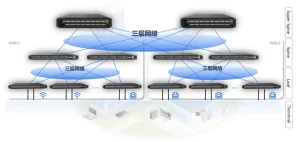
So, what exactly is a Multi-Gig Ethernet port? In simple terms, it’s a network port that breaks the 1 Gigabit per second speed barrier without forcing you to rewire your entire building. It’s built on the IEEE 802.3bz standard, which was a game-changer upon its introduction. The beauty of this technology is its backward compatibility and flexibility. A Multi-Gig port can automatically negotiate and connect at a range of speeds—from a slow 10 Mbps all the way up to 10 Gbps—depending on what the connected device supports and the quality of the cabling in use.
This means a single port on your switch can handle a legacy 1G device, a newer 2.5G access point, and a 5G-capable workstation, all while allowing each device to operate at its maximum potential. The key advantage is the ability to deliver 2.5G or 5G speeds over the common Cat5e and Cat6 cabling that is already widely deployed. This makes upgrading your network speed far more cost-effective than a jump to 10G, which often requires more expensive Cat6a or Cat7 cabling.
Breaking Down 2.5 Gigabit Ethernet
2.5 Gigabit Ethernet sits in a very useful sweet spot. It offers two-and-a-half times the bandwidth of standard 1G Ethernet but doesn’t demand the premium cost or infrastructure changes associated with 10G. It’s the perfect upgrade path for environments where 1G is becoming a bottleneck but 10G is overkill.
You’ll find 2.5G ports increasingly common on modern networking gear, including 2.5G switches, routers, and Network Interface Cards (NICs). They are particularly valuable for:
- High-performance Wi-Fi 6/6E access points: To fully utilize the wireless speed of new APs, a 2.5G backhaul connection is often necessary.
- Network-attached storage (NAS): For faster file transfers and smoother media streaming within your network.
- Power-user workstations: For professionals dealing with large files, such as video editors, graphic designers, and engineers.
The seamless backward compatibility ensures that when you plug a standard 1G device into a 2.5G port, it will simply negotiate down to 1G, maintaining full functionality.
Understanding 5 Gigabit Ethernet Capabilities
5 Gigabit Ethernet takes the performance up another significant notch, providing five times the throughput of traditional 1G. This level of speed is tailored for more demanding applications and denser environments where multiple high-bandwidth devices are competing for resources.
While 5G is less common than 2.5G at the consumer level, it’s gaining traction in business and prosumer settings. It is ideal for:
- Small business servers and storage: Drastically reducing data transfer times for backups and large file access.
- High-resolution video editing stations: Allowing editors to work directly off network storage without frustrating lag.
- Advanced applications like VR/AR workloads: Where low latency and high data transfer rates are critical.
Like its 2.5G counterpart, a 5G port is designed to be backward compatible, automatically scaling down to 2.5G, 1G, or slower speeds as needed.
1G vs. 2.5G vs. 5G: A Detailed Feature Comparison
Let’s put these three technologies side-by-side. The most obvious difference is raw bandwidth. 1G Ethernet caps at 1,000 Mbps, which has been sufficient for decades. 2.5G pushes this to 2,500 Mbps, and 5G doubles that again to 5,000 Mbps. This translates directly to how quickly you can move data across your network.
When it comes to compatibility, 1G is universally supported. For 2.5G and 5G, you need to ensure that all parts of the connection chain—the switch port, the network cable, and the device’s NIC—support the desired speed. Cost is a major factor. 1G equipment is the most affordable. 2.5G carries a modest premium, while 5G is currently at a higher price point, though costs are falling as adoption increases.
Key Decision Factors for Your Upgrade
Making the right choice isn’t just about picking the highest number. You need a practical strategy.
- Start with Your ISP’s Speed: This is your ceiling for internet access. If your plan is 300 Mbps, a 1G connection is perfectly adequate for web-based activities. However, if you have a 1.5 Gbps or 2 Gbps fiber plan, you’ll need a 2.5G router and NIC to experience those full speeds.
- Audit Your Device Capabilities: Look at the computers, NAS systems, and Wi-Fi access points on your network. Are they equipped with 2.5G or 5G NICs? Upgrading your switch is only beneficial if your devices can use the extra speed.
- Consider Future-Proofing: Even if your current needs are met by 1G, think about the next 3-5 years. Will you be adding more users? Adopting 8K video? Deploying more advanced applications? Investing in a Multi-Gig switch now can save you from another upgrade sooner than you think.
- Evaluate Your Existing Cabling: Fortunately, if your building is wired with Cat5e or Cat6, you can likely support 2.5G or even 5G over short to medium distances (up to 100 meters for 2.5G on Cat5e). This is a huge cost saver.
- Be Realistic About Your Budget: Weigh the performance gains against the investment. For many, a 2.5G switch offers the best balance of improved performance and reasonable cost.
Telecomate.com’s Multi-Gigabit Solutions: Flexibility for Evolving Networks
For network managers seeking reliable Multi-Gigabit solutions, Telecomate.com offers a range of switches designed to provide that essential flexibility. These switches support a mix of 1G, 2.5G, 5G, and 10G ports, allowing for a gradual, cost-effective network evolution. This approach ensures you can integrate faster technologies where they are needed most without a complete infrastructure overhaul. The robust management features found in these switches give you precise control over network traffic, security, and performance, ensuring that your investment delivers both speed and stability.
Final Recommendations: Aligning Speed with Actual Need
The decision between 1G, 2.5G, and 5G Ethernet ultimately hinges on a clear-eyed assessment of your present and near-future requirements. For standard office work, casual browsing, and HD video streaming, a robust 1G network remains a capable and cost-efficient solution. However, if your activities involve frequent transfers of large files, you run a high-performance NAS, you want to leverage the full potential of Wi-Fi 6/6E, or you have an internet plan exceeding 1 Gbps, then the leap to 2.5G is not just a luxury—it’s a practical necessity to eliminate network bottlenecks. 5G occupies a more niche space, delivering premium performance for power users, creative professionals, and small businesses where time is money and data throughput is critical. By carefully evaluating your ISP plan, your device ecosystem, and your growth trajectory, you can make an informed choice that ensures your network infrastructure is a catalyst for productivity, not a constraint. Explore the selection of high-performance networking equipment at Telecomate.com to find the hardware that aligns with your specific speed and reliability needs.
Leave a comment