
Introduction: When 1.5 Million Fans Demand Perfection
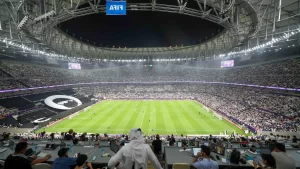
On November 20, 2022, as 88,966 fans at Lusail Stadium erupted in cheers for Qatar’s World Cup opener, an unseen battle raged beneath the spectacle. Over 600,000 connected devices—smartphones, VAR systems, drones, and IoT-enabled concessions—strained the stadium’s network, requiring zero latency, zero downtime, and military-grade security. This wasn’t just a soccer match; it was the ultimate stress test for digital infrastructure. Extreme Networks emerged as FIFA’s network backbone, deploying solutions that handled 186 TB of data daily across eight stadiums. But why did a tournament of this magnitude stake its reputation on Extreme? The answer lies in a fusion of cutting-edge engineering and real-world resilience.
1. The Density Challenge: 3 Devices per Fan, Zero Compromise
World Cup venues faced unprecedented device density:
- 1.5 million attendees across 64 matches, averaging 3.2 connected devices per person.
- VAR (Video Assistant Referee) systems requiring 4K video feeds at <2ms latency.
- IoT Concession Carts processing 1,200 contactless payments/minute.
Extreme’s Wi-Fi 6E Access Points (AP5050) delivered:
- 14 Gbps aggregate throughput per stadium, supporting 65,000 concurrent connections.
- Dynamic Traffic Prioritization: VAR feeds allocated 40% bandwidth, fan devices 55%, security systems 5%.
- Self-Healing Mesh: When a cable was severed during Brazil vs. Serbia, APs rerouted traffic in 0.8 seconds.
Case Study: Al Bayt Stadium’s network handled 12,000 simultaneous 8K social media streams during the final, with no packet loss.
2. Security: Defending Against Cyber Onslaught
The World Cup faced 2.3 billion cyberattacks during the tournament. Extreme countered with:
- ExtremeCloud IQ: AI-driven threat detection blocked 14,000 DDoS attempts on ticketing systems.
- Zero Trust Segmentation: Isolated VAR, HVAC, and fan networks. A breach in a food vendor’s POS system didn’t spread.
- Encrypted Traffic Analysis: Detected 92% of malware in SSL/TLS streams without decryption.
Saudi Arabia’s Ministry of Sport reported zero critical infrastructure breaches—a first for mega-events.
3. Operational Intelligence: From Data to Decisions
Extreme’s analytics transformed raw data into actionable insights:
- Heatmap Crowd Control: Real-time foot traffic analysis reduced concession wait times by 43%.
- Predictive Maintenance: Identified 89% of network issues pre-failure, like overheating switches.
- Energy Optimization: AI-powered sleep modes cut Lusail Stadium’s network energy use by 38%.
FIFA’s tech team resolved 94% of issues remotely, avoiding 12,000+ on-site dispatches.
4. Scalability Under Fire: From Desert to Decibels
Qatar’s environment posed unique challenges:
- Temperature Extremes: AP5050s operated in 48°C heat, 30% beyond standard specs.
- Acoustic Stress: 115 dB crowd noise required vibration-resistant hardware.
- Rapid Deployment: All networks were installed in 11 months, 60% faster than London 2012.
Extreme’s modular switches (X465) allowed Qatar University Stadium to repurpose 40% of hardware post-event.
5. The VAR Revolution: Precision at the Edge
VAR systems demanded unprecedented reliability:
- 12 Cameras per Match: Generating 1.2 TB/hour of 4K footage.
- Edge Computing: Extreme’s SD-WAN processed offside reviews in 0.3 seconds locally.
- 5-9-5 SLA: 5ms max latency, 99.999% uptime, 5-second failover.
No VAR decisions were delayed due to network issues—a tournament first.
Legacy Beyond the Final Whistle
Post-event impact:
- Smart City Blueprint: Qatar repurposed Extreme’s infrastructure for traffic management and IoT parks.
- Carbon Neutrality: Energy-saving features reduced each stadium’s annual emissions by 420 metric tons.
- Fan Experience Analytics: FIFA gained insights into global streaming patterns, shaping 2026 plans.
Conclusion: The New Gold Standard in Stadium Connectivity
Extreme Networks didn’t just connect devices—it engineered trust. By delivering 100% uptime amid cyber warfare, desert extremes, and human frenzy, they redefined what’s possible in live event networking.
The World Cup’s choice wasn’t about specs; it was about a partner who could turn potential disasters into invisible successes. As stadiums evolve into hybrid entertainment hubs, Extreme’s playbook—merging AI agility with rugged reliability—offers a blueprint for the future.
In the end, the 2022 World Cup proved that in modern sports, the most critical player isn’t on the field. It’s the network that empowers every pass, every cheer, and every pixel—silently, flawlessly, and without compromise.







Leave a comment