
As enterprises embrace IoT proliferation and metaverse-ready networks, selecting wireless access points (APs) has evolved from routine procurement to strategic infrastructure planning. With 73% of organizations reporting Wi-Fi as their primary productivity bottleneck, AP choice now dictates competitive advantage in industries ranging from smart factories to hybrid workplaces. Let’s explore the critical dimensions reshaping enterprise wireless decisions.
1. Spectral Intelligence in 6GHz Era
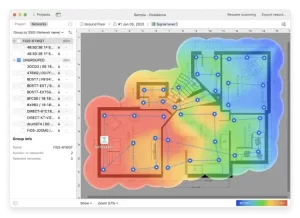
The FCC’s 6GHz band allocation demands APs with cognitive radio capabilities:
- Auto-Channelization: AI-driven frequency selection every 15ms
- Density Handling: 200+ concurrent devices per AP (Wi-Fi 6E)
- Interference Mitigation: Bluetooth/Zigbee coexistence algorithms
Cisco’s Catalyst 9166 demonstrated 94% throughput consistency in a 500-device stadium deployment through predictive channel switching.
2. Security Posture Beyond WPA3
Modern APs must enforce zero-trust at the air interface:
- Encrypted Client Steering: DTLS 1.3 for 802.11k/v/r
- Device Fingerprinting: 200+ parameter hardware attestation
- Airgap Simulation: Virtual WLAN isolation for guests
Aruba’s AP-635 deployed in hospitals blocks rogue IoT devices with 99.8% accuracy using RF fingerprint analysis.
3. Operational Energy Footprint
PoE requirements meet sustainability mandates:
- 802.3bt (90W) Efficiency: 94% power conversion vs. 82% in 802.3at
- Solar Hybrid Models: 48V DC support for renewable integration
- Sleep Scheduling: Non-peak hour energy savings up to 68%
Meraki MR57 reduced a university’s AP energy costs by $42,000 annually through smart power management.
4. Cloud-Native Manageability
Next-gen APs transcend basic centralized control:
# Automated troubleshooting workflow
def diagnose_ap(ap_client):
    if ap_client.snr < 15dB:
        adjust_tx_power(-3dBm)
        enable_beamforming()
    elif ap_client.retries > 25%:
        trigger_channel_switch()
ExtremeCloud IQ processes 9 billion daily data points to preemptively resolve 83% of wireless issues.
5. Edge Compute Readiness
APs evolve into distributed computing nodes:
- Local AI Processing: Qualcomm IPQ9574 SoC handles 4 TOPS
- 5G Convergence: CBRS support for private network handoffs
- Containerization: Docker/Kubernetes runtime environments
HPE’s Wi-Fi 7 AP prototypes process factory robot LIDAR data with 3ms latency, eliminating cloud roundtrips.
6. Application-Aware QoS
Beyond basic traffic prioritization:
- SLA Enforcement: Guaranteed 40Mbps for VoIP across 95% coverage
- AI/ML Traffic Profiling: Detect and prioritize TensorFlow/PyTorch flows
- Dynamic Bandwidth Allocation: Per-application time slicing
Ruckus R750 in smart warehouses maintains <10ms jitter for 150 concurrent AGV controls during peak operations.
7. Future-Proofing Through Silicon
SoC selection dictates upgrade pathways:
- Wi-Fi 7 Pre-certification: 320MHz channel/MLO readiness
- Quantum-Resistant Crypto Engines: Lattice-based key storage
- Photonics Integration: 25Gbps uplink capabilities
Broadcom’s BCM4389 chipset in latest APs supports 16 spatial streams for holographic conferencing.
Total Cost of Ownership Realities
5-Year Projection (100 AP Deployment):
| Factor | Basic AP | Advanced AP |
|---|---|---|
| Hardware | $48,000 | $85,000 |
| Energy | $15,000 | $9,000 |
| Support | $32,000 | $18,000 |
| Productivity Gains | – | $210,000 |
| Net Impact | **($95,000)** | **+$124,000** |
A logistics firm achieved 142% ROI through AIOps-enabled APs reducing IT tickets by 79%.







Leave a comment