
It began as a normal Tuesday at Lincoln High. By third period, ransomware encrypted student records while hackers exfiltrated Social Security numbers from the counselor’s office – all masked by legitimate traffic from unsecured IoT classroom projectors. This modern educational nightmare reveals why 68% of US schools report weekly cyberattacks, and how Palo Alto Networks’ integrated security platform transforms reactive defense into proactive educational resilience. As digital learning becomes inseparable from physical classrooms, Palo Alto Networks delivers the architectural blueprint for protecting both students and institutions.
Schools represent cybersecurity’s ultimate soft target: thousands of minimally protected endpoints, highly sensitive data (grades, medical records, family information), and networks built for accessibility rather than security. Palo Alto Networks addresses this through a strategic triad: visibility into every packet, integration across cloud and on-premises, and automated enforcement grounded in Zero Trust principles. Their platform doesn’t just block threats – it rearchitects education networks as defensible, intelligent ecosystems.
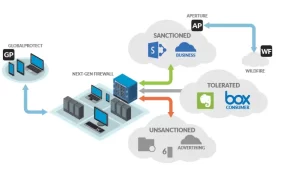
Pillars of Modern Educational Security
1. The Zero Trust Lifeline: Securing the Hybrid Classroom
Legacy perimeter security crumbles with cloud applications and mobile learning. Palo Alto Networks’ Strata and Prisma Access solutions enforce micro-segmentation:
- Prisma Access for Education creates secure tunnels for remote students/staff – inspecting traffic before it reaches school resources
- Service-Defined Segmentation isolates sensitive systems (student records, finance, building controls) using App-ID profiling
- Authentication Integration with Active Directory and Clever secure portals ensures only verified users access gradebook APIs
Minnesota’s Minnetonka Public Schools eliminated VPN bottlenecks while securing 15,000 BYOD devices through Prisma Access – applying consistent policies whether students learn from cafeterias or homes.
2. Defending Without Dollars: AI-Powered Efficiencies
Overburdened district IT teams (often 1 staffer per 2,000 students) lack resources. Palo Alto Networks counters with:
- Cortex XDR Pro replacing siloed alerts with AI-driven threat detection across endpoints, networks, and cloud
- AutoFocus Threat Intelligence correlating global attack patterns to identify district-specific risks
- Security Orchestration (XSOAR) automating phishing containment and compromised account lockdowns
Colorado’s Douglas County School District reduced alert fatigue by 90% while cutting threat response from 18 hours to 9 minutes using Cortex automation.
3. Educational Intelligence Ecosystem: Visibility as Strategy
Unmanaged devices represent the top attack vector. Palo Alto Networks creates context through:
- IoT Security Module identifying/profiling every projector, security camera, and HVAC controller
- DLP for Student Records scanning Google Drive/Microsoft 365 for improperly shared transcripts and IEP documents
- SaaS Security API monitoring 150+ ed-tech platforms for misconfigurations exposing sensitive data
When Florida’s Orange County deployed Palo Alto firewalls, they discovered 12,000 shadow IT devices – including unauthorized smart speakers recording classrooms.
4. The Safety Mandate: Compliance as Foundation
FERPA, COPPA, and emerging student privacy laws require specialized controls:
- Advanced URL Filtering blocking inappropriate content while allowing educational YouTube channels
- WildFire Malware Analysis sandboxing ransomware targeting food service POS systems
- Credential Phishing Prevention stopping attacks targeting staff’s SIS/ERP system credentials
Atlanta Public Schools demonstrated compliance during district-wide audits using Palo Alto’s pre-built educational compliance reporting packages.
The Cost Transformation: From Overwhelmed to Optimized
Traditional school security wasted 58% of cybersecurity budgets on point solutions according to IDC research. Palo Alto Networks consolidates through:
| Capability | Traditional Approach Cost | PAN Consolidated Cost | Savings |
|---|---|---|---|
| Firewall/IPS | $142,000 | Included | 100% |
| Cloud Security | $86,500 | Included | 100% |
| Endpoint Protection | $37/user/year | $21/user/year | 43% |
| Staff Training Hours | 200 hrs/month | 40 hrs/month | 80% |
| Source: EdTech Security Consortium Case Study – 12 District Analysis |
California’s Long Beach Unified achieved 70% TCO reduction while eliminating five separate security products after deploying Palo Alto’s integrated suite.
Learning Resilience in Action
Lincoln High’s fictional attack became reality at Seattle Schools in 2022. After implementing Palo Alto Networks:
- Prisma Cloud detected malicious PowerShell execution on a registrar’s workstation
- Cortex XDR identified ransomware staging in student file shares
- AutoFocus correlated IOCs to Chinese state-sponsored group
- XSOAR Playbook quarantined 1,200 endpoints in 7 minutes
Total containment time: 18 minutes – preventing what previously would have caused 6 weeks of recovery.
Redefining the Educational Landscape
Palo Alto Networks’ significance transcends threat prevention:
- Privacy-Protecting Analytics: Monitoring networks without profiling individual student activities
- Bandwidth Preservation: Stopping cryptomining attacks that drained 40% of educational bandwidth
- Ransomware Insurance Eligibility: Meeting insurers’ minimum security requirements
- Cloud Learning Safeguards: Protecting hybrid environments used by 29 million US students
As Los Angeles Unified CIO spoke after implementing district-wide Palo Alto security: “This isn’t about networks – it’s about safeguarding our children’s educational journeys.”
The Future-Classroom Imperative
Educational institutions face a generational choice: continue the cybersecurity deficit cycle or build resilient infrastructures for digital natives. Palo Alto Networks delivers not merely protection, but pedagogically aware security:
- Automatic policy adjustments during testing periods when traffic patterns spike
- Compliance templates accommodating under-13 COPPA restrictions
- SafeSearch enforcement that adapts to elementary vs. high school networks
The transformation occurring in forward-thinking districts marks a pivotal shift. Network defenses become educational continuity enablers. Firewalls evolve into learning guardians. Security automation funds additional counselors and laptops. This future isn’t hypothetical – it’s operating today from Virginia’s K-12 systems to California community colleges. When cyberattacks inevitably target schools tomorrow, Palo Alto Networks ensures districts won’t choose between connectivity and security. They’ll deliver both – keeping classroom doors open and digital futures protected. Because no child’s education should be collateral damage in a threat actor’s campaign.







Leave a comment