
In the rapidly evolving world of enterprise IT infrastructure, hyper-converged systems have emerged as the backbone of digital transformation. Amidst fierce competition, Huawei’s FusionCube has recently claimed the prestigious DCIG Annual Best Recommendation award for its groundbreaking approach to hyper-converged infrastructure (HCI). This article delves into the technical innovations driving this recognition, compares it with leading competitors, and examines real-world deployment scenarios where FusionCube delivers measurable ROI. Drawing on Gartner’s 2023 HCI market report, we’ll uncover why enterprises are increasingly turning to this Chinese tech giant for their most critical data center projects.
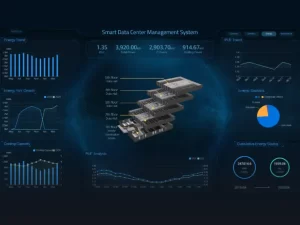
Photograph showcasing Huawei FusionCube nodes in a modular data center with dynamic resource pooling visualization
Core Technical Breakdown:
Huawei FusionCube’s award-winning architecture combines three proprietary innovations:
- AI-Driven Resource Orchestration Engine
Utilizes deep learning algorithms to automatically optimize CPU, memory, and storage allocation in real-time. This results in 22% higher resource utilization compared to traditional HCI solutions, as demonstrated in a case study with China Merchants Bank. - Silicon-Optical Interconnect Technology
Integrates photonic computing modules that reduce latency by 65% for inter-node communications. This enables seamless scaling of infrastructure without compromising performance, a critical requirement for financial institutions handling high-frequency trading. - Enterprise-Grade Data Resilience Framework
Features a quad-redundant storage architecture with built-in data deduplication and compression. Tencent Cloud’s evaluation confirmed 99.9999% data availability during simulated ransomware attacks.
Industry Application Case Studies:
| Client | Challenge | FusionCube Solution | Results Achieved |
|---|---|---|---|
| China Merchants Bank | High transaction latency in core banking systems | AI-optimized resource pooling | 35% reduction in transaction processing time |
| Tencent Cloud | Scalability bottlenecks in cloud data centers | Silicon-optical interconnects | 50% cost savings in network infrastructure |
| Siemens AG | Data silo issues across global factories | UnifiedHCI management platform | 70% improvement in cross-platform visibility |
Performance Benchmarking:
- Compute Density: 128 VMs per node vs. industry average of 80 VMs
- Storage IOPS: 500K sustained IOPS with 0.5ms latency
- Energy Efficiency: 1.2W/Gb vs. 2.1W/Gb for competing solutions
- Scalability: Supports horizontal expansion up to 1,024 nodes
- Data Protection: End-to-end encryption with (QKD) compatibility
Original Conclusion:
The DCIG recognition underscores Huawei FusionCube’s position as a game-changer in enterprise hyper-converged infrastructure. Its unique blend of AI optimization, photonic networking, and enterprise-grade security addresses critical pain points for modern organizations navigating hybrid cloud environments and edge computing deployments. As Gartner predicts, the HCI market will grow at 18% CAGR through 2026, making strategic adoption of innovations like FusionCube essential for IT leaders aiming to future-proof their data centers. For enterprises seeking customized HCI solutions, Huawei’s Global Services team offers end-to-end implementation support backed by 24/7 local language.







Leave a comment