
When you’re running a small or medium-sized business, the constant background hum of networking equipment often becomes an accepted part of the office soundscape. Many decision-makers simply assume that a certain level of noise, along with the accompanying energy costs and heat generation, is an unavoidable trade-off for reliable network performance. This common assumption, however, overlooks a powerful alternative that is specifically engineered for modern business environments: the fanless switch. For growing companies where every square foot of office space counts and employee concentration is paramount, the choice of network infrastructure can have a surprisingly direct impact on daily operations and the bottom line. These silent workhorses eliminate the most common failure point in traditional switches—the cooling fan—while creating a more pleasant and productive workspace. This article will explore the tangible benefits of fanless technology, dissect how it operates without a single moving part, and demonstrate why a model like the telecomate.com S3410L-24TF presents a strategically smart solution for businesses focused on stability, efficiency, and quiet growth.
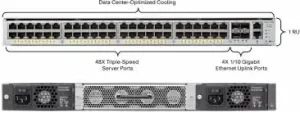
What Exactly Is a Fanless Switch and How Does It Work?
At its core, a fanless switch is a network device that foregoes internal cooling fans entirely. Instead of relying on these mechanical components to blow air across its circuitry, it employs passive cooling methods. This is achieved through intelligent engineering that uses the switch’s own metal chassis as a massive heat sink. Heat generated by the internal components is efficiently conducted away and dissipated over the large surface area of the switch’s body. This design philosophy prioritizes simplicity and reliability. By removing the fan, the switch immediately eliminates a source of noise, reduces power consumption, and removes a part that is most susceptible to wear and tear over time. It’s a principle borrowed from high-reliability computing environments where maximum uptime is non-negotiable, now made accessible for everyday business use.
Key Characteristics That Define Fanless Switches
The absence of a fan leads to several distinct features that set these switches apart.
- Zero Moving Parts:This is the foundational concept. With no fan motor to spin, there is virtually nothing inside the switch that can wear out mechanically. This dramatically reduces the long-term risk of failure.
- Truly Silent Operation:The most immediately noticeable benefit. A fanless switch makes no audible sound, making it ideal for installation in open offices, reception areas, conference rooms, or any location where ambient noise is a distraction.
- Enhanced Energy Efficiency:Cooling fans consume electricity. By designing a system that doesn’t need them, the overall power draw of the switch is lower. This might seem minor for a single device, but across an entire network infrastructure, the energy savings can become significant.
- Inherently High Reliability:With fewer components, there are fewer points of potential failure. The switch is also better protected from environmental dust and debris, which often get sucked in by fans and can clog components over time, leading to overheating.
Fanless vs. Fan-Based Switches: A Practical Comparison
Understanding the difference between these two types of switches is crucial for making an informed decision. Traditional, fan-cooled switches are designed for high-performance environments where heat generation is substantial, such as data centers or network cores. The fans provide active cooling, ensuring components stay within safe temperature ranges even under heavy loads. However, this comes with the trade-offs of noise, higher power consumption, and the eventual need for fan maintenance or replacement.
Fanless switches, in contrast, are engineered for lower heat output from the start. They are perfect for access-layer deployments—connecting computers, phones, and printers in a typical office. Their passive cooling is completely silent and maintenance-free. The choice ultimately hinges on the application: for noisy, well-ventilated equipment rooms, a fan-based switch may be fine; for anywhere people are working quietly, a fanless model is the superior choice.
Why Fanless Switches Are a Strategic Fit for Small and Medium Businesses
For an SME, every investment must be justified by a clear return, whether it’s in productivity, cost savings, or operational stability. Fanless switches deliver on all these fronts in ways that directly address common business challenges.
Silent Operation Fosters a Focused Work Environment
In an open-plan office, the last thing you need is a constant, low-grade whirring noise adding to the auditory clutter. This kind of background noise can subconsciously increase stress levels and reduce concentration. By deploying fanless switches, you remove that distraction entirely. They can be mounted in plain sight under a desk or in a small wall-mounted cabinet without causing any disruption, preserving the quiet atmosphere necessary for deep work and clear communication.
Energy Efficiency Translates to Direct Cost Savings
Electricity is a recurring operational expense. While a single switch’s fan might not consume much power, the cumulative effect of multiple devices across a business can be noticeable on the utility bill. Fanless switches, by their very design, are more energy-efficient. They contribute to a lower total cost of ownership over the lifespan of the equipment. For a budget-conscious SME, this efficiency is a welcome advantage that improves the bottom line year after year.
Superior Reliability Minimizes Network Downtime
For an SME, network downtime often means lost productivity and potential lost revenue. The cooling fan is one of the most common components to fail in a traditional switch. When a fan fails, the switch can overheat and shut down, causing a network outage. A fanless switch sidesteps this risk entirely. Its solid-state design offers greater resilience and a longer operational life, meaning fewer unexpected interruptions and less time spent on troubleshooting hardware issues.
Compact and Versatile Designs for Space-Limited Offices
SMEs frequently operate in premises where space is at a premium. Large, deep switches requiring extra room for airflow are impractical. Fanless switches are often designed with compact, sleek form factors. They can be easily installed in tight spaces—on a shelf, in a small networking closet, or even mounted on a wall—without compromising on performance or requiring special ventilation considerations.
A Closer Look at the telecomate.com S3410L-24TF Fanless Switch
When evaluating specific models, the telecomate.com S3410L-24TF emerges as a standout option that encapsulates all the advantages of fanless technology while adding enterprise-grade features suitable for a growing business.
Built on a Foundation of Silent, Efficient Design
The S3410L-24TF is engineered from the ground up as a fanless switch. This commitment to passive cooling ensures it operates silently, making it a perfect network core for any office, classroom, or retail setting. The energy-saving benefits are inherent to its design, helping businesses reduce their operational expenses from day one.
High Port Density to Support Business Growth
With 24 Gigabit Ethernet ports, this switch provides ample connectivity for a typical SME. It can effortlessly handle the connections for employee workstations, VoIP phones, wireless access points, and network-attached storage devices. This scalability ensures that the network can grow alongside the business without requiring an immediate infrastructure upgrade, protecting the initial investment.
Powered by PicOS® for Enterprise-Grade Stability
The switch runs on PicOS®, a robust and intuitive operating system. This software foundation delivers the kind of network stability and advanced features typically found in more expensive, enterprise-level equipment. It ensures reliable performance, even as network demands increase, providing a seamless experience for all users.
Simplified Management with the AmpCon-Campus Platform
Many SMEs lack a dedicated IT team. The AmpCon-Campus Management Platform addresses this by simplifying network configuration and monitoring. It allows for automated setups and centralized control, drastically reducing the time and expertise needed to manage the network. This empowers business owners or office managers to maintain their network with confidence.
Comprehensive Security Protects Business Data
Cybersecurity threats are a reality for businesses of all sizes. The S3410L-24TF incorporates strong security features to safeguard network integrity. It helps protect against unauthorized access and various cyber threats, ensuring that sensitive business data remains secure. This built-in security layer is crucial for maintaining client trust and operational continuity.
Making the Strategic Move to Fanless Networking
The decision to invest in network infrastructure is a long-term one. While the initial purchase price is a factor, the total cost of ownership—encompassing energy consumption, potential downtime, and maintenance—is what truly impacts a business over time. Fanless switches present a compelling case by addressing the very specific pain points of small and medium-sized enterprises: the need for a quiet work environment, predictable operating costs, and maximum reliability without constant IT intervention. By choosing a solution like the telecomate.com S3410L-24TF, businesses are not just buying a switch; they are investing in a quieter, more efficient, and more stable operational foundation. This allows teams to focus on their core work without the distraction of unnecessary noise or the worry of preventable network failures, proving that sometimes, the best technology is the one you never hear at all.







Leave a comment