
The race against milliseconds is brutal. In today’s hyper-connected world, whether you’re a high-frequency trader executing million-dollar orders split seconds before the market shifts, a competitive esports gamer needing pixel-perfect response, or a surgeon performing remote-assisted procedures where instruments must respond exactly when commanded – latency kills opportunity, precision, and immersion. That sluggish feeling, that frustrating disconnect between input and output? It’s often the hidden choke point holding back transformative applications. This relentless pressure demands infrastructure that doesn’t just move data, but anticipates it. Huawei low latency switch technology steps squarely into this arena, promising to slash those critical delays where every microsecond counts. It’s not merely about faster pipes; it’s about redefining what’s possible for applications demanding near-instantaneous interaction. The question now becomes, can leveraging this specific low latency switch capability finally empower these cutting-edge, real-time applications to truly overcome the stubborn speed barriers that have limited them?
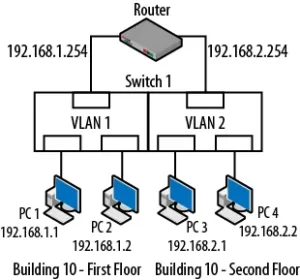
So, how does this actually help Real-Time Applications beat the speed barrier? Let’s cut through the fluff. It boils down to relentless optimization at multiple levels, targeting the major culprits of delay within the switch itself and its interaction with the network.
First, ditch the notion that raw bandwidth (big pipes) equals low latency. It’s about speed within the silicon. Huawei tackles this head-on with custom ASICs designed for blazingly fast packet processing. Think of traditional switches needing multiple hops and lookups inside their internal architecture just to figure out where a tiny piece of data (a packet) goes next. These hops add microseconds – unacceptable for real-time traffic. The targeted low latency switch solutions focus on ultra-short pipeline design and massively parallel processing engines inside the chip. Packets get classified, prioritized, and forwarded almost as they arrive, significantly cutting internal processing delay. It’s stripping out every unnecessary instruction and stage possible within the switch fabric.
Next, traffic jams at the ingress/egress ports are latency killers. Picture ten lanes of traffic all trying to merge into a single exit ramp suddenly – chaos ensues. Advanced deep buffer management and truly intelligent queuing algorithms are crucial for a genuine low latency switch. This isn’t just FIFO (First-In-First-Out). It means the switch understands the nature of the traffic. High-priority, time-sensitive packets (like a trader’s order, a gamer’s mouse click, or robotic surgery command) get identified instantly using techniques like Deep Packet Inspection (DPI) and IEEE 802.1Q prioritization schemes, then shoved to the front of the line within the switch, bypassing any congestion caused by bulk data transfers happening simultaneously. This priority scheduling happens consistently, preventing bursts of regular data from drowning out critical packets.
Then there’s the elephant in the room: congestion management across the whole network path. A switch can be internally fast, but if it’s dumb about predicting upstream/downstream congestion, queues build, and latency spikes. Modern low latency designs incorporate explicit congestion notification protocols combined with finely tuned Active Queue Management (AQM) techniques. They don’t just react to congestion after it happens; they anticipate it using sophisticated models and gently signal traffic sources to slow down before buffers overflow, maintaining smooth flow specifically for the time-sensitive streams. It’s proactive flow control, preventing the hard stops and massive delays inherent in basic TCP congestion avoidance.
Finally, the physical layer matters more than many realize for a true low latency switch. The choice of ports (10G/25G/40G/100G+) isn’t just about throughput; higher speeds mean packets physically spend less time on the wire entering and exiting the switch. Furthermore, eliminating Layer 2 loops without complex protocol convergence times (using advanced loop protection mechanisms) is vital. Using cut-through switching instead of slower store-and-forward methods shaves off critical microseconds per hop. Precise timing synchronization, leveraging technologies like IEEE 1588 PTP (Precision Time Protocol) accurately timestamps packets, allowing applications to compensate for jitter. This integrated approach – faster chips, smarter queues, intelligent congestion avoidance, and leaner port/forwarding physics – is how these switches systematically dismantle the speed barrier piece by piece. The result is consistently minimized latency, measured not in optimistic lab scenarios, but in the demanding chaos of production networks handling mixed, unpredictable workloads.
The payoff isn’t theoretical. Imagine financial traders equipped with Huawei low latency switch infrastructure edge-gateways. The reduction in order execution time translates directly to capturing fleeting arbitrage opportunities before competitors, protecting positions faster during volatile drops, and achieving potentially better fill prices – translating into measurable alpha generation. Every microsecond shaved off the round-trip communication path gives them an advantage. For gamers streaming demanding titles through cloud platforms like GeForce Now or PlayStation Now, the low latency switch deployed within the cloud provider’s edge pops makes the fundamental difference between perceivable lag disrupting an intense multiplayer firefight and a seamless, console-like experience convincing enough for competitive play. That responsiveness eliminates the jarring disconnect that screams “this isn’t real.” In industrial automation and telemedicine, predictable ultra-low latency means robotic arms or surgical assistants respond virtually instantaneously to remote operator inputs, enabling delicate maneuvers and remote diagnostics with confidence previously only possible with direct physical interaction. The barrier becomes not the technology, but the physical limitations of light speed itself. This reliable, predictable low-latency network layer, underpinned by purpose-built hardware like this specific switch, is what unlocks the practical deployment of latency-sensitive innovations, moving them out of controlled labs and into the messy, demanding real world where milliseconds define success or failure.
The relentless need for immediacy isn’t fading; it’s accelerating across industries. That drag, that micro-lag disrupting flow and precision, is fundamentally an infrastructure limitation. While bandwidth grabs headlines, the Huawei low latency switch approach tackles the more insidious enemy: unpredictable delay within the network’s critical junctions. By architecting silicon, software, and protocols specifically to accelerate high-priority traffic streams and manage congestion proactively, this type of switch delivers the essential underlying consistency and speed required by applications demanding near-instant feedback. The barrier hasn’t vanished, but for crucial real-time tasks – from securing market advantage to enabling remote life-saving procedures to finally delivering truly seamless cloud interactivity – this specific switch technology provides the tangible, measurable leap forward needed to push past previous limits. Investing in this low latency switch capability directly translates to deploying next-generation applications that simply couldn’t function reliably on conventional network gear. It’s the unseen engine enabling the high-stakes, high-speed digital interactions that increasingly define competitive advantage and cutting-edge experiences. When milliseconds mean millions or mission-critical precision, accepting standard lag isn’t an option. This low latency foundation changes the game.







Leave a comment