
In today’s hyper-connected business landscape, the switch huawei s2700 series has emerged as a quiet yet critical force for small to mid-sized enterprises. These unassuming devices aren’t just boxes with blinking lights—they’re the backbone of reliable data flow, security, and cost-effective scalability. With rising demands for seamless VoIP calls, uninterrupted cloud access, and IoT integration, outdated switches often become bottlenecks, throttling productivity and inflating IT budgets. The Huawei S2700 switch, however, challenges this status quo by blending enterprise-grade performance with budget-friendly pricing. But does it truly deliver on its promise to simplify complex networks while keeping costs low? Let’s dissect why this series is gaining traction among IT managers who refuse to compromise between quality and affordability.
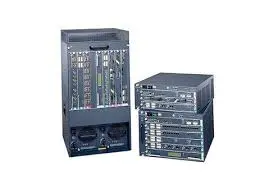
The Silent Hero: How the Huawei S2700 Switch Works Behind the Scenes
The first title poses a question: Is the Huawei S2700 Switch Your Network’s Silent Hero? The answer lies in its ability to handle multitasking without fanfare. Unlike entry-level switches that falter under heavy traffic, the S2700 series supports advanced Layer 2 features like VLAN tagging, QoS prioritization, and port isolation—capabilities typically reserved for pricier models.
For instance, a growing e-commerce startup might use the huawei s2700 switch to segment its network: isolating POS systems from guest Wi-Fi to prevent security breaches while prioritizing bandwidth for live inventory updates. The switch’s “silent” strength is its granular control. Administrators can configure traffic policies to ensure video conferencing tools never buffer during peak hours, even if dozens of devices are connected.
But what about durability? The S2700’s fanless design isn’t just about noise reduction—it eliminates moving parts that often fail in dusty environments. A warehouse using these switches can operate in harsh conditions without fearing sudden hardware meltdowns. Plus, its energy-efficient chips cut power consumption by up to 30% compared to older models, a win for sustainability-focused businesses.
Affordable Scalability: Breaking Down Cost vs. Value
The second title asks: Can Affordable Enterprise Switching Redefine Scalability? Affordability here isn’t about cutting corners—it’s about strategic engineering. The Huawei S2700 achieves this through three pillars:
- Simplified Upgrades: Traditional enterprise switches often require forklift upgrades (replacing entire systems) when expanding. The S2700’s stackable design lets businesses add units incrementally. A school district, for example, could start with a 24-port switch for one building and later stack a 48-port model as more classrooms go digital—no need to scrap the initial investment.
- Maintenance Savings: With intuitive web-based management, the S2700 reduces reliance on specialized IT staff. Features like auto-detection of faulty cables or loop prevention cut troubleshooting time. A hotel chain managing multiple locations could deploy these switches globally while training onsite staff to handle basic configurations.
- Future-Proofing: The S2700 supports IPv6, making it compatible with next-gen internet protocols. This avoids the costly scramble to replace switches when IPv4 addresses inevitably run out.
Critics might argue that “affordable” switches lack security, but Huawei counters this with port-based access control and ACL (Access Control List) filtering. A clinic using the s2700 switch could restrict medical device ports to authorized MAC addresses, adding a layer of defense against unauthorized access.
The switch huawei s2700 isn’t just a piece of hardware—it’s a strategic pivot point. For businesses tired of choosing between bleeding-edge performance and budget constraints, this series offers a middle path: robust enough to handle VoIP, surveillance systems, and high-density device networks, yet priced to accommodate lean operations. Its real value isn’t in flashy specs but in the absence of headaches—no unexpected downtime, no security loopholes, and no budget blowouts. In a world where every second of latency translates to lost opportunities, the S2700 proves that reliability doesn’t need to shout. It just needs to work. So, is it time to retire your creaky old switches? The better question is: Can you afford not to?







Leave a comment