
Modern networks face relentless pressure – soaring data volumes, unpredictable traffic spikes, and security threats lurking at every turn. Your switches and routers aren’t just boxes; they’re the central nervous system of your entire operation. When performance stutters or security falters, everything grinds to a halt. That’s where the core question hits hard: Can your current setup genuinely keep pace, or is it quietly becoming the bottleneck holding your business back? Investing in the right infrastructure isn’t an IT cost; it’s a strategic move for survival and growth. The demands placed on networks today require gear built not just for yesterday’s needs, but engineered for tomorrow’s unpredictable challenges. Juniper routers and switches represent that next evolutionary step, promising more than just connectivity – they offer a foundation for resilience and agility. But does the reality match the promise when the digital rubber meets the road?
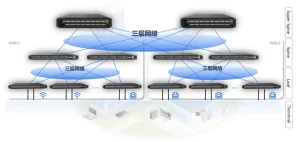
So, can Juniper routers and switches truly outpace escalating digital demands? The answer hinges on how they tackle the core pain points plaguing modern networks. First, raw performance under pressure. Legacy gear often chokes when traffic surges unexpectedly or complex applications demand low latency. Juniper routers, powered by silicon like Juniper’s custom ASICs, are designed for wire-speed processing even with advanced services like deep packet inspection or encryption enabled. This means your network doesn’t slow down when security or complex routing policies are applied – a critical factor for real-time applications and large-scale data transfers. It’s about consistent speed, not just peak theoretical numbers. Similarly, Juniper switches, particularly in the access and aggregation layers, leverage high-throughput architectures that prevent bottlenecks, ensuring smooth user experiences even during peak usage. You need switches that don’t just connect devices but intelligently manage traffic flows without introducing lag.
Next, operational complexity is a massive drain. Managing dozens of devices with different interfaces and manual configurations eats time and breeds errors. Juniper’s approach, centered on platforms like Junos OS Evolved and automation tools (Junos OS itself is renowned for its consistency and programmability), offers a unified operational experience. Think single-pane-of-glass visibility, automated provisioning, and streamlined troubleshooting across your entire router and switch fleet. This drastically cuts the time spent on mundane tasks, reduces misconfigurations, and allows your team to focus on strategic initiatives rather than firefighting. Automation isn’t a luxury; it’s essential for scaling efficiently and maintaining reliability in complex environments. The ability to push consistent configurations or roll back changes instantly across hundreds of devices translates directly into uptime and cost savings.
Security is non-negotiable. Threats are sophisticated and pervasive. Juniper routers integrate advanced threat prevention capabilities directly into the forwarding path. This means inspecting traffic for malware, exploits, and command-and-control communications withoutcreating performance bottlenecks or requiring separate, expensive security appliances for every segment. Built-in encryption secures data in transit, while features like MACsec provide hardware-accelerated link-layer security between switches. Juniper switches also offer robust segmentation capabilities (like EVPN-VXLAN) to isolate sensitive traffic and contain breaches, forming a critical part of a zero-trust architecture. It’s security woven into the fabric of the network, not bolted on as an afterthought. This integrated approach closes gaps that traditional point solutions might miss.
Finally, scalability and future-proofing. Digital demands willgrow. Can your infrastructure scale gracefully without forklift upgrades? Juniper’s modular platforms, both in routers (like the PTX and MX Series) and high-end switches (like the QFX Series), are built for massive scale. They offer investment protection through field-upgradable components, support for emerging standards (like 400G/800G interfaces), and architectures designed for seamless expansion. This means you can start where you are and grow your capacity and capabilities incrementally, aligning costs with actual needs. Avoiding costly rip-and-replace cycles every few years is a significant financial advantage. The flexibility to mix and match platforms within the Juniper ecosystem also provides tailored solutions without vendor lock-in headaches.
Ultimately, choosing Juniper routers and switches isn’t just about buying hardware; it’s about investing in a network foundation designed for the relentless pace of digital business. Their strength lies in delivering uncompromising performance even under heavy security loads, drastically simplifying operations through automation and a unified OS, embedding robust security directly into the data path, and offering scalable architectures that grow with your ambitions. For businesses where network performance, security, and agility directly impact revenue and reputation, Juniper provides the critical infrastructure needed not just to meet today’s demands, but to confidently outpace tomorrow’s. When your switches and routers are this resilient and intelligent, your entire organization moves faster and operates with greater confidence. Isn’t it time your network backbone became your strategic advantage?







Leave a comment