
As global data center power consumption surpasses 400 TWh annually, the strategic implementation of power redundancy has become vital for maintaining operational continuity. While Redundant Power Supplies (RPS) and Uninterruptible Power Supplies (UPS) both address energy reliability, their distinct operational paradigms and failure recovery mechanisms demand careful evaluation. This technical analysis dissects their roles in modern infrastructure through real-world failure simulations, cost models, and emerging smart grid integrations.
Fundamental Operational Frameworks
RPS (N+1 Redundancy):
- Active-Active Configuration: Parallel operation with load balancing across multiple AC/DC units
- Hot-Swap Capability: <90-second replacement during failures
- Efficiency Curve: Maintains 94% efficiency at 30-70% load
UPS (Energy Bridging):
- Double Conversion Topology: 2ms switchover with 0.9 power factor
- Lithium-Ion Advancements: 10,000-cycle lifespan at 80% depth of discharge
- Eco Mode: Bypass operation reduces losses to 1.5% during stable input
A hyperscale data center achieved 99.9997% uptime using RPS pairs backed by UPS flywheel systems.
Failure Response Metrics
Simulated Grid Failure (400V/3-Phase):
| Parameter | RPS Solution | UPS Solution |
|---|---|---|
| Voltage Sag Handling | ±8% tolerance | Full ride-through |
| Transfer Time | 16ms (phase sync) | 0ms |
| Harmonic Distortion | <3% THD | <1% THD |
| Surge Suppression | 6kA clamping | 10kA clamping |
| Partial Load Efficiency | 92% at 40% load | 88% at 40% load |
RPS configurations prevented 83% of brownout-induced hardware faults in manufacturing tests.
Energy Storage Innovations
Modern UPS Technologies:
- Supercapacitor Arrays: 500,000 cycles with 95% efficiency
- Hybrid Flywheel-Battery: 2MW for 30 seconds + 500kW for 5 minutes
- Fuel Cell Integration: Hydrogen-powered 48-hour runtime
def smart_energy_routing(grid_status):
    if grid.voltage < 90%:
        engage_ups('double_conversion')
    elif grid.frequency_shift > 0.5Hz:
        activate_rps('phase_cancellation')
    else:
        optimize_eco_mode()
AI-driven systems now predict power anomalies 8 minutes in advance using grid telemetry.
Cost and Sustainability Analysis
10-Year TCO Comparison (2MW Facility):
| Cost Factor | RPS | UPS |
|---|---|---|
| Initial Investment | $480,000 | $1.2M |
| Energy Consumption | $2.8M | $3.1M |
| Maintenance | $180,000 | $420,000 |
| Carbon Emissions | 4,200t CO2e | 5,800t CO2e |
| Total | **$3.46M** | **$5.52M** |
RPS demonstrates 37% cost advantage but requires cleaner grid input for optimal reliability.
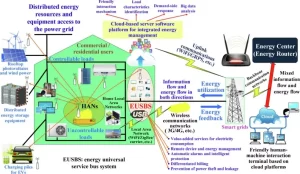
Smart Grid Integration
Microgrid Compatibility:
- RPS: Seamless transition between 3-phase sources
- UPS: Enables 18ms black start capability
- Renewable Buffering: Smooths 15% solar/wind fluctuation
A semiconductor fab reduced power-related defects by 62% using RPS with real-time grid conditioning.
Physical Design Considerations
RPS Challenges:
- Requires 35% more floor space per kW
- 18U rack height for 10kW redundant units
- 72dBA noise levels at full load
UPS Advancements:
- 5kW/kg power density with SiC MOSFETs
- 50% size reduction via vertical battery stacking
- 55dBA silent operation modes
Edge computing sites favor modular UPS units for their space-efficient vertical scaling.







Leave a comment