
you’ve invested in rock-solid Cisco switches to power your network – the backbone of your operations. But are you getting maximum value and ironclad security from that investment? As threats grow smarter and the demand for seamless access explodes with BYOD and IoT, simply relying on switch-level controls isn’t cutting it anymore. That’s where the strategic integration of Aruba ClearPass becomes absolutely critical. Without a unified, intelligent policy manager like ClearPass, managing who gets on your network, what they can access, and ensuring every Cisco switch enforces those rules consistently becomes an administrative nightmare fraught with vulnerabilities. It transforms your secure switching infrastructure from a potential fortress into a collection of loosely guarded gates, leaving sensitive assets exposed. Achieving true network access control (NAC) requires a smarter layer of centralized visibility and enforcement working hand-in-glove with your switching fabric. That seamless partnership between authentication granularity and switching power is what delivers real security posture strength.
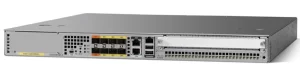
Diving Deeper: Why ClearPass is the Missing Link for Cisco Switches
Think about the sheer volume and diversity of devices hitting your network daily. Employees, contractors, guests, smart TVs, cameras, HVAC systems – each needing different levels of access. Configuring Cisco switches individually to authenticate and authorize each device type based on identity and posture? That’s a recipe for burnout and inconsistency. Aruba ClearPass acts as the central brain. When a device connects to any Cisco switch configured to work with ClearPass (using protocols like RADIUS or TACACS+), the switch forwards the authentication request. ClearPass then performs the heavy lifting: checking if the user/device exists in directories like AD, assessing the device’s security posture (Is AV updated? OS patched?), and determining the appropriate network access policy. Crucially, it sends a clear instruction back to the Cisco switch: “This user belongs on VLAN 200 with access only to these servers and can only use ports 80/443.” The switch then dynamically assigns the VLAN and applies the precise access control lists (ACLs), locking down connectivity right at the port level. This on-device enforcement is vital – stopping threats before they traverse the network.
The magic lies in automation and context. ClearPass uses robust policy rules. You define criteria: “If device is corporate laptop owned by the Sales group and passes all posture checks, grant full access to Sales VLAN and resources.” Or, “If device is an unknown guest smartphone, redirect to captive portal for registration, then grant Internet-only access with rate limiting.” Once configured, this happens instantly for every connection request across all participating Cisco switches. Need to change security posture requirements for IoT devices? Update the policy once in ClearPass; it propagates immediately everywhere. New Cisco switch deployment? Configure it to point to ClearPass, and it immediately enforces all existing security policies. This eliminates the painstaking manual ACL configuration and VLAN changes on individual switches, drastically reducing complexity and the inevitable configuration errors (“switch drift”) that weaken security. Furthermore, ClearPass offers deep visibility. You gain a single pane of glass seeing every device on any connected Cisco switch, its type, user, location (switch/port), security status, and current access level – invaluable for troubleshooting and security audits. Without ClearPass, orchestrating this level of granular, consistent security enforcement across a complex Cisco switching environment is practically unmanageable at scale, leaving significant gaps attackers love to exploit.
Ultimately, deploying Aruba ClearPass to manage access policies for your Cisco switches isn’t just adding another tool; it’s fundamentally upgrading your network security model from fragmented and reactive to integrated, intelligent, and proactive. It liberates the full potential of your Cisco switching infrastructure, transforming it from mere connectivity points into powerful policy enforcement engines. You move beyond basic port security to context-aware control, where access decisions are based on robust identity checks and real-time security posture assessments. The automation slashes operational overhead, minimizes misconfigurations, and ensures consistent enforcement, significantly closing security gaps inherent in manual switch-by-switch setups. The comprehensive visibility ClearPass provides into every device and connection flowing through your Cisco switches empowers faster response to incidents and simplifies compliance proof. In an era demanding agility without compromising security, failing to integrate ClearPass means your expensive Cisco switching platform isn’t truly delivering the robust, easily manageable protection modern networks require. The clear winner is deploying ClearPass as the intelligent command center for unified and dynamic network access control on your Cisco switching fabric.







Leave a comment