
For IT directors and network engineers managing modern data centers or enterprise environments, the physical constraints of equipment rooms often pose a significant challenge. As networks expand to support cloud applications, IoT devices, and increasing data throughput, the demand for switch ports and capabilities grows, but rack space remains a finite resource. This squeeze forces difficult choices between performance, redundancy, and footprint. The search for a switch that offers high-density connectivity without consuming excessive real estate is a common pain point. The Telecomate S8550-6Q2C directly addresses this dilemma with its innovative half-U form factor. This isn’t just about saving space; it’s about rethinking how enterprise-grade features can be packed into a more efficient design. By combining a radically compact footprint with robust hardware specs and comprehensive feature sets, this switch aims to eliminate the traditional trade-off between size and power. This review will dissect its architecture, practical benefits, and real-world applications to demonstrate how it meets the rigorous demands of today’s business networks.

Core Demands for Modern Enterprise Switches
When evaluating switching hardware, professionals look for a balance of several critical attributes that ensure long-term viability and operational efficiency. The ideal solution must address not only immediate connectivity needs but also future-proof the network against evolving demands.
The Imperative for a Compact and Adaptable Footprint
Physical space is a premium commodity in server rooms and network closets. A switch’s design must maximize port density per rack unit while offering installation flexibility. The ability to deploy in various configurations—whether rack-mounted side-by-side, wall-mounted in a wiring closet, or stacked for redundancy—adds significant value. This adaptability allows businesses to optimize their infrastructure layout without being forced into costly room expansions or rearrangements.
Non-Negotiable Hardware Performance and Speed
Underneath the chassis, the switch’s engine must be powerful enough to handle current and anticipated traffic loads without becoming a bottleneck. Key metrics here include the total switching capacity, which dictates the internal data path bandwidth, and the forwarding rate, which determines how many packets per second can be processed. Low latency is especially critical for real-time applications like VoIP, video conferencing, and financial transactions, where delays of even microseconds can impact user experience and business operations.
Ensuring Uptime with Redundancy and High Availability
Network downtime is expensive, making reliability a top priority. A robust switch should be built with failure in mind, incorporating redundant components such as power supplies and fans that can be hot-swapped without interrupting service. Beyond hardware, features like Multi-Chassis Link Aggregation (MLAG) allow two physical switches to act as a single logical entity, providing automatic failover if one device encounters a problem. This layered approach to redundancy is essential for maintaining business continuity.
Advanced Feature Support for a Multi-Service Environment
Modern networks carry a diverse mix of traffic types, each with its own requirements. The switch must intelligently manage this flow. Support for Quality of Service (QoS) policies ensures that latency-sensitive traffic gets priority over bulk data transfers. Advanced routing protocols, virtualization technologies like VXLAN, and security features need to be integrated to support complex network architectures, from data centers to campus backbones.
A Layered Approach to Network Security
As cyber threats grow more sophisticated, the network switch has become a first line of defense. It must provide tools to control access, authenticate users and devices, and inspect traffic to prevent malicious activity. This involves a combination of features like Access Control Lists (ACLs) for granular traffic filtering, 802.1X for port-based authentication, and DHCP snooping to prevent rogue servers on the network.
How the Telecomate S8550-6Q2C Meets These Demands
Revolutionizing Rack Space with a Half-U Design
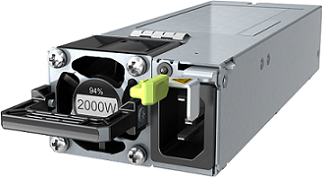
The most immediate advantage of the S8550-6Q2C is its physical profile. Occupying only half a standard rack unit (0.5U), it effectively doubles the potential port density within a given space compared to traditional 1U switches. This design is a boon for environments where every inch counts, such as colocation facilities, branch offices, or dense server racks. The flexibility extends to deployment options; it can be installed as a single unit or, impressively, two units can be mounted together within a 1U space using a special bracket. In this dual configuration, the switches can be set up with redundant links, creating a highly available pair that provides an additional layer of network resilience without increasing the physical footprint. For locations without standard racks, the switch also supports wall-mounting, adding to its versatility. The inclusion of hot-swappable power supplies and fans means that these critical components can be replaced during operation, significantly enhancing serviceability and minimizing planned downtime.
Unpacking the Hardware Prowess
At its core, the S8550-6Q2C is built to handle high-throughput environments. Let’s break down the specifications that empower this performance. The switch is equipped with six 40G QSFP+ ports and two 100G QSFP28 uplink ports. A key feature is the port breakout capability; each 40G port can be split into four independent 10G ports, and the 100G ports can be segmented into four 25G or 10G ports. This flexibility is invaluable for network architects. You might use the 100G ports for high-speed spine-leaf connections in a data center while using broken-out 40G ports to connect to multiple access switches or high-performance servers, all from a single, compact device.
The backbone of this performance is a substantial switching capacity of 880 Gbps and a forwarding rate of 654.72 million packets per second (Mpps). This ensures that the internal fabric won’t congest, even when multiple ports are operating at full capacity. For handling large data transfers efficiently, the switch supports Jumbo Frames up to 9600 bytes, reducing protocol overhead and improving throughput for storage and video applications. A 9MB packet buffer helps absorb traffic bursts, preventing packet loss during momentary congestion, while the exceptionally low latency of 0.96 microseconds guarantees speedy data transit for time-sensitive tasks. With 8GB of flash memory, the device has ample room for the operating system and future software updates. Its large ARP and routing tables (16K and 12K IPv4 routes, respectively) ensure it can operate effectively in large, segmented network environments, fully supporting dual-stack (IPv4/IPv6) operations.
Comprehensive High Availability and Multi-Service Capabilities
Beyond raw speed, the S8550-6Q2C is equipped with a suite of features designed for resilient and complex networks. For redundancy, it supports MLAG, allowing two switches to be paired so that if one fails, the other seamlessly takes over the traffic load without waiting for spanning-tree reconvergence. Protocols like LACP enable the bundling of multiple physical links into a single logical trunk for increased bandwidth and redundancy.
For modern data center applications, the switch supports advanced overlay technologies like VXLAN with BGP EVPN control plane, which is essential for creating large, scalable layer 2 domains over an IP underlay. To ensure lossless transport for storage traffic (like RoCEv2), it implements Priority Flow Control (PFC) and Explicit Congestion Notification (ECN). For enterprises relying on ring-based network topologies, such as in industrial settings or campus distributions, it supports ERPS and other ring protection protocols for sub-50ms failover, ensuring rapid recovery from link failures.
Streamlined Management and Automation Readiness
Managing the network should not be a burden. The S8550-6Q2C offers multiple management interfaces, including a web-based GUI for day-to-day tasks and a Command Line Interface (CLI) for power users and scripting. For integration into larger monitoring ecosystems, it supports SNMP and can work with systems like Zabbix. Crucially, it also provides an RPC-based API, paving the way for automation and integration with modern orchestration platforms, which is a significant step towards intent-based networking and operational efficiency.
A Robust, Built-in Security Posture
Security is integrated throughout the switch’s functionality. Administrators can create granular policies using IPv4 and IPv6 ACLs to permit or deny traffic based on IP addresses, protocols, and ports. Features like DHCP Snooping and Dynamic ARP Inspection (DAI) work together to prevent common layer-2 attacks, such as ARP spoofing or rogue DHCP servers. For user and device authentication, it supports 802.1X, which can be integrated with RADIUS or TACACS+ servers for centralized credential management. To protect the switch’s management plane itself, Control Plane Policing (CoPP) allows rate-limiting of traffic destined for the CPU, mitigating denial-of-service attacks.
The Telecomate S8550-6Q2C represents a significant leap in switching design, proving that a compact footprint does not require a compromise on performance or features. It successfully condenses enterprise-level capabilities—including high-speed connectivity, robust redundancy, advanced feature sets, and comprehensive security—into a space-efficient half-U chassis. For network planners facing physical space constraints, whether in a crowded data center, a remote branch, or a growing enterprise network, this switch offers a compelling solution. It effectively eliminates the need to choose between saving rack space and deploying a powerful, full-featured network core. By delivering high density, flexibility, and reliability in a minimalist design, the S8550-6Q2C stands as a strategic asset for building efficient, scalable, and resilient networks. For detailed specifications and purchasing information, visit the product page on telecomate.com or contact their solutions team to discuss your specific requirements.






Leave a comment