
The efficiency of modern enterprise networks hinges on one often-overlooked factor: switch Huawei configuration. As businesses race to support hybrid workforces, IoT ecosystems, and cloud-driven operations, the complexity of network setups has skyrocketed. Huawei’s approach—melting automated configuration tools, AI-assisted troubleshooting, and cloud-native management—aims to turn hours of CLI commands into a few clicks. But does this simplicity come at the cost of customization? And can automation truly replace the nuanced expertise of network engineers? For IT teams drowning in VLANs, QoS policies, and security protocols, Huawei’s configuration revolution promises relief—if they’re willing to rethink traditional workflows.
How Does Huawei’s Configuration Framework Reduce Deployment Time?
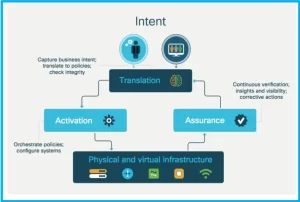
The phrase switch Huawei configuration used to evoke images of engineers hunched over terminals, typing endless command lines. Today, Huawei’s CloudCampus Solution flips the script with three game-changers: template-driven setups, AI validation, and zero-touch provisioning.
Take a retail chain deploying switches across 50 locations. Traditionally, each site required manual configuration for VLANs (to separate POS systems from security cameras) and ACLs (to block unauthorized access). With Huawei’s iMaster NCE-Campus, admins create a master template once. The system auto-generates site-specific configurations by factoring in variables like branch size, traffic load, and device types. A coffee shop with five IP cameras gets a lightweight setup, while a flagship store with 100+ IoT devices receives optimized bandwidth allocation—all without human intervention.
But automation isn’t just about speed; it’s about accuracy. Huawei’s NetEngine switches use machine learning to flag configuration conflicts before deployment. For example, if a new QoS policy prioritizes video conferencing but clashes with an existing VoIP rule, the system suggests fixes instead of crashing during runtime. This preemptive error detection slashes troubleshooting time by up to 70%, as reported by logistics firms managing warehouse networks.
The real magic lies in zero-touch provisioning. Ship a Huawei switch to a remote office, plug it in, and it auto-connects to the cloud management platform. Configuration syncs within minutes, complete with the latest security patches. This “set-and-forget” model is reshaping industries like healthcare, where clinics can’t afford downtime during network expansions.
Is Over-Automation Killing Customization in Network Design?
Critics argue that switch Huawei configuration tools sacrifice flexibility for convenience. After all, how can a one-size-fits-all template handle niche requirements like industrial IoT latency thresholds or financial sector encryption standards?
Huawei addresses this through modular configuration layers. The base layer handles universal settings—SSH access, SNMP monitoring, firmware updates. The middle layer applies industry-specific profiles: manufacturing plants get deterministic networking for robotics, while universities receive multicast optimization for lecture streaming. The top layer allows granular tweaks via a no-code GUI or traditional CLI for purists.
A case in point: A smart factory using Huawei’s S5735-H switches needed microsecond-level latency for assembly-line robots. The automated template provided 95% of the configuration, but engineers manually adjusted LLDP settings and enabled precision time protocol (PTP) for synchronization. The system learned these tweaks, incorporating them into future templates for similar use cases.
Security is another customization battleground. Huawei’s HiSec solutions let admins define risk-based policies. If a switch detects unauthorized devices on a hospital network, it can automatically isolate them and adjust firewall rules across the entire VLAN—a level of dynamic response impossible with static configurations.
What’s the Hidden Cost of Ignoring Modern Configuration Tools?
Sticking to manual switch Huawei configuration isn’t just inefficient—it’s a strategic liability in three critical areas: scalability, security, and talent retention.
Consider a growing e-commerce company adding 10 new warehouses annually. Manually configuring each switch for VLANs, BGP routing, and DDoS protection consumes weeks of IT time annually. Huawei’s SDN-based automation reduces this to hours, freeing teams to focus on edge computing or 5G integration instead of repetitive tasks.
Security gaps compound over time. A 2023 audit of a European bank revealed that 60% of firewall misconfigurations stemmed from human error during switch setups. Huawei’s SecoManager automates policy enforcement, ensuring ACLs and port security align with ISO 27001 standards. When a new IoT device joins the network, the switch auto-applies least-privilege access rules—no manual oversight needed.
Then there’s the human factor. Junior engineers stuck configuring switches via CLI gain little exposure to strategic projects. By automating grunt work, Huawei’s tools let them upskill in AIOps or network analytics—key areas for career growth. Firms using these tools report 30% lower IT staff turnover, as teams engage in higher-value work.
The debate around switch Huawei configuration isn’t about replacing engineers with bots—it’s about empowering teams to focus on innovation rather than maintenance. Huawei’s blend of automation and adaptability meets modern networks where they are: overstretched, understaffed, and racing to keep up with digital demands. While skeptics cling to manual methods, forward-thinking enterprises leverage these tools to build self-healing, self-optimizing networks. The question isn’t whether to automate configurations; it’s how quickly you can transition before your network becomes a bottleneck. In an era where agility defines competitiveness, Huawei’s configuration solutions aren’t just convenient—they’re existential.







Leave a comment