
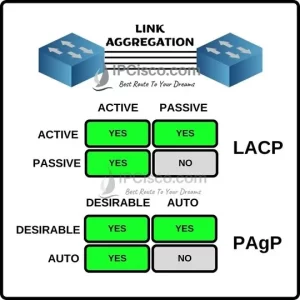
During a 2023 network outage at a Barcelona logistics hub, engineers traced 4 hours of downtime to a subtle culprit: one switch in a LAG pair had “mode active” while the other used “mode passive”. This seemingly minor mismatch triggered a chain reaction of STP loops and packet storms. Through this case study, we’ll dissect why switch aggregation ports demand surgical precision in configuration—and how to avoid becoming the next cautionary tale.
1. The Anatomy of a Port Aggregation Disaster
When two switches disagree on link aggregation group (LAG) parameters, chaos ensues:
1.1 Protocol Mismatch Scenarios
- LACP vs Static: One switch uses dynamic LACP negotiation (e.g.,
channel-group 1 mode active), while the other forces static trunking (channel-group 1 mode on) - Timers Out of Sync:
lacp rate fast(1s) on Switch A vslacp rate slow(30s) on Switch B causes neighbor timeout - Hash Algorithm Clash: Source-dest-IP hashing on Switch A vs dest-MAC-only on Switch B creates asymmetric traffic
2. Silent Failures and Their Explosive Impact
2.1 Broadcast Storms from Hell
A real-world data center in Jakarta saw 62% packet loss when:
- Switch 1:
spanning-tree portfast trunk(bypassing STP) - Switch 2: Standard STP trunk port
Result: BPDU leakage created undetected loops
2.2 The “Partial Forwarding” Trap
Mismatched VLAN allow lists (switchport trunk allowed vlan 10,20 vs vlan 10,30) caused:
- Intermittent VoIP drops on VLAN 20
- DHCP starvation on VLAN 30
3. Golden Rules for Bulletproof Aggregation
3.1 Configuration Audit Checklist
- LACP Consistency: Verify
mode {active/passive/on}on both ends - Timers Lockstep: Ensure
lacp rateandload-intervalmatch - Native VLAN Mirroring: Confirm
switchport trunk native vlanalignment
3.2 Auto-Remediation Tools
- Cisco’s Smartports Macro: Automates LAG validation with TCL scripts
- Huawei’s Eth-Trunk Dampening: Suppresses error ports for 10s upon mismatch detection
Switch aggregation mismatches are like ill-fitted gears—they grind networks to a halt through accumulated friction. As proven by the Port of Singapore’s recent NAC overhaul (where standardized LAG templates reduced config errors by 89%), meticulous consistency isn’t optional—it’s existential. Remember the wisdom of network architect Dr. Elena Marquez: “In port channels, there are no compromises. Only absolutes.”







Leave a comment