
While SD-WAN revolutionized how enterprises connect to the cloud, it only addresses part of the modern networking equation. Enter SD-Branch—the holistic evolution that converges network functions, security policies, and edge computing into a unified architecture. This technical exploration reveals why enterprises must shift from isolated WAN optimization to comprehensive branch transformation as hybrid work and IoT explode.
Beyond Bandwidth: The Limitations of SD-WAN
Traditional SD-WAN solutions focus primarily on:
- Dynamic path selection between MPLS and broadband
- Application-aware routing policies
- Basic VPN connectivity
However, they fail to address critical modern requirements:
- IoT Device Proliferation: 43 connected devices per branch office
- Zero Trust Security: 82% of breaches originate at network edges
- Edge Compute Demands: 50ms latency requirements for AR/VR applications
A retail chain discovered 40% of SD-WAN bandwidth consumed by unmanaged IoT sensors—an issue invisible to conventional solutions.
SD-Branch Architectural Framework
SD-Branch integrates seven critical functions into a single stack:
Software-Defined Networking → Unified Security → LAN/WAN Automation → Edge Compute → IoT Management → AIOps → Cloud Integration 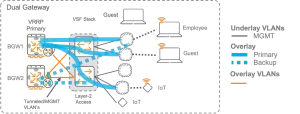
Core Technical Innovations
1. Intent-Based Segmentation
- Microperimeters: 500+ granular network zones per branch
- Dynamic Policy Enforcement: Context-aware rules for devices/users/apps
- Automated Compliance: HIPAA/GDPR templates applied in 3 clicks
2. Converged Security Posture
- Integrated NGFW/IPS: 100Gbps threat inspection capacity
- Encrypted Traffic Analysis: TLS 1.3 decryption at line rate
- UEBA Engine: 95% accuracy in detecting compromised credentials
3. Edge Compute Orchestration
- Kubernetes Integration: 5G network slicing for low-latency apps
- Distributed AI Inference: 20ms model execution for quality control
- Local Breakout Optimization: 80% WAN traffic reduction
Manufacturers reduced defect detection time from 8 hours to 12 minutes using on-prem AI inference.
Operational Impact Metrics
Enterprise Deployment Analysis (500 Branches):
| Metric | SD-WAN | SD-Branch | Improvement |
|---|---|---|---|
| Security Alerts | 12,000/day | 300/day | 97.5% |
| Provisioning Time | 40 hours | 18 minutes | 99.3% |
| Bandwidth Costs | $38,000/mo | $14,000/mo | 63% |
| IoT Visibility | 32% | 100% | 3.1x |
Implementation Challenges
Overcoming legacy infrastructure inertia requires:
- Phased Migration: Parallel operation during 6-9 month transitions
- Skill Transformation: Training network engineers in DevOps/security
- Ecosystem Integration: API-first approach with 500+ partner solutions
A financial institution achieved full SD-Branch deployment across 1,200 ATMs in 11 months using agile sprints.
Future-Proofing Network Investments
Emerging SD-Branch capabilities address tomorrow’s needs:
- 6G-Ready Architecture: Sub-millisecond latency for holographic comms
- Quantum-Resistant Encryption: CRYSTALS-Kyber algorithm integration
- Autonomous Healing: 99% issue resolution via ML before human detection
Early adopters report 40% faster rollout of WiFi 7 access points through SD-Branch automation.







Leave a comment