
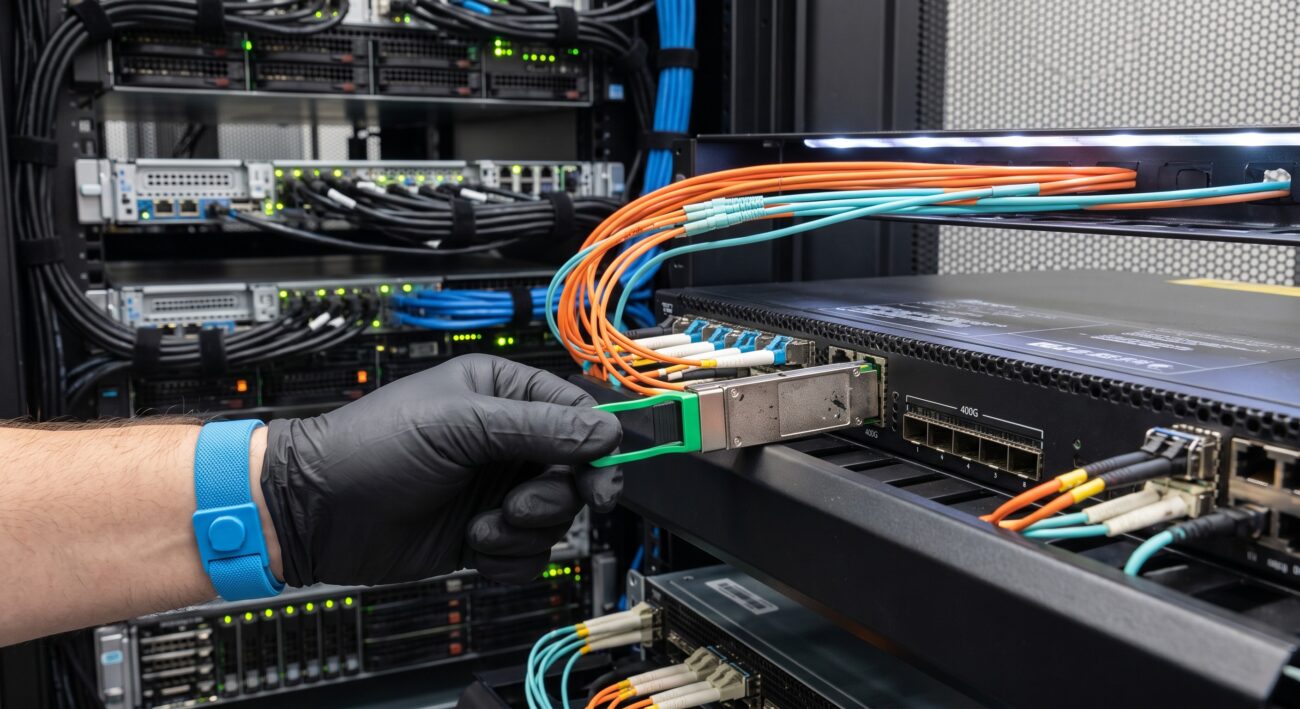
Introduction: The Imperative Shift to 400G QSFP-DD in Modern Networks
As global IP traffic continues its exponential growth, fueled by AI workloads, cloud-native architectures, and 5G backhaul, the networking industry faces a critical inflection point. The 400G QSFP-DD (Quad Small Form-Factor Pluggable Double Density) transceiver has emerged as the de facto standard for high-density, high-speed interconnects in both hyperscale datacenters and carrier-grade core networks. This comprehensive guide delves deep into the hardware architecture, technical specifications, and deployment strategies of 400G QSFP-DD modules, providing network architects and systems integrators with a data-driven blueprint for next-generation infrastructure.
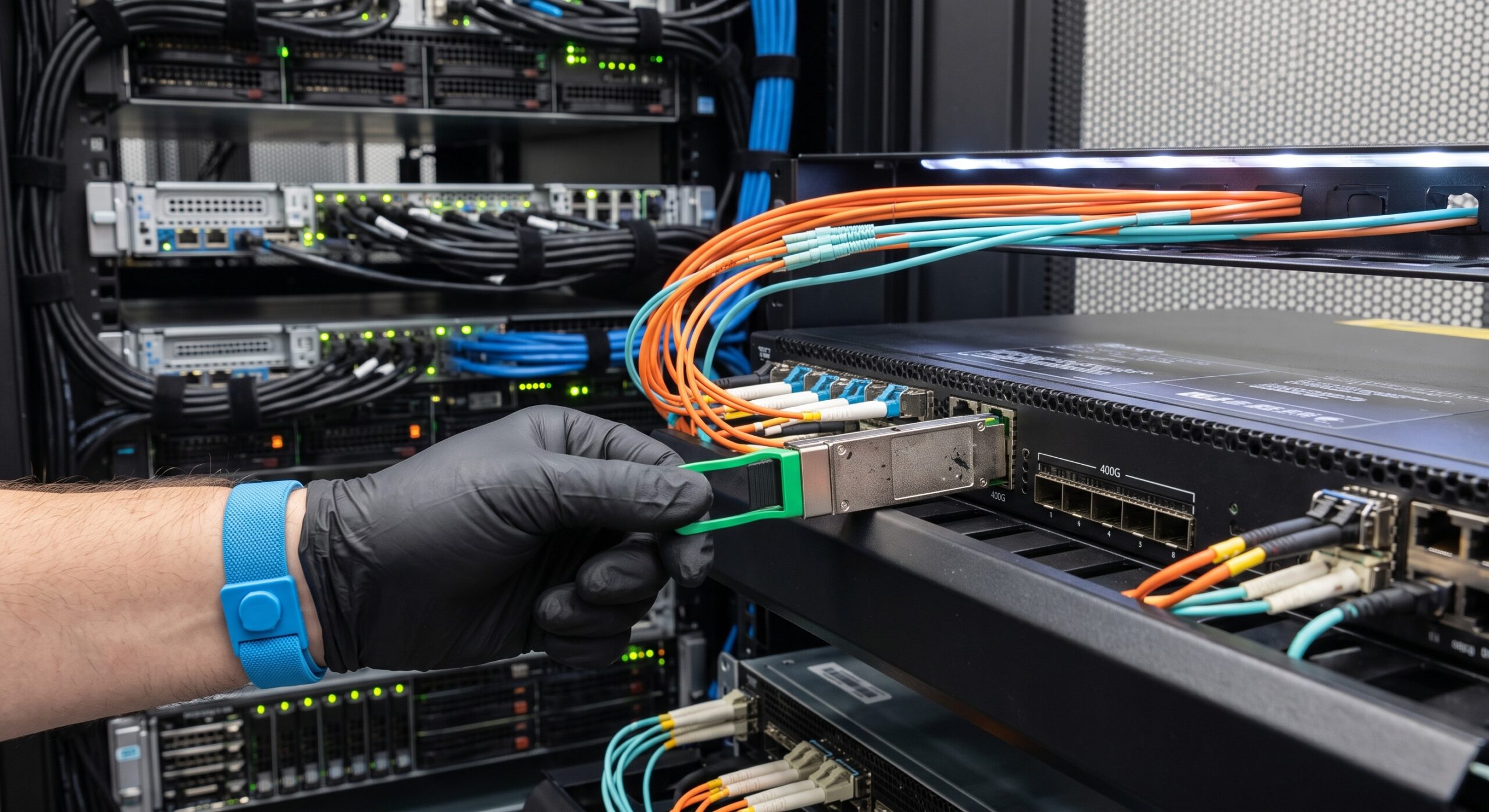
Core Architecture & Hardware Topology of 400G QSFP-DD
Physical Layer Design and Electrical Interface
The QSFP-DD form factor builds upon the legacy QSFP footprint, doubling the electrical interface lanes from four to eight. Each lane operates at 50Gbps PAM4 (Pulse Amplitude Modulation 4-level) signaling, aggregating to a total bandwidth of 400Gbps. The module complies with the QSFP-DD MSA (Multi-Source Agreement) Rev 5.0 and 6.0 standards, ensuring mechanical and electrical interoperability across major vendors. The connector features a dual-row, 76-pin design, with a dedicated sideband interface for enhanced management and diagnostics via the I2C/MDIO bus.
Optical Sub-Assembly and Laser Technology
Depending on the reach requirement, 400G QSFP-DD transceivers leverage different optical engines. For short-reach (up to 100m) applications, VCSEL (Vertical-Cavity Surface-Emitting Laser) arrays paired with PAM4 DSP (Digital Signal Processor) drive SR8 (8x50G) multimode fiber configurations. For longer distances (up to 2km to 10km), EML (Electro-absorption Modulated Laser) or SiPh (Silicon Photonics) technologies are employed, often utilizing DWDM (Dense Wavelength Division Multiplexing) to optimize fiber utilization. The integrated DSP is critical for mitigating channel impairments, including chromatic dispersion and insertion loss, ensuring a BER (Bit Error Rate) of
High-Speed PCB and Signal Integrity
The module’s internal PCB utilizes low-loss, high-frequency materials such as Megtron 6 to support the 25GBd symbol rate of PAM4. Careful impedance control (100Ω differential) and minimal trace length variations are critical to maintaining signal integrity across the 8 lanes. The module’s power consumption, a key metric, ranges from 8W to 12W depending on the reach and DSP complexity, necessitating robust thermal management strategies in high-density line cards.
| Key Parameter | Technical Specification |
|---|---|
| Data Rate | 400 Gbps (8x 50G PAM4) |
| Electrical Interface | 8x 50G PAM4 per IEEE 802.3ck |
| Optical Standards | 400GBASE-SR8, -DR4, -FR8 (IEEE 802.3bs) |
| Max Reach | 100m (SR8), 500m (DR4), 2km (FR8), 10km (LR8) |
| Power Consumption | 8W – 12W typical (varies by reach) |
| Latency (DSP) | |
| MTBF | > 5,000,000 hours (Telcordia SR-332) |
| Case Temperature | 0°C to 70°C (Commercial) / -40°C to 85°C (Industrial) |
| Compliance | QSFP-DD MSA Rev 6.0, RoHS, REACH |
Technical Specifications and Compliance Standards
IEEE and ITU-T Compliance Mastery
The 400G QSFP-DD transceiver is engineered to meet stringent industry standards. On the electrical side, it adheres to IEEE 802.3bs (400GBASE-SR8, -DR4, -FR8) and IEEE 802.3ck for the electrical interface. For optical transport, it aligns with ITU-T G.959.1 for physical layer characteristics. Additionally, the module is fully compliant with RoHS (Restriction of Hazardous Substances) and REACH environmental regulations, ensuring global deployment eligibility.
Operational Parameters and Reliability Metrics
Key operational parameters include a case temperature range of 0°C to 70°C (commercial) or -40°C to 85°C (industrial), with an optical output power ranging from -2 dBm to +4 dBm. The MTBF (Mean Time Between Failures) is a critical reliability metric for carrier-grade applications, typically exceeding 5 million hours at 25°C, calculated per Telcordia SR-332 standards. The module’s latency through the DSP pipeline is approximately 100-150 nanoseconds, which is negligible in most switching fabrics but critical for HPC and financial trading networks.
Deployment Strategies and Integration
High-Density Datacenter Scaling
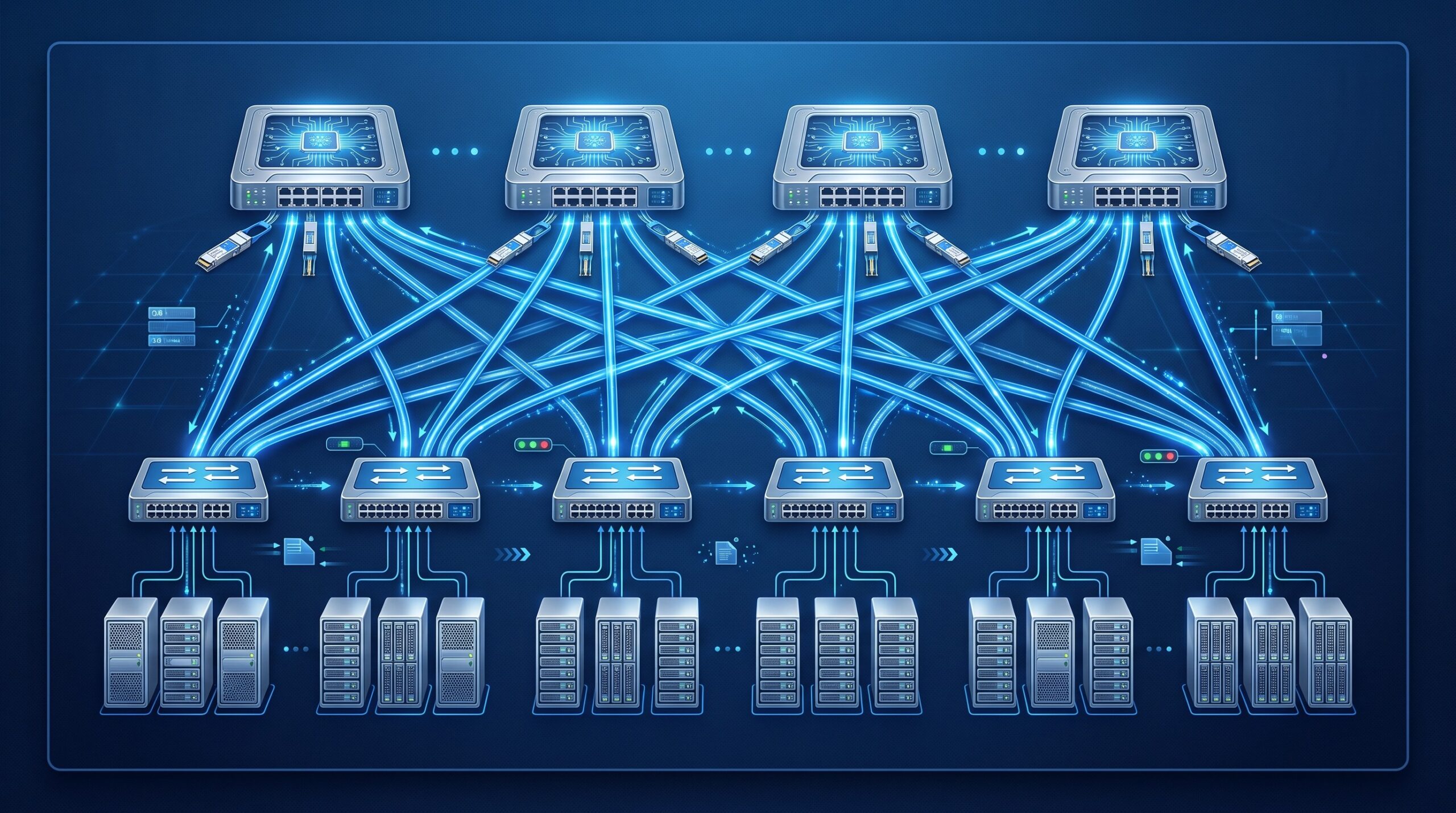
Integrating 400G QSFP-DD into spine-leaf architectures enables a massive reduction in cabling complexity. A single 400G link can replace four 100G links, reducing port count and power consumption per gigabit. For example, deploying a 128-port 400G switch in a leaf-spine topology can achieve a 51.2 Tbps switching capacity, while reducing overall rack space by up to 60% compared to equivalent 100G solutions. This density is achieved through the use of breakout cables (e.g., 400G-DR4 to 4x100G-DR) to support legacy infrastructure.
Carrier-Grade Reliability and Redundancy
In carrier and core routing environments, the 400G QSFP-DD module’s support for dual-redundant power paths and hot-swappable capabilities ensure minimal downtime. Forward Error Correction (FEC) algorithms, such as Reed-Solomon (RS(544,514)), are implemented in the DSP to correct burst errors, extending the link budget and enabling longer reach over standard SMF. The module’s digital diagnostics (DDM/DOM) provide real-time monitoring of temperature, voltage, bias current, and optical power, allowing proactive network management per SFF-8636 specifications.
Conclusion: The Strategic Imperative of 400G QSFP-DD
The 400G QSFP-DD transceiver is more than a speed upgrade; it is a foundational technology for the next decade of network architecture. Its combination of high port density, advanced DSP-based signal integrity, and compliance with rigorous standards positions it as the optimal choice for data centers, cloud providers, and telecom operators facing the relentless growth of data traffic. By adopting this standard, organizations can achieve a Total Cost of Ownership (TCO) reduction through lower power-per-bit consumption and simplified infrastructure management. As the industry transitions towards 800G and 1.6T solutions, the architectural principles established by QSFP-DD will remain paramount, solidifying its role as the cornerstone of modern high-speed networking.

Leave a comment