
Juniper MX240 Router: The Definitive Guide to Universal Edge Routing
Abstract
What: This comprehensive whitepaper provides an in-depth architectural and operational analysis of the Juniper MX240 Router, a compact yet high-performance Universal Routing Platform designed by Juniper Networks. We will deconstruct its hardware components, proprietary Trio silicon capabilities, and the robust Junos OS ecosystem.
Why: In an era where global internet bandwidth demand has surged by 23% year-over-year (Source: TeleGeography, 2024), enterprise networks and service providers face unprecedented pressure to scale. Traditional edge routers often bottleneck under the weight of cloud-native applications, 5G transport, and encrypted traffic. The MX240 solves this by delivering massive throughput in a highly efficient 5-Rack-Unit (5 U) form factor.
How: Readers will discover actionable deployment strategies for Data Center Interconnect (DCI), Broadband Network Gateway (BNG), and enterprise edge peering. By understanding the optimal configuration of Modular Port Concentrators (MPCs) and leveraging software-defined networking (SDN) telemetry, B2B network architects can drastically reduce Total Cost of Ownership (TCO) while future-proofing their telecommunications infrastructure.
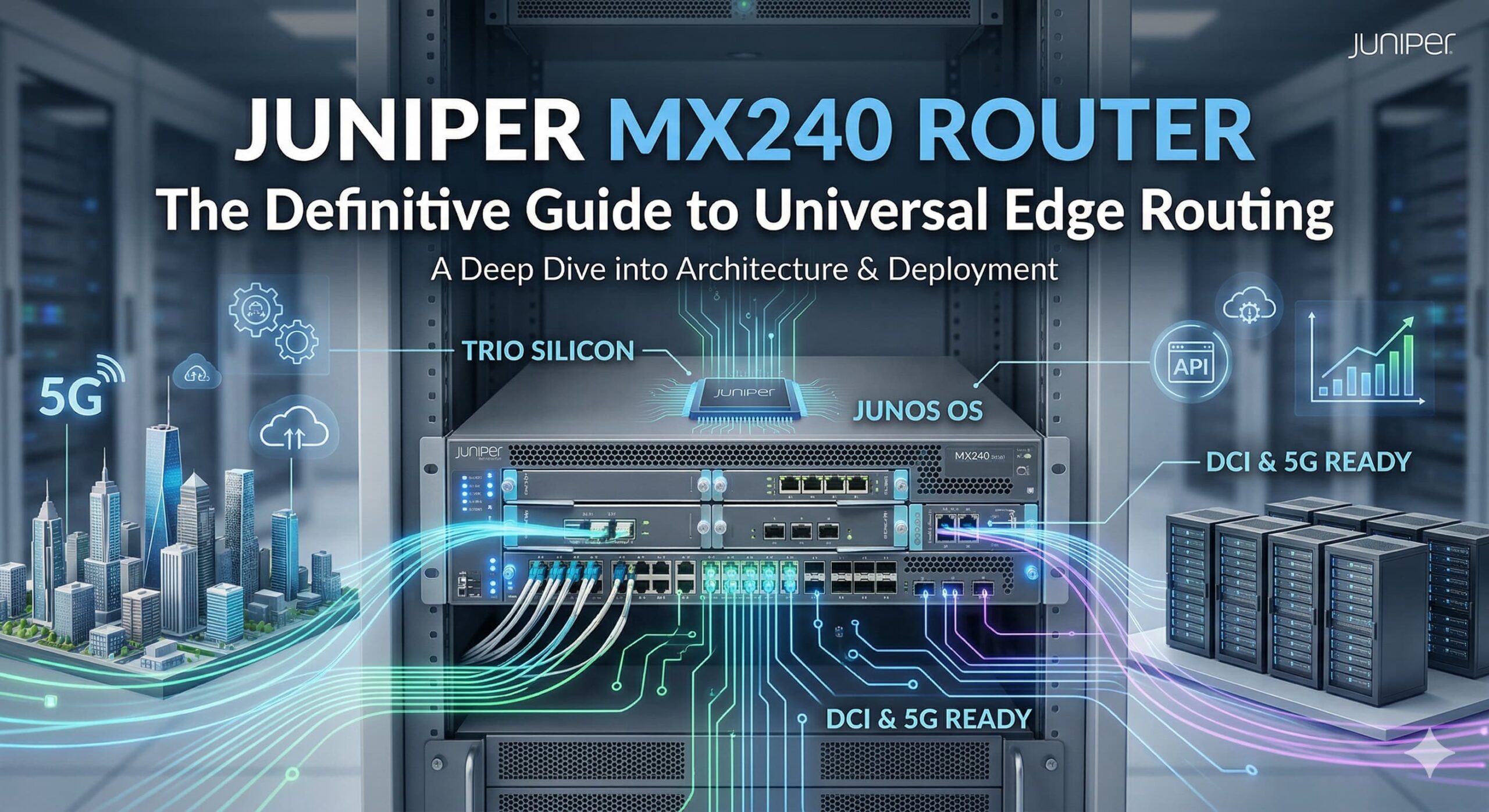
Unpacking the Juniper MX240 Universal Routing Platform
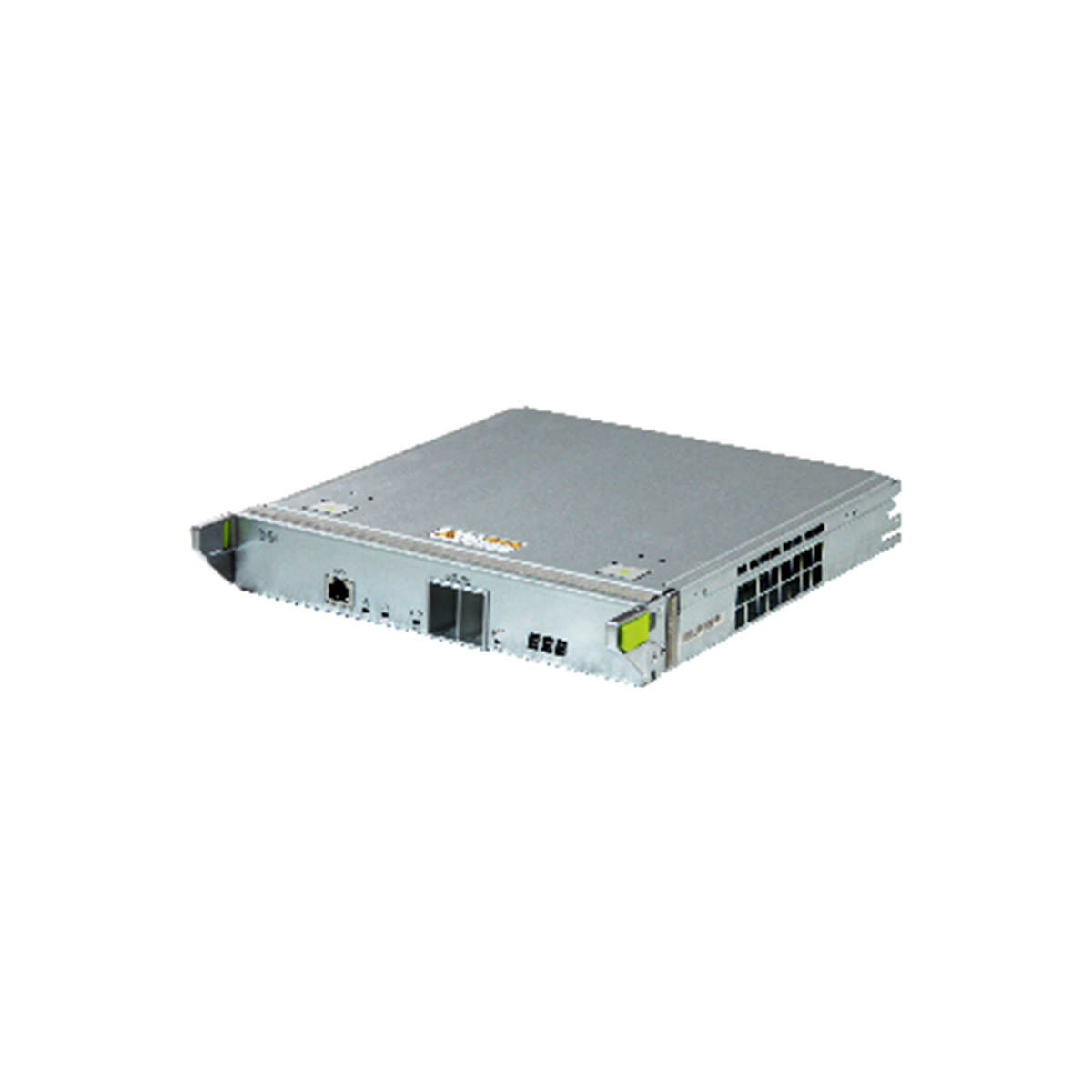
The Juniper MX240 3D Universal Edge Router is a cornerstone of modern telecommunications and enterprise networking. Positioned as the most compact member of the flagship MX Series portfolio (which includes the MX480 and MX960), the MX240 does not compromise on performance. It is engineered to provide carrier-grade reliability, advanced routing, and switching capabilities for service providers, cloud operators, and large enterprises.
As businesses transition toward heavily virtualized, geographically distributed IT environments, the perimeter of the network—the “edge”—has become the most critical chokepoint. The Juniper MX240 is strategically designed to sit at this edge, mediating traffic between the internal secure corporate network and the public internet, or routing traffic securely between multiple global data centers. Unlike fixed-configuration access switches, the MX240 is highly modular. This modularity allows organizations to upgrade their throughput capacity and interface types (from 10GbE to 100GbE and even 400GbE) without having to “rip and replace” the entire chassis, making it a highly sustainable investment for foreign trade B2B companies expanding their global digital footprint.
The Role of Programmable Trio Silicon Technology
At the heart of the Juniper MX240 Router’s sustained market dominance is Juniper’s proprietary Programmable Trio Silicon. While many competitors rely on merchant silicon (off-the-shelf chips), Juniper’s decision to develop custom ASICs (Application-Specific Integrated Circuits) gives the MX series a distinct competitive advantage in complex routing environments.
The latest generations of Trio silicon (such as Trio 5 and Trio 6) are explicitly designed to handle extreme scale and high-touch packet processing without degrading throughput. Standard merchant silicon often struggles when features like deep packet inspection, inline MACsec encryption, or complex Quality of Service (QoS) queues are enabled. Trio silicon, however, features a highly pipelined, multi-threaded architecture. This means the MX240 can execute simultaneous lookups, apply granular firewall filters, and route EVPN-VXLAN traffic at wire speed. Furthermore, Trio silicon offers unparalleled investment protection. Because it is highly programmable, Juniper can push software updates via Junos OS to support emerging networking protocols (like Segment Routing over IPv6, or SRv6) without requiring customers to purchase new hardware. This longevity is a massive cost-saving factor for enterprises optimizing their CapEx budgets.
Modular Hardware Architecture: Built for Redundancy
The physical chassis of the Juniper MX240 Router is a masterclass in high-density engineering. Operating within a compact 5 U space, the router provides a fully redundant, carrier-class architecture. Every critical component—including routing engines, switch control boards, power supplies, and cooling fans—can be configured in a 1+1 or N+1 redundant matrix. This eliminates any single point of failure, achieving the 99.999% (Five Nines) uptime demanded by Tier-1 internet service providers.
The MX240 features two dedicated slots for the control plane (housing the Routing Engine and Switch Control Board) and two dedicated slots for the data plane (housing the Modular Port Concentrators, or MPCs). In scenarios where maximum port density is required, a third slot can be utilized for an MPC, provided the control plane is operating in a non-redundant configuration (though this is rarely recommended for production environments). The backplane of the MX240 is entirely passive. It acts merely as a physical interconnect for the active line cards. This passive design ensures that if a component fails, the failure is isolated to the specific card, and the backplane itself remains unaffected, drastically reducing the Mean Time To Repair (MTTR).
Key Specifications and Performance Metrics of the Juniper MX240
Understanding the technical thresholds of the Juniper MX240 Router is essential for network architects tasked with capacity planning. The device’s performance is governed by the specific combination of Switch Control Boards (SCBs) and Modular Port Concentrators (MPCs) installed.
Scalability and Unprecedented Port Density
Despite its small footprint, the MX240 can scale to an astonishing 3 Tbps of system capacity when equipped with the latest Switch Fabric Boards (SFB3) and high-end line cards like the MPC10E. This density makes it highly suitable for environments where rack space is expensive or limited, such as colocation facilities or dense urban enterprise data centers.
The modularity of the MX240 relies on a two-tier card system:
-
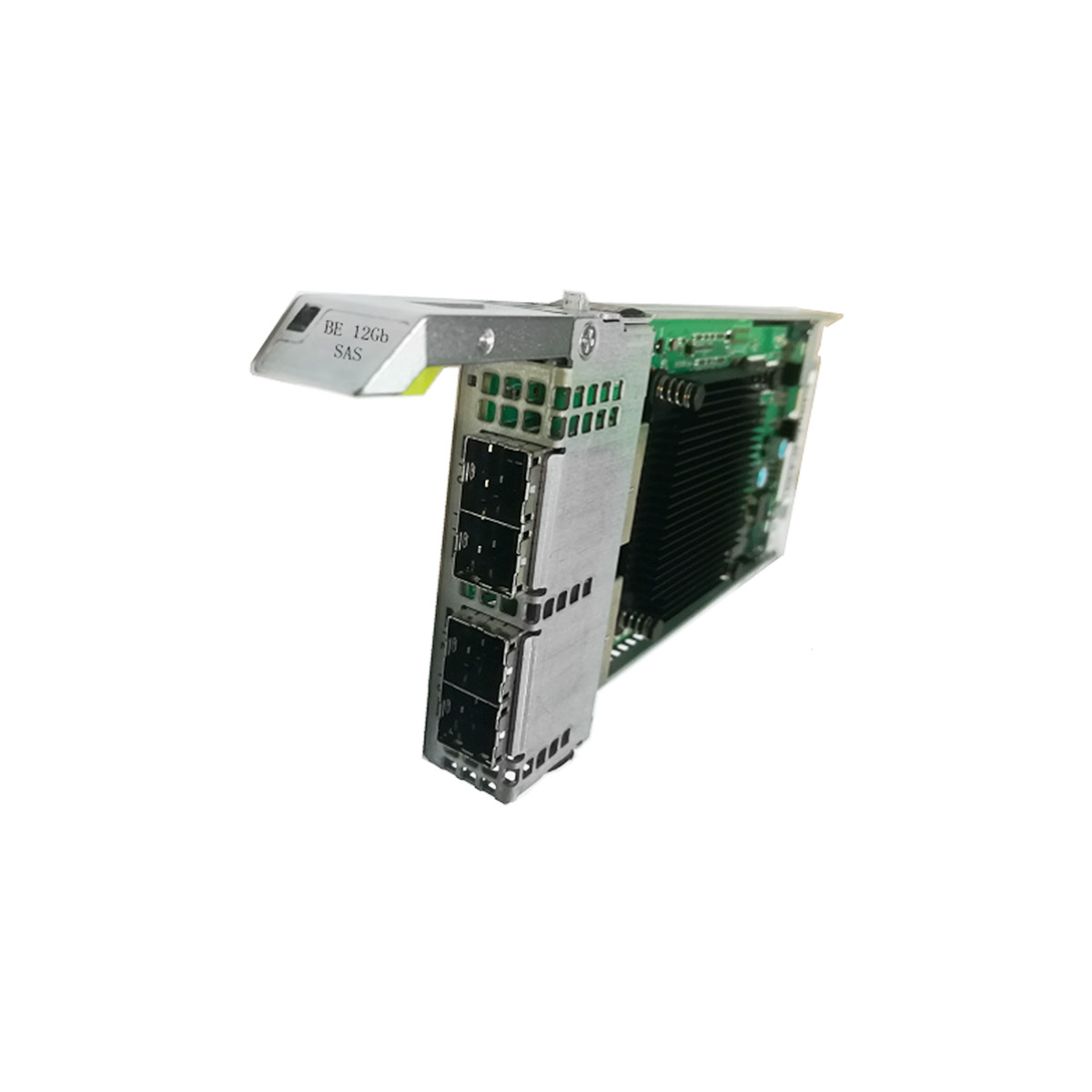
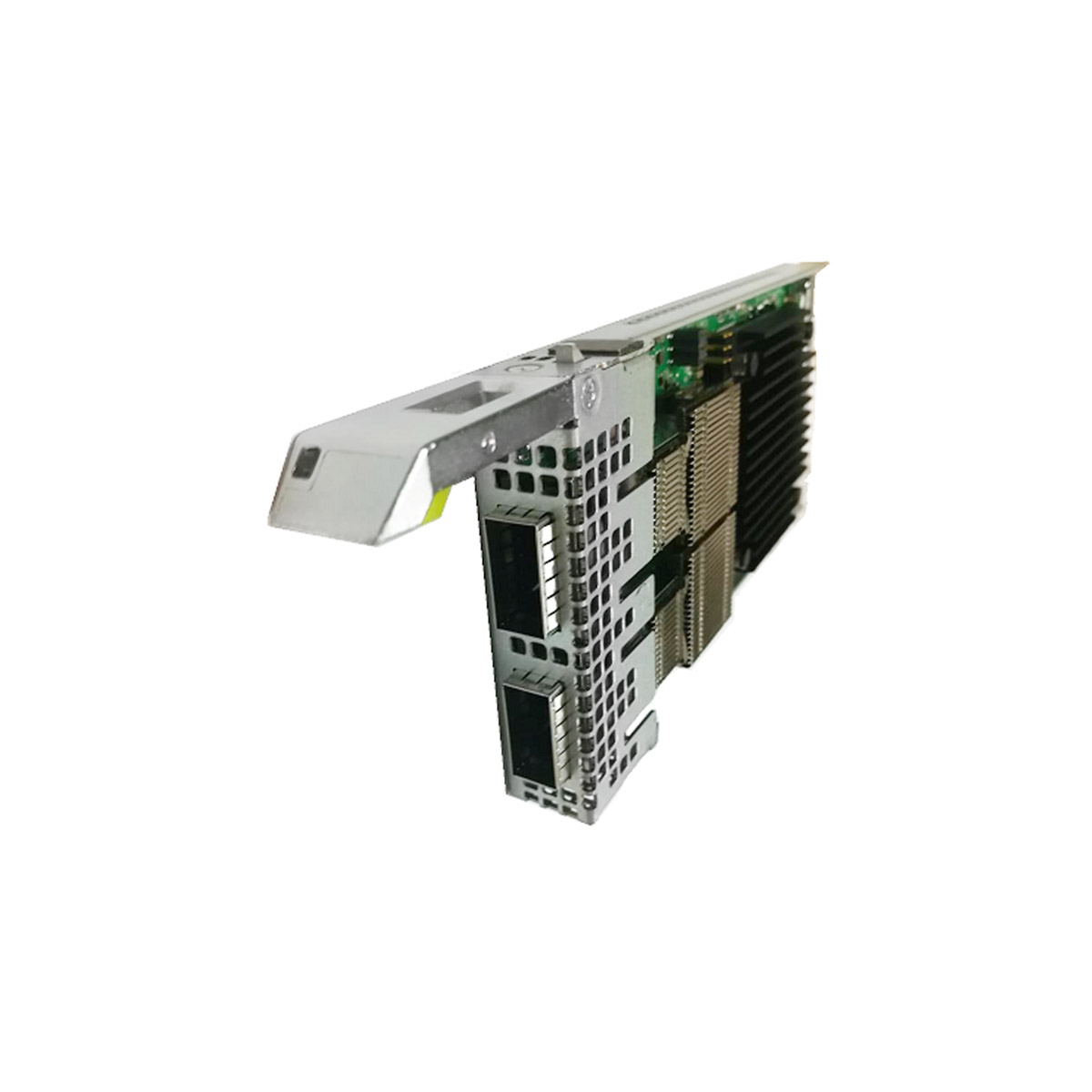
Modular Port Concentrators (MPCs): These are the large carrier boards that slot directly into the router’s midplane. They house the Trio silicon forwarding engines and provide the primary packet processing power.
-
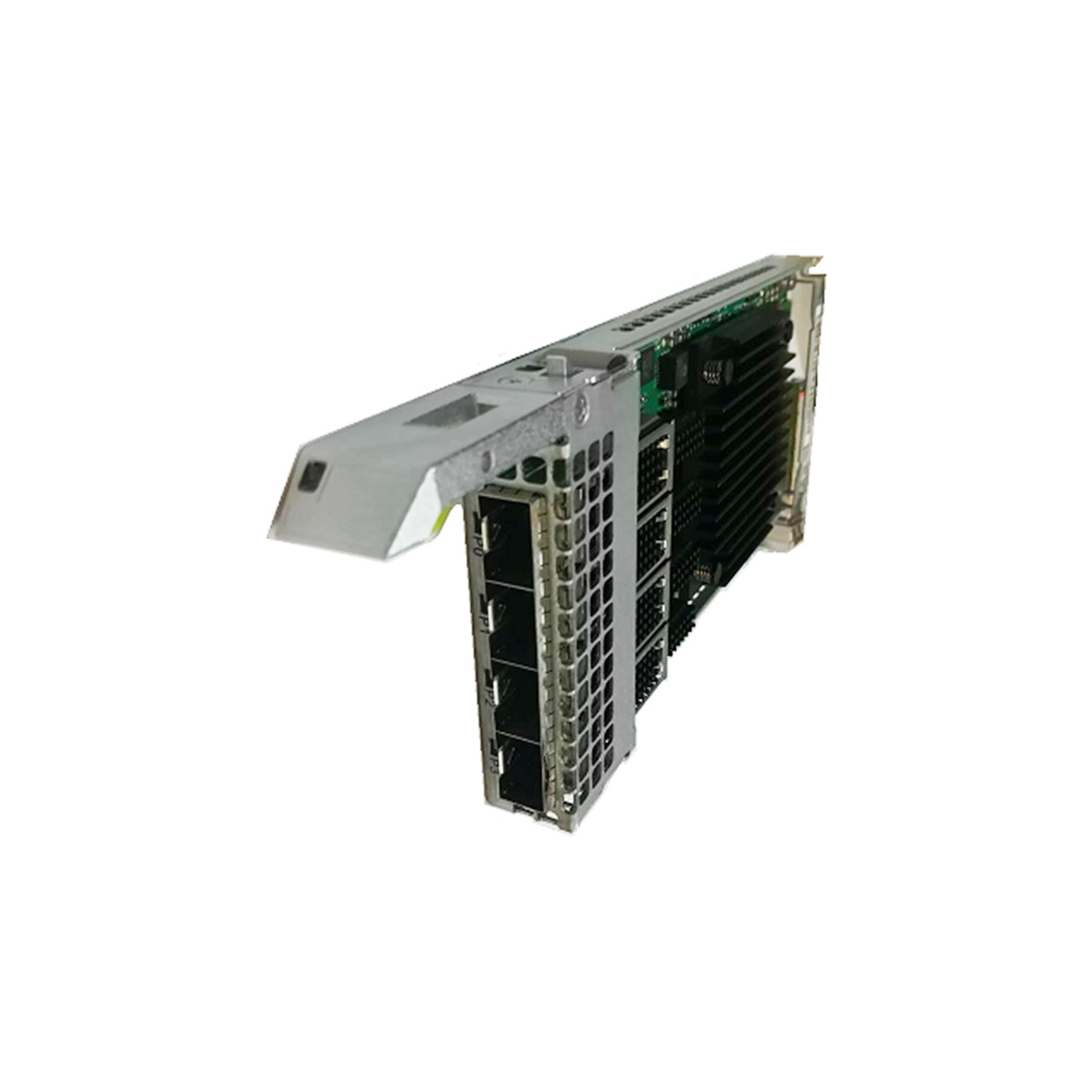
Modular Interface Cards (MICs): These are smaller physical interface modules that plug into the MPCs. MICs dictate the actual port types (e.g., RJ-45 copper, SFP+ fiber, QSFP28).
This decoupled design allows network engineers to independently scale packet processing power (by upgrading the MPC) and port interfaces (by swapping MICs). For example, a company currently relying on 10GbE architectures can populate their MX240 with 10GbE MICs today. As their bandwidth needs increase—perhaps due to the deployment of high-resolution video streaming applications or massive data replication tasks—they can simply swap those MICs for 100GbE or 400GbE QSFP56-DD modules without replacing the underlying MPCs or the router chassis.
Throughput and Route Scale Capabilities
The forwarding performance of the MX240 is exceptional. When fully loaded, the router can process billions of packets per second (pps). However, raw throughput is only one half of the equation; route scale is equally critical. For core peering and BGP (Border Gateway Protocol) routing, the router must hold massive routing tables. The Juniper MX240 Router, driven by its high-performance Routing Engine (RE) equipped with multi-core Intel processors and expansive RAM, can easily hold multiple copies of the full Internet routing table (which currently exceeds 950,000 IPv4 routes).
Additionally, the MX240 supports millions of MAC addresses, ARP entries, and MPLS labels. This massive memory allocation is vital for broadband network gateways serving thousands of residential subscribers or data centers hosting thousands of multi-tenant virtual machines. (Source: Gartner Magic Quadrant for Enterprise Network Infrastructure, 2023) highlights that hardware scalability and route table capacity remain the top two procurement criteria for Fortune 500 network buyers, positioning the MX240 perfectly within B2B procurement strategies.
Advanced Capabilities: Junos OS and SDN Integration
Hardware is only as powerful as the software that commands it. The Juniper MX240 Router is powered by Junos OS, a highly structured, FreeBSD-based operating system that has set the industry standard for network reliability, automation, and operational simplicity.
Carrier-Grade Reliability with Junos OS
Unlike other network operating systems that suffer from feature bloat and monolithic codebases, Junos OS operates on a strictly modular architecture. In Junos, the control plane (routing protocols, management, user interface) is strictly separated from the data plane (packet forwarding). This separation ensures that a sudden surge in data traffic—such as a Distributed Denial of Service (DDoS) attack—will not overwhelm the router’s CPU, allowing engineers to maintain management access to the device even under extreme load.
Furthermore, Junos OS uses a single, unified source code base across Juniper’s entire routing, switching, and security portfolio. For a B2B enterprise deploying MX240 routers at the edge, EX switches in the campus, and SRX firewalls at the perimeter, network administrators only need to learn one command-line interface (CLI) and one configuration syntax. This uniformity drastically reduces human error, which is responsible for over 70% of network outages (Source: Uptime Institute Annual Outage Analysis, 2024). Features like “commit check” and “configuration rollback” allow engineers to test syntax before applying it, and instantly revert to a previously working state if an error occurs.
Seamless Automation and Streaming Telemetry
In the era of Generative AI and advanced network analytics, traditional SNMP (Simple Network Management Protocol) polling is obsolete. SNMP is too slow, resource-intensive, and lacks the granularity required for modern, reactive networks. The Juniper MX240 Router supports advanced Junos Telemetry Interface (JTI), which utilizes push-based streaming telemetry.
Instead of waiting for a centralized server to ask for updates every 5 minutes, the MX240 continuously streams highly granular data (at sub-second intervals) regarding interface utilization, optical light levels, queue depths, and packet drops. This data can be ingested by AI-driven network management platforms to predict congestion before it happens and automatically reroute traffic. Furthermore, the MX240 is fully integrated into the Software-Defined Networking (SDN) ecosystem. It robustly supports NETCONF, RESTCONF, and gRPC APIs, utilizing standard YANG data models. This allows DevOps teams to treat the network as code (Infrastructure as Code), utilizing automation tools like Ansible, Terraform, or customized Robotic Process Automation (RPA) scripts to provision hundreds of VLANs or BGP peers instantly, reducing provisioning time from weeks to minutes.
Juniper MX Series Comparison: MX240 vs. MX480 vs. MX960
To properly position the MX240, it is vital to compare it against its larger siblings in the MX Universal Edge portfolio. All three platforms utilize the exact same Junos OS and the exact same MPC/MIC line cards, providing unparalleled operational consistency. The primary difference lies in chassis size, slot capacity, and ultimate throughput limit.
| Comparison Dimension | Juniper MX240 | Juniper MX480 | Juniper MX960 |
| Physical Rack Units (RU) | 5 U | 8 U | 16 U |
| Maximum System Capacity | Up to 3 Tbps | Up to 9 Tbps | Up to 12 Tbps |
| Line Card Slots (Dedicated) | 2 (Up to 3 without redundancy) | 6 | 11 (Up to 12 without redundancy) |
| Target Deployment Scenario | Space-constrained Edge, Enterprise DCI, Medium BNG | Large Enterprise Core, Regional ISP Edge | Tier-1 ISP Core, Hyperscale Cloud Edge |
| Power Supply Redundancy | 1+1 (AC/DC) | N+1 or N+N (AC/DC) | N+1 or N+N (AC/DC) |
| Control Plane Redundancy | Yes (Dual RE & SCB) | Yes (Dual RE & SCB) | Yes (Dual/Triple RE & SCB) |
As demonstrated in the comparison table, the MX240 is explicitly engineered for environments where vertical rack space is at a premium, yet high throughput and deep routing features are strictly mandated.
Strategic Deployment Scenarios for B2B Networks
The versatility of the Juniper MX240 Router allows it to assume multiple personalities within a network topology simply through software licensing and configuration adjustments. Below are the most prominent strategic deployment use cases for modern enterprises and service providers.
Data Center Interconnect (DCI)
As global enterprises expand, they rarely rely on a single data center. To ensure disaster recovery, high availability, and localized latency for users, applications are distributed across multiple geographically dispersed data centers. Connecting these data centers securely and seamlessly is a complex challenge known as Data Center Interconnect (DCI).
The MX240 excels in DCI roles through its robust support for EVPN-VXLAN (Ethernet VPN over Virtual Extensible LAN). EVPN-VXLAN allows engineers to stretch Layer 2 broadcast domains across a Layer 3 IP WAN network. This means a virtual machine in a Chongqing data center can migrate live to a server in a Frankfurt data center without changing its IP address or dropping existing TCP connections. The MX240 processes this complex encapsulation and decapsulation natively in hardware using its Trio silicon, ensuring that DCI traffic operates at line-rate speeds with zero jitter. Additionally, the MX240 supports inline MACsec (Media Access Control Security), providing AES-256 bit hardware-level encryption for all data leaving the facility, ensuring strict compliance with international data privacy regulations like GDPR.
Business Edge, Peering, and BNG
For Internet Service Providers (ISPs) and large telecommunications carriers, the MX240 acts as a highly efficient Broadband Network Gateway (BNG). In this role, the router aggregates traffic from thousands of residential or business broadband connections (via DSL, Fiber-to-the-Home, or Cable). The MX240 enforces subscriber policies, authenticates users via RADIUS/TACACS+, and applies stringent Quality of Service (QoS) metrics to ensure VoIP and streaming video traffic are prioritized over background downloads.
Furthermore, for large enterprises engaging in high-volume global trade, the MX240 serves as the ultimate internet peering router. Placed at the very edge of the corporate network, it establishes BGP peering sessions with multiple Tier-1 upstream providers. Utilizing its massive routing table capacity, the MX240 dynamically calculates the fastest, lowest-latency path to any destination on the internet. This ensures that B2B portals, SaaS applications, and global ERP systems remain highly responsive, directly impacting operational efficiency and customer satisfaction.
Future-Proofing Your Infrastructure with MX240
Investing in enterprise networking hardware requires looking beyond immediate needs and planning for a 5-to-7-year lifecycle. The architecture of the Juniper MX240 Router is intrinsically designed for longevity, addressing the upcoming waves of technological evolution.
5G Transport and Cloud-Native Readiness
The rollout of 5G cellular networks has fundamentally altered traffic patterns. 5G is not just about faster speeds; it introduces ultra-reliable low-latency communications (URLLC) and massive machine-type communications (mMTC) for IoT devices. This requires the backhaul and transport networks to support precise timing and synchronization. The MX240 is fully equipped with advanced timing features, including Synchronous Ethernet (SyncE) and Precision Time Protocol (PTP / IEEE 1588v2). These protocols ensure that cell towers and edge compute nodes are perfectly synchronized down to the microsecond, which is a mandatory requirement for 5G voice and seamless cell-tower handoffs.
Moreover, Juniper’s transition towards a disaggregated, cloud-native future ensures the MX240 remains relevant. Through integration with Juniper Paragon Automation, operators can implement closed-loop automation, where the network monitors its own health, detects anomalies using AI/ML algorithms, and automatically pushes configuration changes to the MX240 to mitigate issues before users notice a disruption. The MX240 acts as the reliable physical anchor in an increasingly software-defined, cloud-centric world.
Frequently Asked Questions
What is the maximum throughput of the Juniper MX240 Router?
The MX240 can scale up to an impressive 3 Tbps of total system capacity when utilizing the latest high-performance Switch Control Boards (SCBs) and Modular Port Concentrators (MPCs), making it highly capable for dense enterprise edge environments.
Does the Juniper MX240 support 400GbE interfaces?
Yes. By deploying the appropriate high-density Modular Port Concentrators (such as the MPC10E line) equipped with compatible MICs, the MX240 natively supports 400GbE (QSFP56-DD) connections for massive backbone uplinks.
How does the MX240 handle power supply redundancy?
The MX240 supports a highly resilient 1+1 redundancy model for its power supplies. It can be equipped with dual AC or DC power modules, ensuring that if one grid feed or power module fails, the router continues operating without disruption.
What is the difference between an MPC and a MIC on the MX240?
The Modular Port Concentrator (MPC) is the main line card that provides the core Trio silicon packet forwarding engine. The Modular Interface Card (MIC) plugs into the MPC and provides the physical ports (e.g., fiber or copper interfaces).
Is the Juniper MX240 ready for SDN and network automation?
Absolutely. The MX240 natively runs Junos OS, which comprehensively supports NETCONF, RESTCONF, gRPC, and standard YANG data models. This makes it fully compliant with modern Infrastructure as Code (IaC) and SDN telemetry requirements.
What is the physical rack size of the MX240?
The MX240 requires only 5 Rack Units (5 U) of vertical space in a standard 19-inch telco rack. This compact, front-to-back airflow design is ideal for space-constrained colocation facilities.
Does the MX240 support MACsec encryption for secure data transfer?
Yes. With specific hardware modules, the MX240 supports inline IEEE 802.1AE MACsec encryption. This provides wire-rate, AES-256 bit hardware-based payload encryption without compromising routing performance.
How does Junos OS ensure high availability on the MX240?
Junos OS operates on a distinct separation of control and data planes. Combined with dual Routing Engines, it supports Non-Stop Routing (NSR) and In-Service Software Upgrades (ISSU), ensuring zero packet loss during failures or OS updates.
Conclusion
The Juniper MX240 Router represents the pinnacle of compact, high-performance universal edge routing. By combining the unmatched packet-processing power of custom Trio silicon with the carrier-grade reliability of Junos OS, it delivers a scalable, modular architecture that adapts to the evolving demands of 5G transport, enterprise DCI, and complex BNG environments. Rather than succumbing to the limitations of merchant silicon, the MX240 offers B2B enterprises profound investment protection, allowing them to scale from 10G to 400G seamlessly while maintaining a stringent security posture via inline MACsec and robust automated telemetry.
For modern foreign trade enterprises and telecommunications providers looking to optimize their network infrastructure and streamline their digital operations, choosing the right hardware is only step one. Implementing automation, intelligent SEO/GEO-driven marketing for IT solutions, and scalable RPA workflows is the key to dominating the market. Connect with CitioAIGEO today to transform your technical infrastructure and content strategy, driving unparalleled efficiency and global B2B visibility.
Leave a comment