
The Silent Crisis in Modern IT Operations
When a major airline’s booking system collapsed during peak travel season, grounding 20,000 passengers overnight, the world witnessed more than a technical glitch – it saw the fragility of our digital backbone. Such incidents have increased 37% year-over-year according to Gartner, exposing critical weaknesses in how organizations approach system resilience. This article reveals the often-overlooked failure patterns lurking beneath surface-level fixes and provides actionable strategies for creating truly robust digital ecosystems.
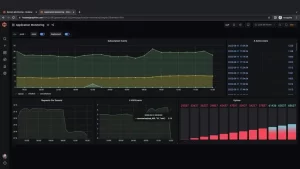
Caption: Modern monitoring systems provide layered visibility, yet 68% of outages originate from blind spots in legacy architectures (Source: IDC 2023 Report)
The Three Silent Killers of System Reliability
-
Human Factor Paradox
Technical teams often focus on hardware redundancy while neglecting cognitive overload. A Forrester study found that 42% of critical incidents stem from configuration errors made by overworked engineers. The solution lies in implementing “error-proof workflows” – automated sanity checks that validate changes against historical failure patterns before deployment. -
Third-Party Dependency Quicksand
Cloud services’ average uptime of 99.95% masks a dangerous truth: interconnected systems create exponential failure risks. When a major CDN provider failed in 2022, it cascaded into 14,000 downstream outages. Resilient organizations now employ “dependency mapping” tools that visualize service interconnections and enable rapid isolation of failing components. -
Technical Debt Timebombs
Legacy systems accumulate hidden risks like outdated cryptographic protocols or unsupported libraries. Proactive organizations conduct “resilience audits” that simulate 50+ failure scenarios quarterly, identifying vulnerabilities before they trigger outages. Microsoft’s adoption of chaos engineering reduced Azure downtime by 61% within 18 months.
Building Biological Immunity in Digital Systems
Forward-thinking enterprises are moving beyond traditional redundancy models. Netflix’s “Concurrency Immunity” framework allows systems to automatically degrade non-essential functions during stress, maintaining core services without complete failure. This approach mirrors biological systems’ ability to prioritize vital functions during crises.
The Renaissance of Monitoring Systems
Traditional monitoring focuses on infrastructure metrics, but next-gen solutions analyze business impact in real-time. Financial institutions now use transaction flow mapping that can pinpoint exactly which payment batches would be affected by a server failure, enabling surgical recovery actions instead of full-system reboots.
Conclusion: From Reactive Firefighting to Predictive Immunity
The future belongs to organizations that treat system resilience as living architecture rather than technical checkbox. By combining human-centric design with intelligent automation, businesses can transform their IT ecosystems into self-healing organisms. As we enter the quantum computing era, resilience strategies must evolve beyond patching vulnerabilities to designing systems inherently resistant to failure. The next breakthrough won’t come from eliminating outages completely, but from creating infrastructures where temporary failures become unnoticeable blips rather than catastrophic events.







Leave a comment