
If you’re managing switches, routers, or an entire data center, you’ve likely encountered the limitations of traditional Ethernet: VLANs maxing out at 4,096 segments, difficulty scaling across subnets, and constraints in supporting multi-tenant or cloud-ready environments. This is where VXLAN (Virtual Extensible LAN) steps in—a network virtualization technology that overlays a virtualized Layer 2 network on top of your existing IP infrastructure. By encapsulating Ethernet frames inside UDP packets, VXLAN allows you to stretch Layer 2 domains across Layer 3 boundaries, making it an essential tool for modern, scalable networking. Whether you’re expanding your data center, improving multi-tenancy, or simplifying virtual machine mobility, understanding VXLAN is critical for making informed decisions about your network hardware and architecture.
How VXLAN Works: Encapsulation and Decapsulation
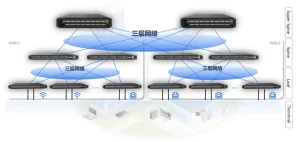
At its core, VXLAN operates through a straightforward two-step process: encapsulation and decapsulation. When a virtual machine sends a frame, the VXLAN-capable device (like a switch or router) wraps the entire Ethernet frame into a UDP packet. This new packet uses the underlying IP network for transport—the source IP is the host or switch where the VM resides, and the destination IP is the remote VTEP (VXLAN Tunnel Endpoint). A critical element is the 24-bit VXLAN Network Identifier (VNI), which isolates traffic into as many as 16 million logical segments. When the packet arrives at the destination VTEP, it is decapsulated—the original frame is extracted and delivered based on its VNI. This process allows seamless extension of Layer 2 networks over scalable IP infrastructure.
Key Benefits of Adopting VXLAN
VXLAN offers clear advantages for administrators and architects working with routers, switches, and data center fabrics:
- •Massive Scalability: With a 24-bit VNI, VXLAN supports over 16 million logical networks—far beyond traditional VLAN limits. This is ideal for large cloud providers or enterprises with complex multi-tenant needs.
- •Layer 2 Over Layer 3: Because VXLAN tunnels Ethernet over IP, virtual machines and devices can communicate across different subnets and physical locations without changing their IP addresses. This enables seamless VM migration and flexible workload placement.
- •interoperability with Existing Infrastructure: VXLAN works over your current IP network. There’s no need to replace routers or switches—only that they support VXLAN termination or are paired with capable gateways.
- •Enhanced Multi-Path and Load Balancing: When integrated with protocols like MP-BGP EVPN, VXLAN improves traffic handling through efficient load balancing, redundancy, and optimized path selection across the network.
- •Security and Encryption: VXLAN supports encryption protocols such as IPsec to secure data traversing the overlay network, adding a layer of confidentiality and integrity for sensitive environments.
Where VXLAN Fits in Real-World Networks
VXLAN isn’t just a theoretical concept—it’s widely deployed across various scenarios:
- •Virtual Machine Mobility: VXLAN allows VMs to move across subnets and data centers without changing their IP settings, simplifying live migrations and dynamic resource allocation.
- •Multi-Tenant Isolation: Cloud providers and enterprises use separate VNIs to isolate customer environments securely, each with independent policies and services.
- •Data Center Interconnection: Extend Layer 2 domains between dispersed data centers, supporting disaster recovery, geo-clustering, and hybrid cloud architectures.
- •Cloud and NFV Deployment: VXLAN offers flexible connectivity for virtual network functions (VNFs) and cloud services, enabling rapid service chaining and scalable tenant networks.
Implementing VXLAN: What Network Professionals Should Know
For teams deploying switches and routers, adding VXLAN involves ensuring hardware support for VXLAN termination (VTEP) and possibly integrating with technologies like EVPN for control plane functionality. Not all hardware supports VXLAN equally—newer switches and routers often include dedicated ASICs or software support for efficient encapsulation. When planning a rollout, consider factors like multicast requirements (if used), gateway placement, and how VXLAN will interact with existing VLANs and security policies.
VXLAN represents a fundamental shift in how we design scalable, secure, and agile networks. By decoupling logical networks from physical infrastructure, it enables unprecedented flexibility in data center and cloud design. When evaluating your next network upgrade, consider VXLAN-ready switches and routers to fully leverage these benefits—all while future-proofing your infrastructure.
Ready to explore how VXLAN can enhance your network performance and scalability? Visit telecomate.com to discover compatible routers, switches, and solutions designed for modern virtualized environments.
Leave a comment