

What Is Wi-Fi Shield?
Wi-Fi Shield is an innovative wireless security technology developed by Huawei. By transmitting additional interference signals, it ensures that only the target station (STA) can correctly receive the data packets, while signals at other locations become undecodable. This effectively prevents malicious users from intercepting data.
What Problem Does Wi-Fi Shield Address?
With the widespread use of wireless networks, Wi-Fi has become a common way to access the Internet. However, since Wi-Fi signals propagate through the air, they can be received by any device within range. This makes it possible for malicious users to intercept the data of legitimate users. In complex Wi-Fi environments, attackers can deploy rogue devices near legitimate users to capture and analyze wireless packets, potentially decrypting sensitive data.

Differences and Relationship Between Wi-Fi Shield and Traditional Encryption Technologies
Traditional Wi-Fi security technologies primarily rely on encryption algorithms to protect wireless data packets. This means that even if an attacker captures the packets, the content remains unreadable.
Huawei’s Wi-Fi Shield takes a different approach. By utilizing the beamforming capabilities of access points (APs), it sends targeted interference signals. As a result, attackers receive only a disordered mix of valid and interfering signals, making demodulation impossible. In other words, Wi-Fi Shield prevents interception at the physical signal level.
Can Wi-Fi Shield Be Used Alongside Traditional Encryption?
Yes. Wi-Fi Shield and traditional encryption technologies operate at different stages of data transmission and are independent of each other. While encryption protects the data content, Wi-Fi Shield protects the transmission path. Since encryption alone may still be vulnerable to certain attacks, combining it with Wi-Fi Shield provides enhanced, layered security—ideal for scenarios with high data protection requirements.
How Does Wi-Fi Shield Work?
Wi-Fi Shield is built on the beamforming capabilities of APs, which have multiple antennas. When signals from different antennas are combined, their interactions can be controlled by adjusting the phase of each transmission. This allows the AP to concentrate the signal energy in a specific direction, transmitting data more precisely to the target STA.
However, in typical wireless transmission, even with beamforming, signal energy can still spread into side lobes—areas outside the main beam—allowing other devices to potentially receive the signal.
To address this, Wi-Fi Shield adds interference signals via additional antennas. These signals contain intentional, non-identifiable noise. When a STA requiring protection connects to the Wi-Fi network, the AP first determines its location. It then adjusts the direction of the interference so that only the target STA’s position remains interference-free, while all other areas are flooded with overlapping signals. This ensures that only the intended recipient can receive and decode the data, while unauthorized devices cannot demodulate any meaningful information.
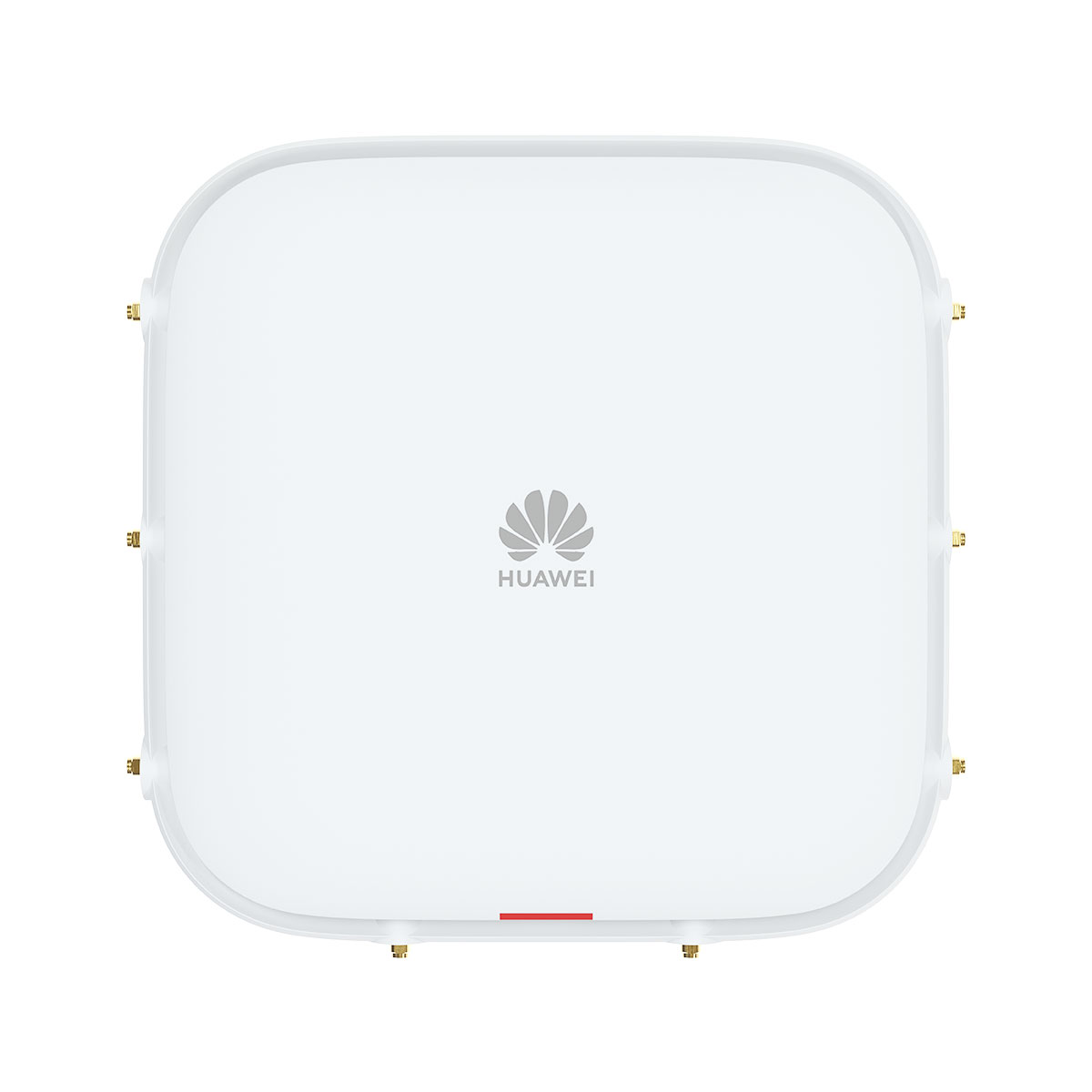
AirEngine 6760-X1E
Huawei AirEngine 6760-X1E indoor access point (AP) with 11ax indoor, 4+6 dual bands, external antenna, USB, IoT Slot, BLE, Optional RTU upgrade to 4+8/4+4+4/4+6+Scan
Which Devices Support Wi-Fi Shield?
On the receiving end, STAs must support Wi-Fi 6 or later protocol standards.
On the transmitting end, selected Huawei AirEngine Wi-Fi 7 AP models support the Wi-Fi Shield feature. For more information about Wi-Fi 7 APs, please visit csd@telecomate.com.







Leave a comment