
Pressure builds as your cloud migration deadline looms. Legacy core switches groan under unpredictable VM traffic spikes, blind spots hide east-west threats, and rigid architectures choke application velocity. This modern data center reality demands more than just ports and speed – it requires infrastructure that evolves as fast as your business. Enter Aruba data center switches and their Adaptive Trust Fabric. This isn’t about incremental upgrades; it’s about fundamentally rethinking how underlying networking handles volatility, security, and relentless scaling. The CX chassis and Spine-Leaf designs underpinning Aruba data center solutions confront the chaos directly. Forget overprovisioned, static backbones – imagine an environment where workload mobility, microsegmentation, and threat response converge seamlessly. The critical question isn’t whether you need better switches, but whether your chosen platform genuinely anticipates tomorrow’s demands instead of just coping with yesterday’s limits.
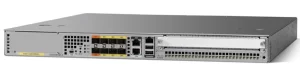
Does adaptive infrastructure future-proof scaling demands? Resoundingly yes – here’s how Aruba’s architecture sidesteps conventional roadblocks:
First, dynamic microsegmentation crushes east-west exposure risks without firewall bottlenecks. Traditional VLAN sprawl struggles to isolate transient VM workloads – creating porous zones where threats jump laterally after initial compromise. Aruba data center switches embed identity-aware enforcement directly into the fabric. Using Aruba’s Group-Based Policy model, you define segments logicallyaround critical app tiers or sensitivity levels – say a “PCI-Servers” group – independent of physical location or IP address changes. When workloads spin up or migrate, the switch dynamically assigns them to predefined secure segments based on tags like Active Directory roles. Security policies enforcing zero-trust (deny by default, allow by policy) travel with workloads automatically. This eliminates manual VLAN-to-VM mapping nightmares and shrinks attack surfaces fundamentally, preventing compromised backup servers from reaching production databases. It’s segmentation engineered for fluid infrastructure – no more bolting on cumbersome firewall clusters just for internal protection.
Second, programmable automation transforms network provisioning from weeks to minutes. Staring at 200 leaf switches needing identical VXLAN/VLAN configuration? Manual pushes risk inconsistencies that trigger downtime. Aruba data center switches leverage AOS-CX APIs and Ansible integrations to push intent-driven templates. Define core configurations once – underlay routing protocols (BGP EVPN), overlay VXLAN gateways, LAG groups – then deploy via Aruba Central or your DevOps pipeline. The switches apply configurations identically andvalidate locally. Failed switches replace themselves: Plug in a new spine switch, and it downloads its role-specific template, self-configures, and rejoins the fabric autonomously. This eradicates manual staging, prevents configuration drift, and accelerates hardware refreshes by 70% or more. Network-as-code becomes tangible reality, letting you roll out new tenant environments or security zones via code repositories instead of CLI marathons. Infrastructure finally keeps pace with DevOps workflows.
Third, scaling with intent prevents spine-and-leaf redesigns at every growth spurt. Many fabrics collapse under unexpected east-west traffic surges – especially when hypervisors or storage clusters communicate. Aruba data center switches are engineered for elastic scale via deep buffers (up to 40MB dynamic per port) and lossless Ethernet (DCB/PFC) support crucial for storage protocols like NVMe-oF. Add capacity frictionlessly: Scale out leaf tiers horizontally with predictable latency as bandwidth demands explode. Scale vertically with powerful modular chassis spines accommodating terabits of non-blocking throughput. More vitally, Aruba’s Virtual Switching Extensions (VSX) deliver hitless upgrades and failover, maintaining session persistence during hardware maintenance or failures – crucial for always-on applications. Telemetry also informs scale decisions: Built-in sensors report interface utilization, flow data, and congestion patterns to Aruba’s NetInsight. Instead of guessing future needs, you visualize traffic matrices and pinpoint precisely when/where to add the next spine or leaf, maximizing capital efficiency.
Choosing Aruba data center switches signals an escape from reactive infrastructure cycles. It means embracing a fabric designed to anticipate volatility, not just withstand it. The Adaptive Trust Foundation – weaving together microsegmentation enforced dynamically across workloads, infrastructure-as-code flexibility eliminating human configuration delays, and genuinely elastic physical/virtual scale points – redefines what’s possible. This approach transforms scaling challenges from existential threats into predictable engineering exercises. You gain unprecedented visibility and policy granularity for securing fluid environments. Automation consistency slashes operational overhead and costly downtime windows. The outcome? A future-proofed infrastructure where scaling demands trigger planned enhancement, not panic-driven redesigns. Aruba data center solutions position your network as an enabler of business velocity, not a constraint requiring constant apology. When leaders demand proof your infrastructure won’t cap growth, demonstrate the architectural substance – adaptive, secure, and ready for whatever demands emerge. Why choose anything less? Is your current backbone truly built for tomorrow’s unknowns?







Leave a comment