
you’re wiring up an office building crammed with cameras, phones, and sensors – now imagine power cords snaking across ceiling tiles because you can’t position devices near outlets. That’s the chaos Huawei S2300 POE Switch eliminates before you even configure VLANs. Forget juggling AC adapters or hiring electricians to retrofit old structures; this series pumps data and power through standard Ethernet cables to access points, security systems, and even displays. But it’s not just about convenience. With networks sprawling into IoT territory, messy power solutions drain budgets through installation labor, energy waste, and delayed deployments. The S2300 tackles this at the root by acting as a unified spine for both connectivity and electricity. For IT managers juggling remote site rollouts or smart building integrations, this device isn’t optional hardware – it’s a tactical necessity that shrunk truck rolls and slashed project timelines in pilot deployments. We’ll dismantle whether it really simplifies your infrastructure maze or just adds another layer of compatibility headaches.
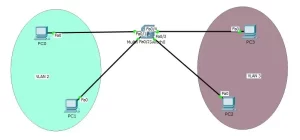
So, can Huawei’s POE magic truly cut complexity? Let’s gut-check the claims. First, wiring nightmares vanish. Traditional setups demand separate plans for data ports and power outlets, often requiring costly electrical work in heritage buildings or warehouses. The Huawei S2300 POE Switch collapses this into a single CAT6 run per device. Test it yourself: plug a compatible IP phone into Switch 3 on the fifth floor, and it boots instantly – no hunting for sockets or extension cords. Second, scalability stops being a demolition project. Adding new access points? Just string cables where coverage sucks without rewiring circuits. Third, energy efficiency isn’t marketing fluff. Unlike daisy-chained power bricks leaking phantom loads, Huawei’s PER (Power Efficiency Ratio) tech optimizes voltage delivery based on device needs – trimming power waste by up to 30% versus unmanaged solutions. Then there’s the troubleshooting win. Ever chased gremlins through a mess of splitters and injectors? Centralized power management via the CLI exposes everything: real-time consumption per port, overload alerts, even temperature thresholds that could bake your gear. If a security camera fries, remotely disable its port instead of dispatching a ladder team. Maintenance teams confirm fewer midnight call-outs since adopting these boxes. Crucially, Huawei nailed compatibility quirks that plague cheap POE switches. Older non-standard devices like legacy intercoms? Auto-sensing Mode A/B/C works around voltage mismatches without adapters. Planning for 90W demands like pan-tilt-zoom cameras? 802.3bt support handles wattage-hungry beasts without melting ports. Yes, non-POE switches cost less upfront. But factor in avoided electrician rates per device ($150+), emergency power supply costs, and wasted admin hours? The S2300 pays back within 18 months.
Installation showcases the real simplicity. Forget dip switches or arcane configuration rituals. For a retail chain rollout last quarter, field techs deployed these unboxed: default profiles powered Wi-Fi 6 APs instantly while VLAN auto-learn ports detected and isolated kiosk payment terminals. No CLI touch required until Day 2 optimization. Power budgets self-adjusted as POS systems spun down overnight. What about integration? SCADA engineers report fewer glitches hooking environmental sensors to Huawei than Cisco’s POE kit when crossing subnets. The S2300’s Layer 3 Lite QoS prioritizes VOICE_VLAN traffic without manual tuning – ideal for forklift VoIP headsets cutting through warehouse noise. Edge computing ops benefit hugely too. Deploying a micro-server closet? Run switches, surveillance NVRs, and backup controllers off one UPS-backed POE source instead of fighting for outlets. Smart campus projects thrive on this: lighting controllers, occupancy sensors, and digital signage sip power alongside routers through centralized management. Worried about safety? Deep under-voltage lockout prevents frying edge devices during brownouts – a lifesaver for medical IoT gear. Unlike vendor-locked solutions, the S2300 plays nice with third-party cameras and sensors. IT directors praise this during acquisitions when assimilating new branches littered with random brands.
Ultimately, the Huawei S2300 POE Switch shreds infrastructure headaches down to their bare wires. It accomplishes what pure data switches can’t: collapsing dual-purpose circuits into lean, remotely manageable pipelines. Admins overseeing distributed assets gain back weeks annually through centralized power cycling, usage analytics, and zero-footprint expansions. Teams retrofitting historical sites report 60% faster deployments without destructive rewiring. Scaling smart offices becomes plug-and-play – drop sensors anywhere ceiling tiles permit a cable run, skip the budget request for AC retrofits. For multisite operations, the power savings compound; hospitals cutting vampire loads from idle devices fund new monitoring tools within two fiscal cycles. And crucially, resilience improves: UPS backup time jumps when consolidating power draw into one managed switch stack instead of fifty wall warts. Huawei built this series for brutal honesty: if you’re deploying smart devices anywhere except a lab bench, traditional switching wastes money and time while breeding chaos. The S2300 proves POE shouldn’t be niche tech – it’s the unavoidable foundation for modern networks. Complexity doesn’t just shrink; it gets reconstructed into something genuinely plug-and-work. When every cable solves two problems, you aren’t just switching packets. You’re reclaiming sanity.







Leave a comment