
In the fast-evolving world of enterprise networking, selecting the right router is critical for ensuring seamless connectivity, security, and scalability. Huawei’s AR G3 series has emerged as a popular choice for businesses worldwide, but with its array of features and configurations, questions often arise. From deployment challenges to advanced functionalities, this article addresses the most pressing inquiries about Huawei AR G3 routers, offering actionable insights for IT managers, network engineers, and business decision-makers.
The Huawei AR G3 Router: A Brief Overview
The Huawei AR G3 series is a lineup of modular routers designed for medium-to-large enterprises and service providers. These devices combine high-performance routing, robust security, and flexible management tools, making them ideal for complex network environments. Unlike consumer-grade routers, the AR G3 supports advanced technologies such as MPLS, VPNs, and SD-WAN, while providing scalability for future growth. Whether optimizing branch office connectivity or managing data center traffic, the AR G3 is built to handle demanding workloads.
But what sets this series apart? Let’s dive into the questions that matter most.
Addressing Key Concerns: 13 Critical Questions About Huawei AR G3 Routers
1. What industries benefit most from Huawei AR G3 routers?
The AR G3 is tailored for sectors requiring high reliability and scalability, such as finance, healthcare, education, and multinational corporations. Its support for multi-gigabit throughput and low-latency transmission makes it suitable for real-time applications like video conferencing or IoT ecosystems.
2. How does the AR G3 compare to other enterprise routers?
While competitors like Cisco ISR or Juniper MX Series offer similar features, the AR G3 stands out for its cost-effectiveness, modular design, and integration with Huawei’s ecosystem (e.g., CloudEngine switches and FusionCloud solutions).
3. Can the AR G3 support SD-WAN deployments?
Yes. The AR G3’s Virtual Routing and Forwarding (VRF) and SD-WAN capabilities allow businesses to prioritize critical traffic, automate network policies, and reduce reliance on traditional MPLS circuits.
4. What security features does the AR G3 provide?
Built-in firewalls, IPSec VPN, and anti-DDoS protection ensure robust defense against cyber threats. Additionally, Huawei’s HiSec security framework offers AI-driven threat detection and response.
5. Is the AR G3 compatible with IPv6?
Absolutely. The routers fully support IPv6 transition technologies, including dual-stack and tunneling, ensuring compliance with next-gen networking standards.
6. How scalable is the AR G3 in terms of ports and modules?
The AR G3 features hot-swappable interface cards, allowing businesses to add SFP+, QSFP28, or Ethernet ports as needed. This modularity eliminates the need for hardware upgrades during expansion.
7. What’s the difference between AR G3 and AR6100 series?
The AR6100 is a higher-end model with enhanced processing power and support for 100G interfaces, catering to ultra-high-density environments. The AR G3 targets mid-range enterprises with balanced performance and affordability.
8. How does the AR G3 handle network redundancy?
Through protocols like HSRP/VRRP and dual power supplies, the AR G3 ensures uninterrupted uptime. It also supports link aggregation for load balancing.
9. Can the AR G3 integrate with cloud services?
Yes. With built-in cloud management tools and SDN compatibility, IT teams can monitor and configure routers remotely via platforms like Huawei CloudEngine.
10. What’s the typical deployment scenario for AR G3 routers?
Common use cases include branch office connectivity, campus networks, data center interconnects, and enterprise VPN setups.
11. Are there limitations to the AR G3’s performance?
While powerful, the AR G3 may require optimization in extremely high-latency environments or when handling ultra-high-throughput workloads without proper uplinks.
12. How does Huawei ensure firmware updates and lifecycle support?
Huawei provides regular firmware updates through its eSight management system, along with five-year standard warranty options for enterprise customers.
13. What training resources are available for IT teams?
Huawei offers certification programs (e.g., HCIP-Datacom), comprehensive documentation, and 24/7 technical support to help teams master the AR G3.
Visualizing the AR G3’s Architecture
To better understand the AR G3’s capabilities, consider the following diagram illustrating its role in a hybrid network setup:
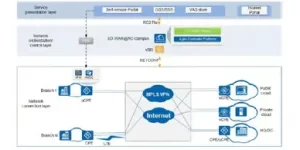
Image description: A network diagram showing Huawei AR G3 routers connecting branch offices, data centers, and the cloud, with SD-WAN overlays and security policies in place.
Why the AR G3 Matters for Modern Networks
The Huawei AR G3 isn’t just a router—it’s a cornerstone of agile, secure networking. Its ability to adapt to evolving demands, from remote workforces to IoT proliferation, makes it a strategic investment. Businesses can leverage its modular design to future-proof infrastructure while benefiting from Huawei’s global service ecosystem.
As enterprises navigate digital transformation, the Huawei AR G3 Router offers a compelling blend of performance, security, and flexibility. By addressing the 13 questions above, IT leaders can make informed decisions about integrating this technology into their networks. Whether upgrading legacy systems or building a cloud-first architecture, the AR G3 is designed to meet today’s challenges head-on—while keeping tomorrow’s possibilities open.
For those ready to explore further, hands-on testing and consultation with Huawei experts are recommended steps. After all, the right router isn’t just about specs; it’s about aligning with your organization’s unique goals and growth trajectory.

Leave a comment