
In today’s threat landscape, where ransomware and zero-day exploits evolve daily, selecting the right firewall is non-negotiable for enterprise security. Two giants dominate the conversation: Huawei and Fortinet. While both promise cutting-edge protection, their approaches diverge significantly. Huawei emphasizes scalability and AI-driven innovation, while Fortinet focuses on simplicity and unified threat management. But which solution truly aligns with your organization’s needs? This article unpacks technical capabilities, deployment scenarios, and hidden costs to help you decide.
The Evolving Role of Firewalls in Enterprise Security
Modern firewalls are far more than perimeter defenders—they’re integrated security hubs capable of deep packet inspection, intrusion prevention, and application-aware filtering. Huawei and Fortinet have carved distinct niches in this space. Huawei’s Firepower Next-Generation Firewall (NGFW) leverages its expertise in 5G and cloud infrastructure, while Fortinet’s Security Fabric integrates with broader ecosystems like SD-WAN and endpoint protection. To determine which fits best, consider three factors: throughput performance, ecosystem compatibility, and operational overhead.
Technical Deep Dive: Huawei Firewalls
Huawei’s firewall lineup, including the USG6000 and USG6500 series, combines hardware acceleration with AI-powered threat detection. For example, its HiSec engine analyzes traffic patterns in real time, identifying anomalies that traditional signature-based systems might miss. A multinational manufacturing firm might deploy Huawei NGFWs to secure IoT devices across 50 global sites, benefiting from high throughput (up to 120 Gbps) and low latency for time-sensitive applications like robotics.
Key Strengths:
- AI/ML Integration: Huawei’s AI-driven threat intelligence shares data across its ecosystem, improving detection accuracy over time.
- 5G Optimization: Tailored for next-gen networks, with deep inspection capabilities for encrypted traffic on ultra-fast connections.
- Cost Efficiency: Aggressive pricing models make Huawei attractive for enterprises scaling infrastructure in Asia-Pacific or EMEA regions.
Fortinet’s Approach: Unified Security Fabric
Fortinet’s FortiGate firewalls, such as the 1000D or 3700F series, prioritize simplicity through unified management. The Security Fabric architecture ties firewalls to endpoint protection (FortiClient), email security (FortiMail), and cloud solutions, creating a cohesive defense layer. A mid-sized healthcare provider might use Fortinet to enforce HIPAA compliance across hybrid cloud environments, leveraging single-pane-of-glass monitoring and automated policy updates.
Key Strengths:
- Fabric Ecosystem: Seamless integration with SD-WAN, email gateways, and threat intelligence platforms reduces complexity.
- Consistent Policy Enforcement: Global organizations benefit from uniform security policies across branch offices and cloud instances.
- Ease of Use: Intuitive dashboards and minimal CLI reliance lower the learning curve for IT teams.
Head-to-Head Comparison: Performance vs. Practicality
| Criteria | Huawei Firewalls | Fortinet Firewalls |
|---|---|---|
| Throughput | Up to 200 Gbps (USG9500 series) | Up to 500 Gbps (FortiGate 6000F series) |
| Management | API-driven, partner-dependent | Unified Fabric Manager, low-code workflows |
| Ecosystem | Strong in 5G/cloud deployments | Broad integration with third-party tools |
| Cost per Gbps | Lower upfront costs | Higher upfront, but lower TCO over time |
Real-World Scenarios: Where Each Shines
- Huawei in High-Density Environments:
A telecom provider in Southeast Asia uses Huawei’s USG9500 to inspect encrypted traffic at 80 Gbps without bottlenecks. Its AI engine reduced false positives by 40% compared to legacy solutions. - Fortinet for Unified Compliance:
A European bank deploys Fortinet’s Security Fabric to meet GDPR requirements. Automated log correlation across firewalls, endpoints, and cloud services cuts audit prep time by six weeks annually.
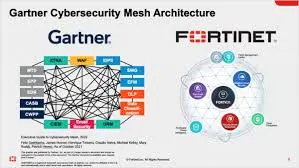
Image description: A side-by-side diagram contrasting Huawei’s AI-centric threat detection with Fortinet’s Fabric-based policy enforcement.
Overlooked Challenges: Hidden Costs and Integration Hurdles
While Huawei offers cost-effective hardware, its reliance on proprietary APIs can complicate multi-vendor deployments. Enterprises already invested in Cisco or Juniper ecosystems may face integration headaches. Conversely, Fortinet’s Security Fabric requires subscription licenses for full functionality, which can escalate costs for smaller teams. For example, a startup might underestimate the recurring expenses of Fortinet’s Advanced Threat Protection add-ons.
The Verdict: Which Firewall Matches Your Strategy?
- Choose Huawei If:
- You’re building a 5G-enabled infrastructure or cloud-first architecture.
- Budget constraints prioritize upfront cost savings over long-term subscriptions.
- Your team has in-house expertise in managing open ecosystems.
- Choose Fortinet If:
- Simplified, unified management is critical for your IT team.
- Compliance and cross-platform visibility outweigh upfront costs.
- You rely on third-party integrations (e.g., Splunk, ServiceNow).
Neither Huawei nor Fortinet offers a one-size-fits-all solution. Huawei’s strength lies in innovation and scalability, while Fortinet excels in operational simplicity and ecosystem cohesion. Decision-makers must weigh their organization’s growth trajectory, technical capabilities, and risk tolerance. As cyber threats grow more sophisticated, the right firewall isn’t just a purchase—it’s a strategic partnership. Test both platforms in your environment, scrutinize total cost of ownership, and remember: the best firewall is the one that silently adapts to your evolving needs.

Leave a comment