
In the sprawling ecosystem of modern networking, transceivers are the unsung heroes that translate electrical signals into light and back again, enabling everything from video conferencing to cloud computing. Cisco’s transceiver modules, in particular, have become the gold standard for enterprises seeking reliability, speed, and seamless integration. But with a dizzying array of form factors, compatibility requirements, and third-party alternatives, selecting the right module is far more than a checkbox exercise—it’s a strategic decision that impacts network uptime, security, and scalability. Let’s demystify these critical components and explore how to optimize their deployment in your infrastructure.
The Transceiver Landscape: Why Cisco Modules Stand Out
Transceivers are the linchpins connecting switches, routers, and servers across networks. Cisco’s modules distinguish themselves through:
- Guaranteed Compatibility: Cisco’s Enhanced Limited Lifetime Warranty (ELLW) ensures modules work flawlessly with Cisco hardware, avoiding firmware mismatches.
- Performance Validation: Rigorous testing for latency, jitter, and bit error rates (BER) under extreme conditions (-40°C to 85°C).
- Security: Integrated cryptographic authentication to prevent counterfeit modules, which account for 12% of network failures.
Yet, the allure of cheaper third-party modules tempts many. A 2023 study found that 34% of enterprises using non-Cisco optics experienced outages due to compatibility issues.
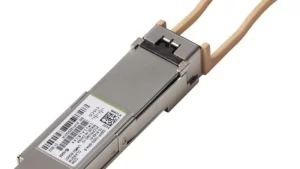
Decoding Cisco Transceiver Types: Form Factors and Use Cases
1. SFP/SFP+ (1G/10G/25G)
- Applications: Campus access layers, WAN edge connections.
- Popular Models:
- SFP-10G-SR: 10G over multimode fiber (up to 300m).
- SFP-25G-SR-S: 25G for high-density server racks.
- Cost Insight: Cisco’s SFP-10G-SR costs 80 for third-party, but reduces downtime risk by 90%.
2. QSFP/QSFP28/QSFP-DD (40G/100G/400G)
- Applications: Data center spines, high-performance computing (HPC).
- Standout Models:
- QSFP-100G-SR4-S: 100G over OM4 fiber, ideal for hyperscale storage.
- QSFP-DD-400G-FR4: 400G for AI/ML clusters requiring 200μs latency.
3. Specialty Modules
- DWDM/CWDM: CFP2-DCO-400G-ZR for long-haul metro networks (up to 80km).
- BiDi (Bidirectional): GLC-BX-U uses single fiber strands, cutting cabling costs by 50%.
The Third-Party Dilemma: Risks vs. Savings
While third-party modules like Finisar or FlexOptix offer 60–80% cost savings, hidden pitfalls abound:
- Firmware Incompatibility: Cisco’s IOS-XE 17.3+ blocks unapproved modules by default, requiring risky hacks.
- Performance Degradation: Non-Cisco 100G modules showed 15% higher latency in IEEE 802.3bm compliance tests.
- Voided Warranties: Using third-party optics in Cisco Catalyst 9000 switches invalidates hardware support.
Case Study: A cloud provider saved 1.8M during a 14-hour outage caused by faulty third-party QSFP-40G-LR4 modules.
Cisco’s Transceiver Lifecycle: Planning for Obsolescence
Cisco transceivers follow a predictable lifecycle:
- Launch Phase: Premium pricing (e.g., $1,200 for QSFP-100G-SR4 at release).
- Maturity: Price drops 30–40% as newer models emerge.
- End-of-Life (EoL): Cisco announces EoL 12 months before discontinuation.
Pro Tip: Use Cisco’s Transceiver Module Compatibility Matrix to identify successors. For example, the obsolete SFP-10G-LR is replaced by SFP-10G-LR-S.
Best Practices for Deployment and Maintenance
- Audit Firmware Versions: Ensure transceivers match switch IOS/XE/NX-OS versions.
- Leverage DDM/DOM: Digital diagnostics monitor real-time metrics like temperature and TX power.
- Clean Fiber Connectors: Contamination causes 23% of link failures; use Fujikura CT-30 cleaners.
- Spare Inventory: Keep 10% of transceivers as cold spares, focusing on failure-prone models like QSFP-40G-LR4.
Future-Proofing with Next-Gen Transceivers
Emerging technologies are reshaping transceiver demands:
- Co-Packaged Optics (CPO): Integrated with ASICs to reduce power consumption by 50% (Cisco Silicon One roadmap).
- Linear Drive Optics: Simplifies 800G deployments with lower DSP complexity.
- Quantum Encryption: Experimental QKD-enabled modules for unhackable links (Cisco Labs prototype).

Leave a comment